



RSS
Below are stories about research efforts featured by U.S. Department of Energy (DOE) Integrated Energy Systems Office.
Subscribe to the IESO E-Newsletter
Subscribe to the IESO e-newsletter to stay informed on the latest wind energy news, events, publications, and updates.
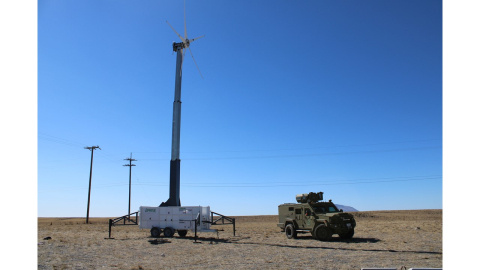
This DOE-funded project analyzes how to build a wind turbine that could serve both military and humanitarian missions around the world.
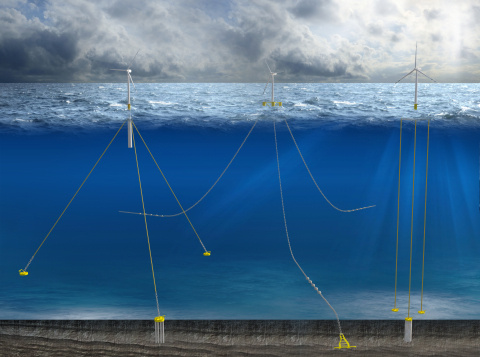
DOE Requests Information on Floating Offshore Wind Energy Mooring and Anchoring
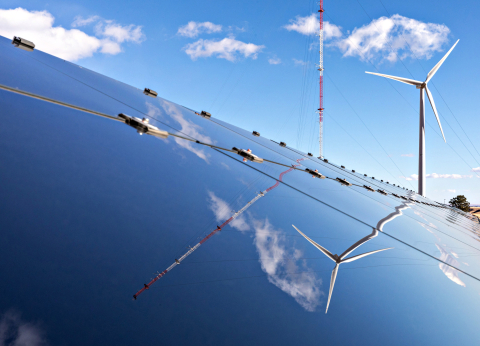
A new study from Lawrence Berkeley National Laboratory published in the journal iScience uses a new methodology to predict patterns for utility-scale wind and solar energy costs and concludes that they will progressively decline in the coming years.
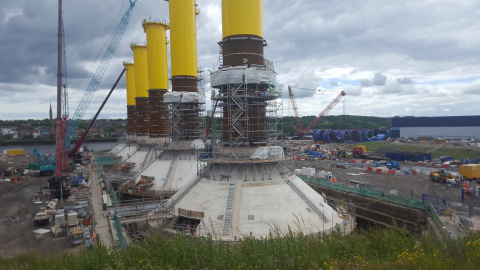
The use of concrete support structures for offshore wind turbines offers many potential advantages over towers comprised of only steel, including greater durability, a longer lifespan, increased local labor opportunities, and much quieter installations.
In a collaborative study published in Wind Energy Science, a team led by Pacific Northwest National Laboratory examined offshore wind energy challenges and laid out future approaches to meet them.
The U.S. wind industry installed 13,413 megawatts (MW) of new wind capacity in 2021, bringing the cumulative total to 135,886 MW.
Driven by falling offshore wind prices, federal action, & state-level commitments, the U.S. offshore wind pipeline grew 13% over the previous year, with 40,083 MW now in various stages of development.
The U.S. distributed wind sector added 11.7 MW of new distributed wind energy capacity with 1,751 new wind turbines installed across 15 states.
In a new journal article, researchers at Lawrence Berkeley National Laboratory explore the potential implications of both solar and wind energy project siting patterns.
In a series of 10 articles, over 100 wind energy experts from around the world are joining forces to identify the most critical needs for wind energy advancement.