



RSS


Below are stories about research efforts featured by U.S. Department of Energy (DOE) Integrated Energy Systems Office.
Subscribe to the IESO E-Newsletter
Subscribe to the IESO e-newsletter to stay informed on the latest wind energy news, events, publications, and updates.
The National Renewable Energy Laboratory released two new databases of state and local wind and solar energy zoning laws and ordinances in the United States. The data is machine readable so geospatial analysts and researchers can analyze siting impacts.
The National Renewable Energy Laboratory has made a big leap forward by adding new data and capabilities to the Distributed Generation Market Demand (dGen) model.
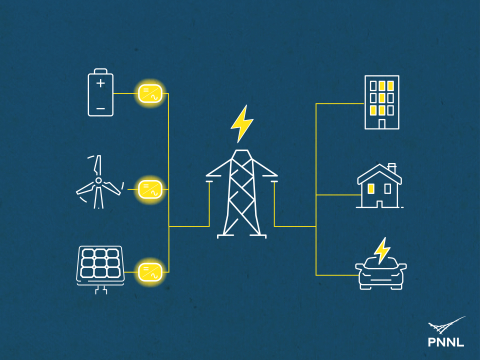
PNNL researchers developed a new computer model of a device that acts like a translator, enabling renewable power sources like wind and solar to provide electricity to the grid while increasing system resiliency and stability.
DOE’s Oak Ridge National Laboratory published a study that highlights the additive manufacturing (3D printing) of permanent magnets for large electrical machines. Additive manufacturing could be an attractive method for manufacturing permanent magnets.
Researchers from the National Renewable Energy Laboratory predict that, by 2035, wind plant designs will embrace towers even taller than previously thought.
A new study indicates that nearly 1,400 gigawatts of distributed wind capacity could be profitably deployed today across the United States, which amounts to more than half of the nation’s current annual electricity consumption.
A standalone wind turbine is transforming the rural Alaskan community of St. Mary’s, according to a new study conducted by Pacific Northwest National Laboratory and Sandia National Laboratories.
New study reveals mixed reactions to flickering shadows generated by wind turbines.
NREL released the Distributed Wind Energy Futures Study, which details the high potential to profitably deploy nearly 1,400 gigawatts of distributed wind capacity across the United States.
Expanding wind energy deployment requires communities to host wind projects, and research has shown that communities are more willing to host wind energy when they feel the planning process has been fair.