



Looking back on a transformative 12 months of progress since President Trump's executive orders on nuclear energy.
May 23, 2026 Estimated Read Time min

On May 23, 2025, President Trump issued four executive orders to revitalize the U.S. nuclear energy industry.
The message was clear: move quickly and decisively to bring about an American nuclear renaissance.
In the year since, we’ve seen an unprecedented transformation in the nation’s approach to delivering more nuclear power than ever before.
Next-generation reactor designs are moving toward key tests with impressive speed. Licensing for new reactors has been streamlined. Our nuclear fuel supply is being reinforced to meet our future energy demands. Retired nuclear plants are on target to restart, and utilities are gearing up to boost the power output of existing plants.
America’s nuclear energy renaissance is truly underway.
Last May, we explored 9 key takeaways from President Trump’s executive orders on nuclear energy. Read on to find out what we accomplished in the past 12 months.
GOAL: Lay the Groundwork for Faster Reactor Testing
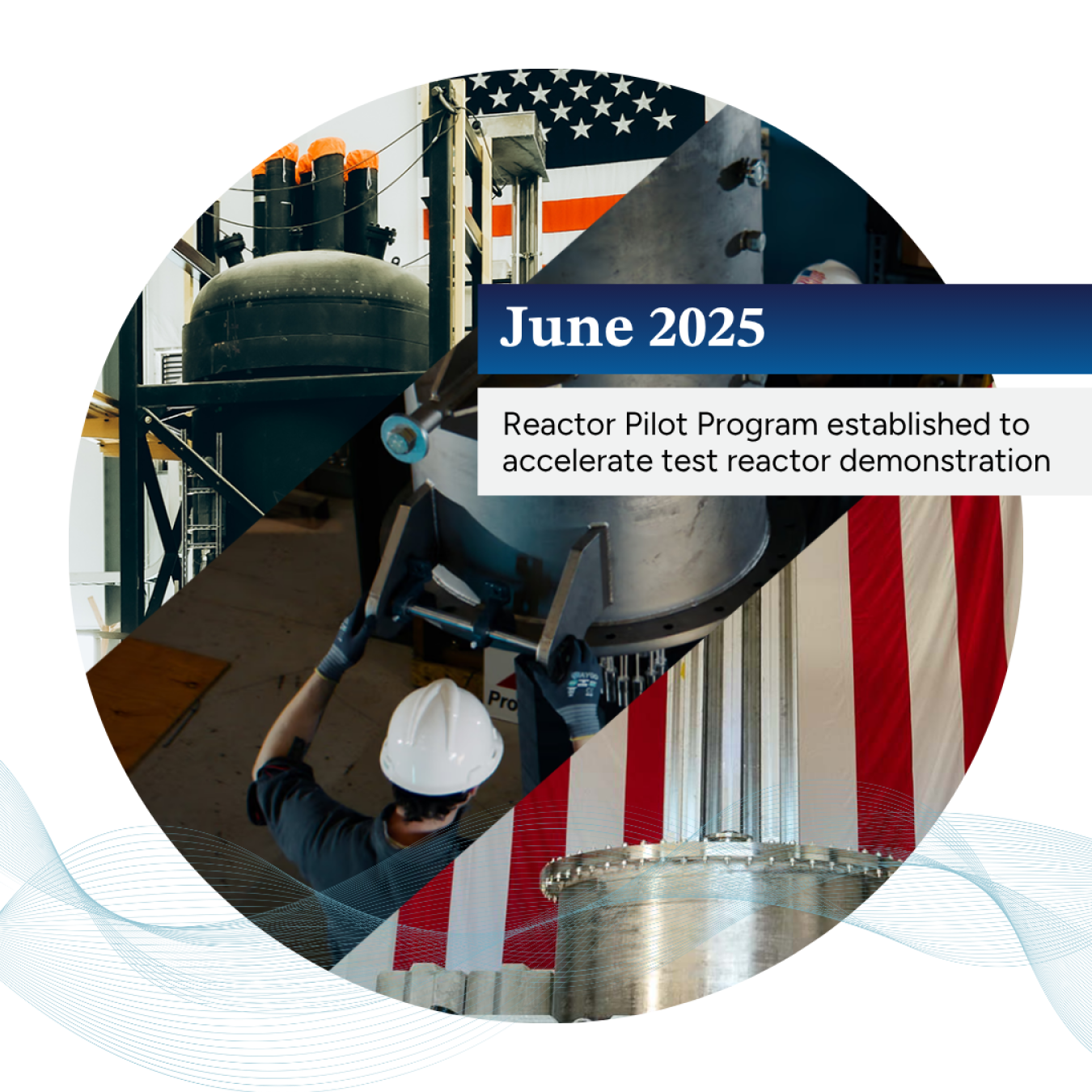
Reactor Pilot Program
President Trump’s executive order, Reforming Nuclear Reactor Testing at the Department of Energy, emphasized the urgency of deploying advanced reactors to meet the nation’s growing demand for reliable energy. Less than a month later, the U.S. Department of Energy (DOE) created the Reactor Pilot Program to provide a new DOE pathway for advanced reactor demonstration to fast-track commercial licensing and unlock private sector investment. The program is leveraging DOE’s authority to expedite the research and development of advanced nuclear reactor technologies, with the goal of at least three reactor designs reaching criticality by July 4, 2026. DOE selected 11 projects to pilot their designs through this new pathway — three of which secured a Final Documented Safety Analysis as of May 2026.
DOE Authorization Pathway
The Reactor Pilot Program is enabled by DOE’s newly streamlined process for reactor authorization. The Department revised this process in 2025 to expedite the review, approval, and construction of advanced reactors under its jurisdiction — reducing red tape while maintaining a paramount focus on safety.
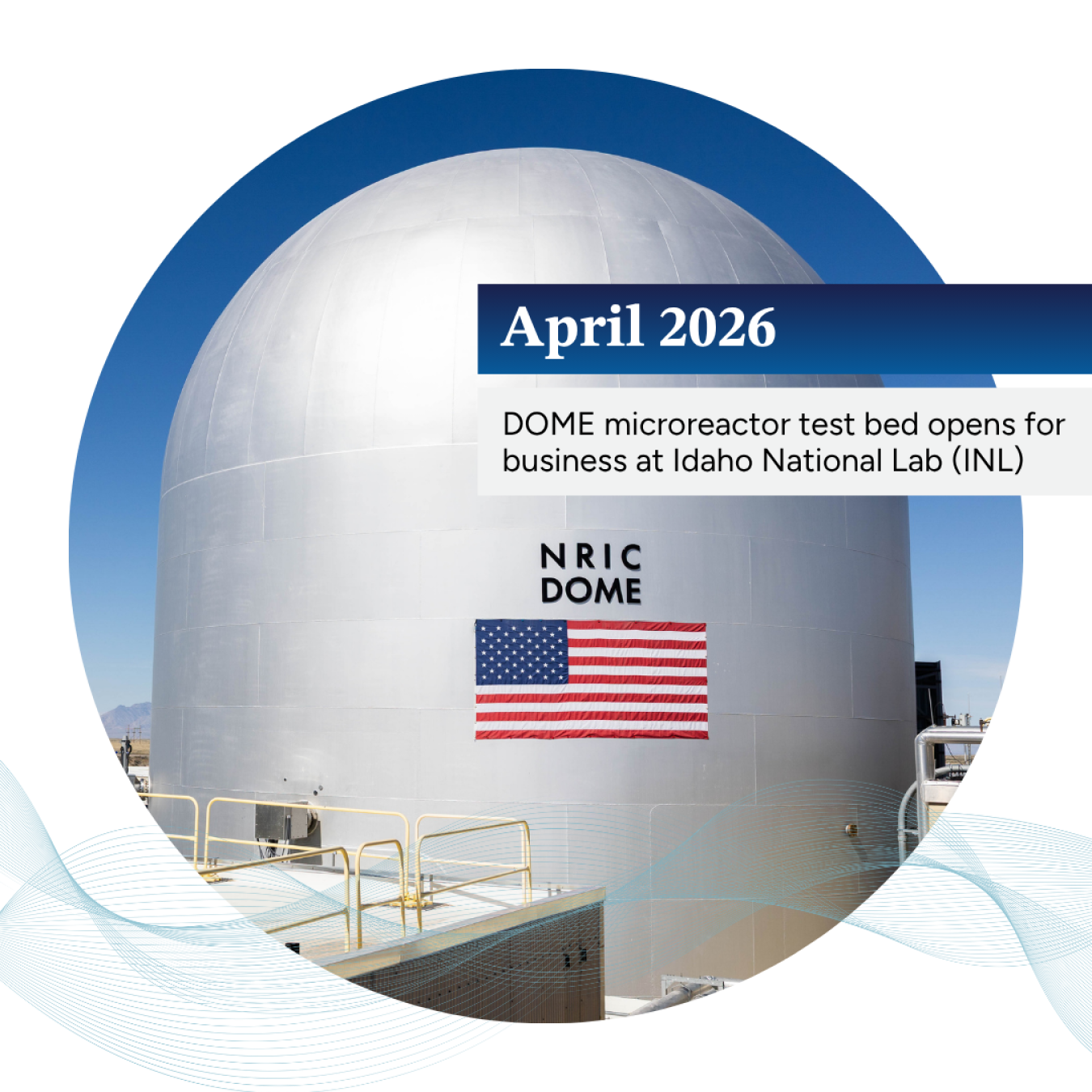
Microreactor Testing
DOME, the world’s first microreactor test bed, opened its doors to advanced reactor developers at Idaho National Laboratory (INL) in April 2026. The facility will provide a safe environment to test experimental reactor concepts and gather performance data that can be used to inform future commercial licensing applications. Radiant is on track to be the first company to test its Kaleidos reactor experiment in DOME in 2026, and the National Reactor Innovation Center (NRIC) is currently seeking additional applicants to conduct testing at the facility in the future.
Launch Pad Ready for Liftoff
In March 2026, DOE and NRIC announced the establishment of the Nuclear Energy Launch Pad. Building on the momentum of the reactor and fuel line programs, Launch Pad was created to help industry demonstrate a wider swath of advanced nuclear technologies on federal and non-federal lands. Launch Pad will foster a robust, innovative ecosystem to support expanded iterative testing, speed up advanced nuclear technology deployment, and help U.S. nuclear companies sprint towards commercialization. Four companies were announced as initial selections in April 2026, and the program is requesting additional applicants through July 2026.
GOAL: Add 300 Gigawatts of New U.S. Nuclear Capacity by 2050
American-Made Gen III+ SMRs
One key takeaway from President Trump’s executive orders was the directive to facilitate increased deployment of new nuclear reactor technologies and expand American nuclear energy capacity from around 100 GW today to 400 GW by 2050.
DOE reached a major milestone in that effort in December 2025, when it selected the Tennessee Valley Authority (TVA) and Holtec Government Services to support early deployments of advanced light-water small modular reactors (SMRs) in the United States. The project teams will receive up to a combined $800 million in federal cost-shared funding to advance initial projects in Tennessee and Michigan. The U.S. Nuclear Regulatory Commission (NRC) is currently reviewing a construction permit application from TVA for a GE-Hitachi BWRX-300 reactor in Oak Ridge.
Eight additional companies were awarded a combined $94 million in May 2026 to address key gaps hindering the domestic nuclear industry. These projects will help deliver new nuclear generation in the early 2030s, strengthen domestic supply chains, and accelerate large-scale deployment of Gen III+ SMRs.
Additionally, in March 2026 the U.S. Department of Commerce announced a major $40 billion energy partnership with Japan to deploy GE Vernova Hitachi (GVH) BWRX-300 SMRs in Tennessee and Alabama. The deal, part of a U.S.-Japan Strategic Investment initiative, aims to provide 3 gigawatts of clean, baseload power to the region.
Finally, NuScale Power received NRC approval for its uprated small modular reactor (SMR) design, making it the second SMR design to be approved for use within the United States.
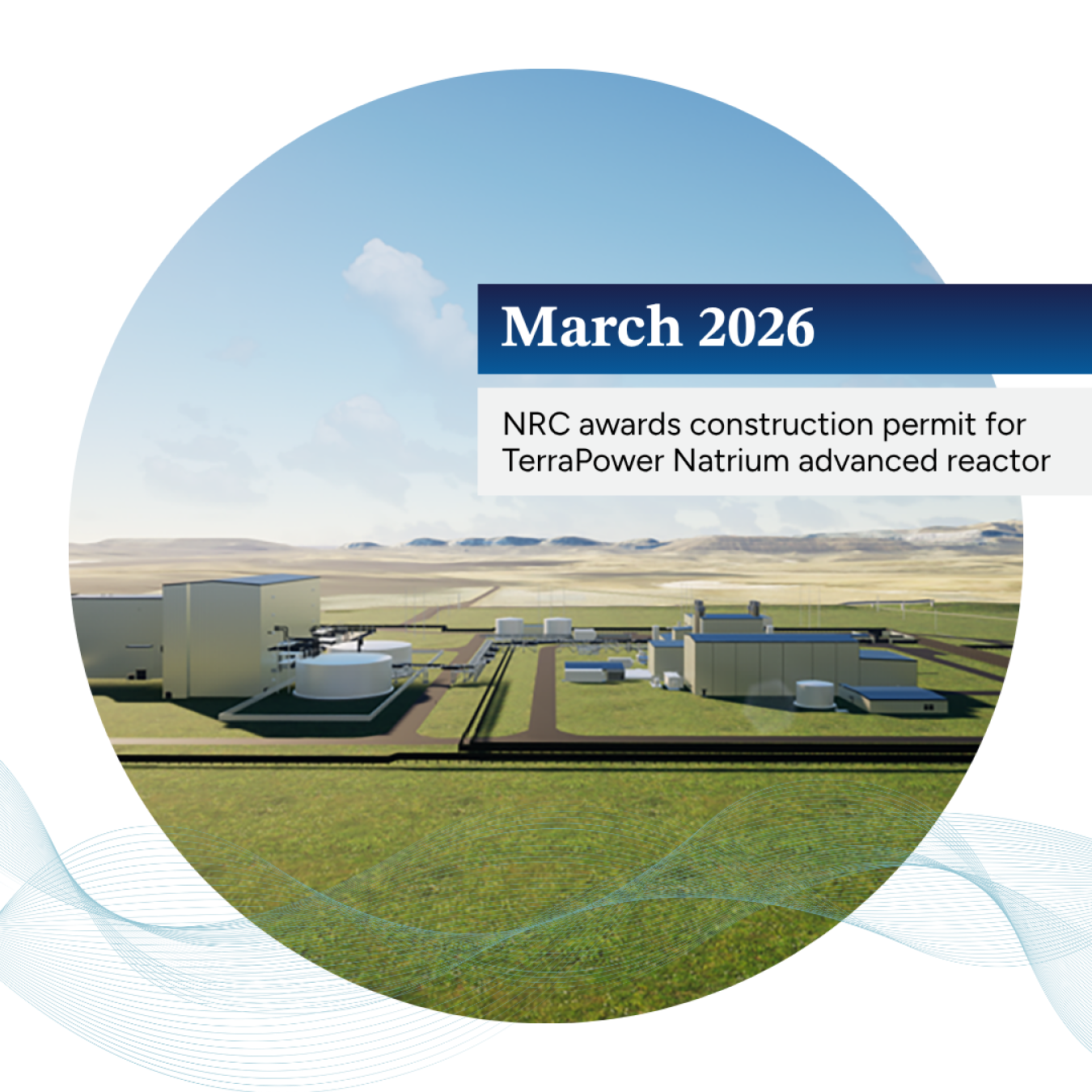
Gen IV Advanced Reactor Demonstration Milestones
Several projects supported by DOE’s Advanced Reactor Demonstration Program (ARDP) reached historic milestones in the past year, including TerraPower’s Natrium fast reactor project in Kemmerer, Wyoming. TerraPower received its construction permit in March 2026 — the first ever issued by the NRC for a commercial non-light-water power reactor — and broke ground on the Natrium plant construction the following month. The NRC is currently reviewing a construction permit application from Dow for an X-energy Xe-100 reactor in Seadrift, Texas. Kairos Power initiated nuclear construction on their Hermes test reactor in May 2025 and broke ground on their Hermes 2 reactor in April 2026. Hermes 2 will be a commercial demonstration of the Kairos Power technology and is Kairos Power’s first deployment under its agreement with Google to develop an advanced reactor fleet.
Restarting American Nuclear Energy
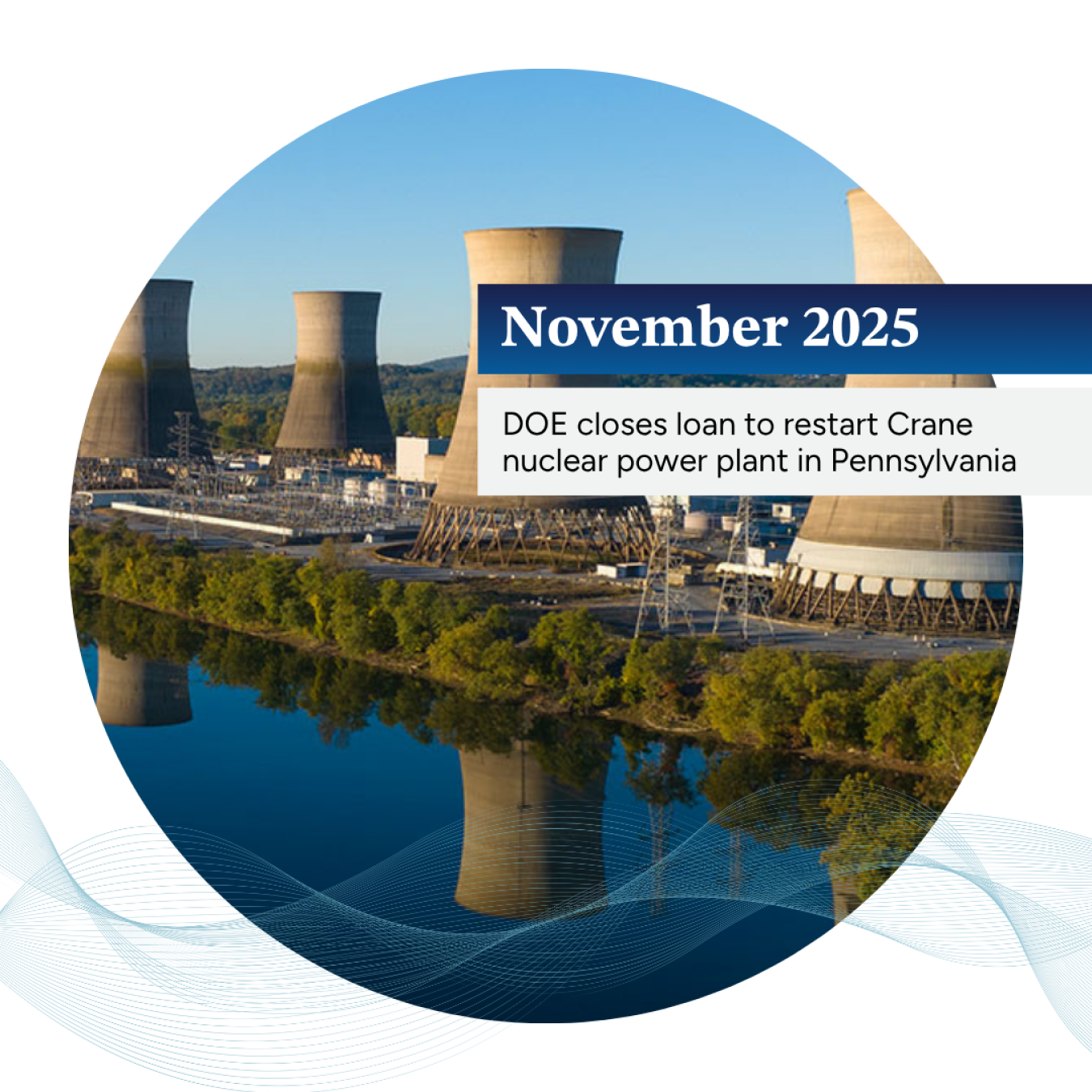
DOE through the Office of Energy Dominance Financing (EDF) continues to issue disbursements of an up to $1.52 billion loan to Holtec to help fund the restart of the Palisades Nuclear Plant in Michigan. Palisades, which ceased operations in 2022, would be the nation’s first nuclear power plant to return to service after entering decommissioning. EDF also closed a $1 billion loan to Constellation Energy Generation in November 2025 to help finance the restart of the Crane nuclear power plant in Londonderry Township, Pa. These loans support President Trump’s executive order Reinvigorating the Nuclear Industrial Base, which directed DOE to prioritize restarting closed nuclear plants as part of a strategy to accelerate nuclear energy development.
UPRISE on the Horizon
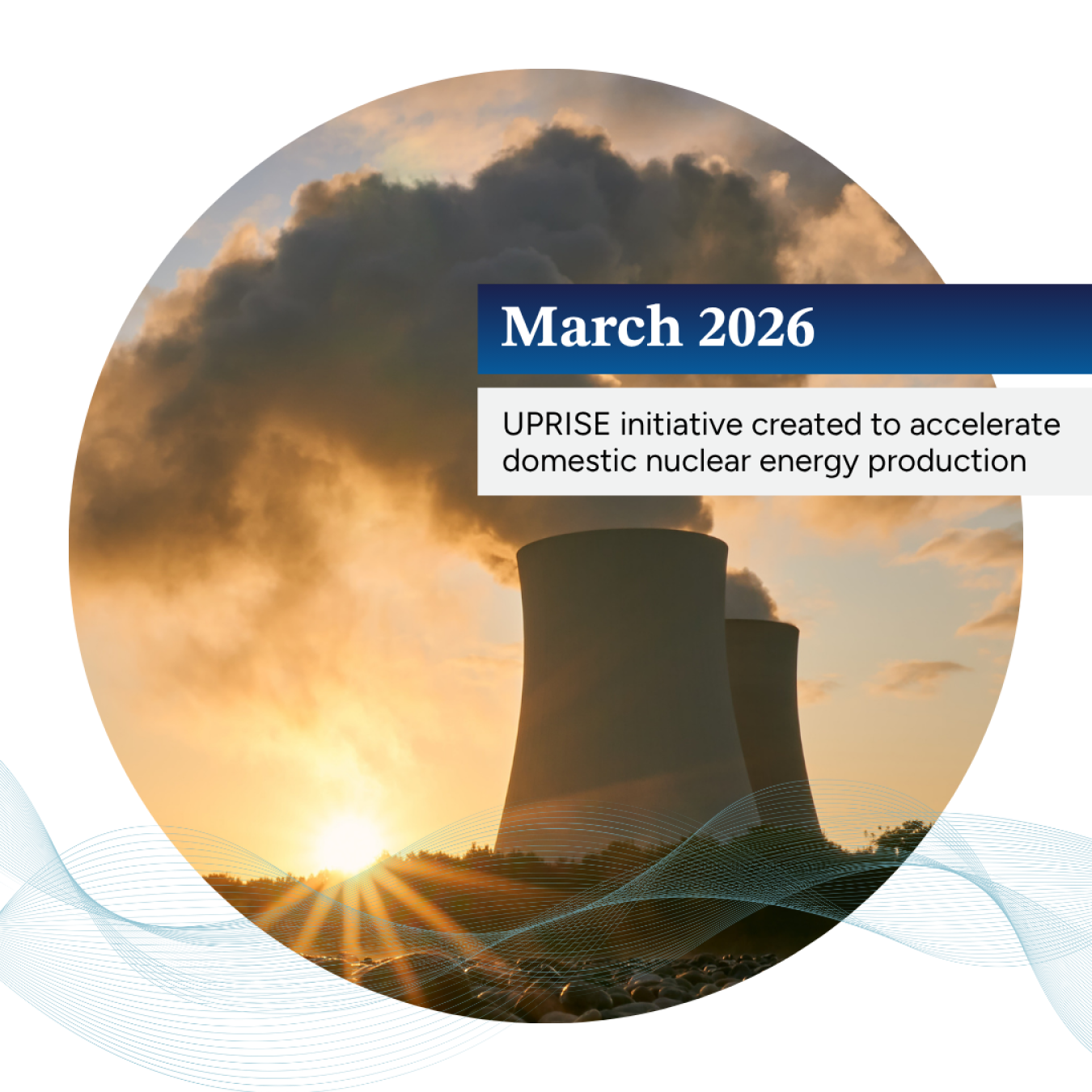
That same executive order also called for DOE to facilitate at least 5 gigawatts of power uprates to existing reactors and have 10 new large reactors under construction by 2030. In response, the Department launched the Utility Power Reactor Incremental Scaling Effort (UPRISE) initiative to accelerate domestic nuclear energy production by leveraging existing nuclear infrastructure.
UPRISE will target the fastest, most cost-effective ways to add more nuclear energy to the grid — including increasing the power output of existing reactors and enhancing plant efficiency — to achieve 2.5 gigawatts of additional nuclear capacity by 2027 and 5 gigawatts by 2029.
This initiative has already seen the planned uprates of six existing reactors at plants Hatch, Vogtle, and Farley to produce a combined 345 megawatts of additional baseload capacity. These uprates are being pursued in addition to license renewals as part of EDF’s $26.5 billion loans to Southern Company across Alabama and Georgia.
Genesis Mission: AI for Nuclear Energy
The Office of Nuclear Energy is harnessing Artificial intelligence (AI) to Deliver Nuclear Energy Faster, Safer, and Cheaper. To achieve this objective, the Office of Nuclear Energy is partnering with industry, academia, and the national laboratories through the Genesis Mission Request for Applications. Through this collaborative framework and with human oversight, NE is leveraging AI to design, license, manufacture, construct, and operate nuclear reactors; secure the domestic fuel supply; and support waste disposition. These efforts are designed to achieve two significant goals: driving a 2x faster delivery timeline for new projects and reducing nuclear plant operational costs by over 50%. This work aims to reduce human error, strengthen national security, and ensure U.S. energy dominance while realizing multi-billion-dollar cost savings per gigawatt of generating capacity.
GOAL: Amp up Domestic Nuclear Fuel Production
Fuel Line Pilot Program
Executive Order 14302, Reinvigorating the Nuclear Industrial Base, called for the federal government to pursue policies to maximize the value of nuclear fuel and expand the domestic nuclear fuel supply chain.
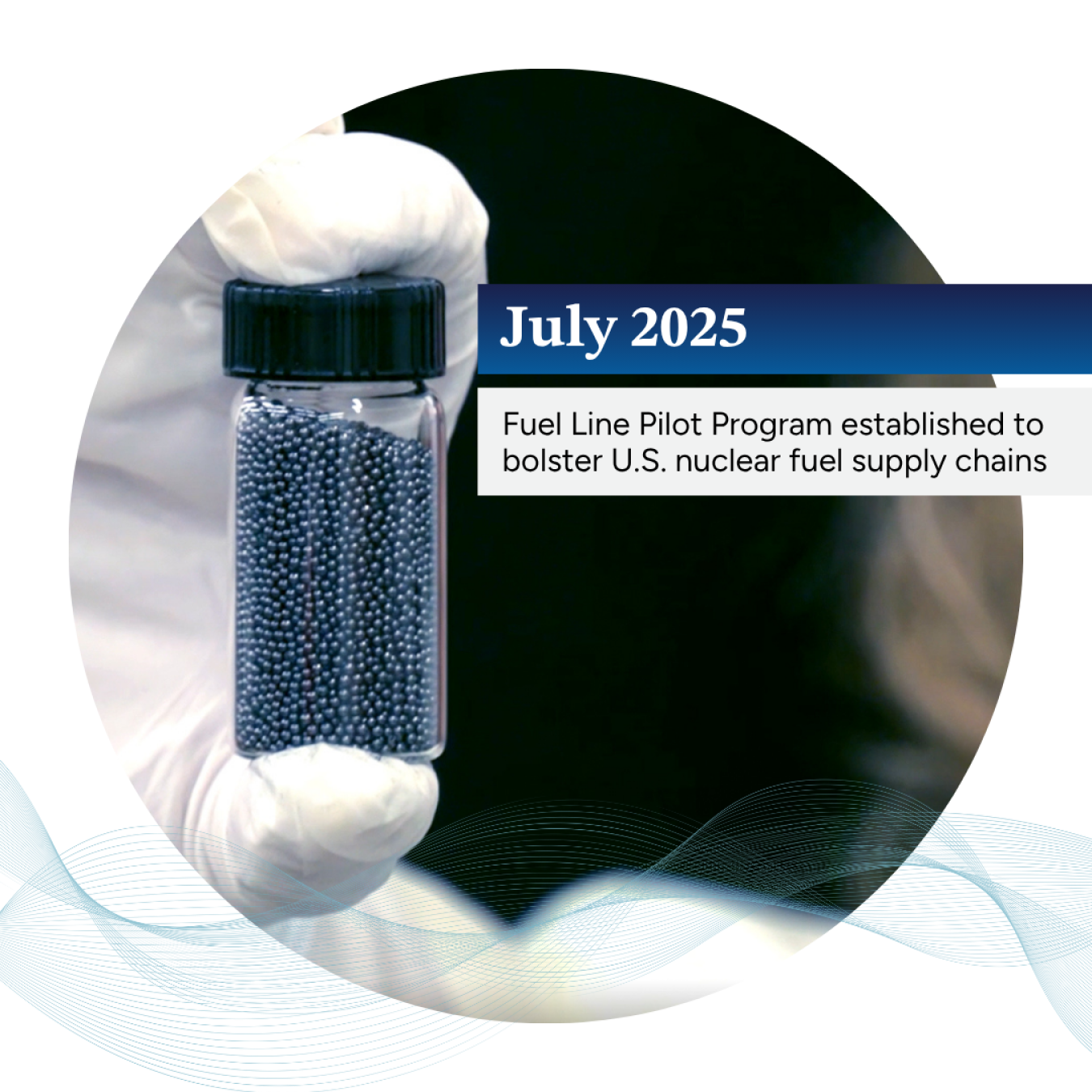
In order to support a new surge of advanced reactor development, DOE established the Fuel Line Pilot Program in July 2025 to enable U.S. companies to develop nuclear fuel production lines needed for advanced reactors. Similar in structure to the Reactor Pilot Program, this effort uses the DOE authorization process to tackle this essential piece of the nuclear energy renaissance.
Fueling America’s Nuclear Future
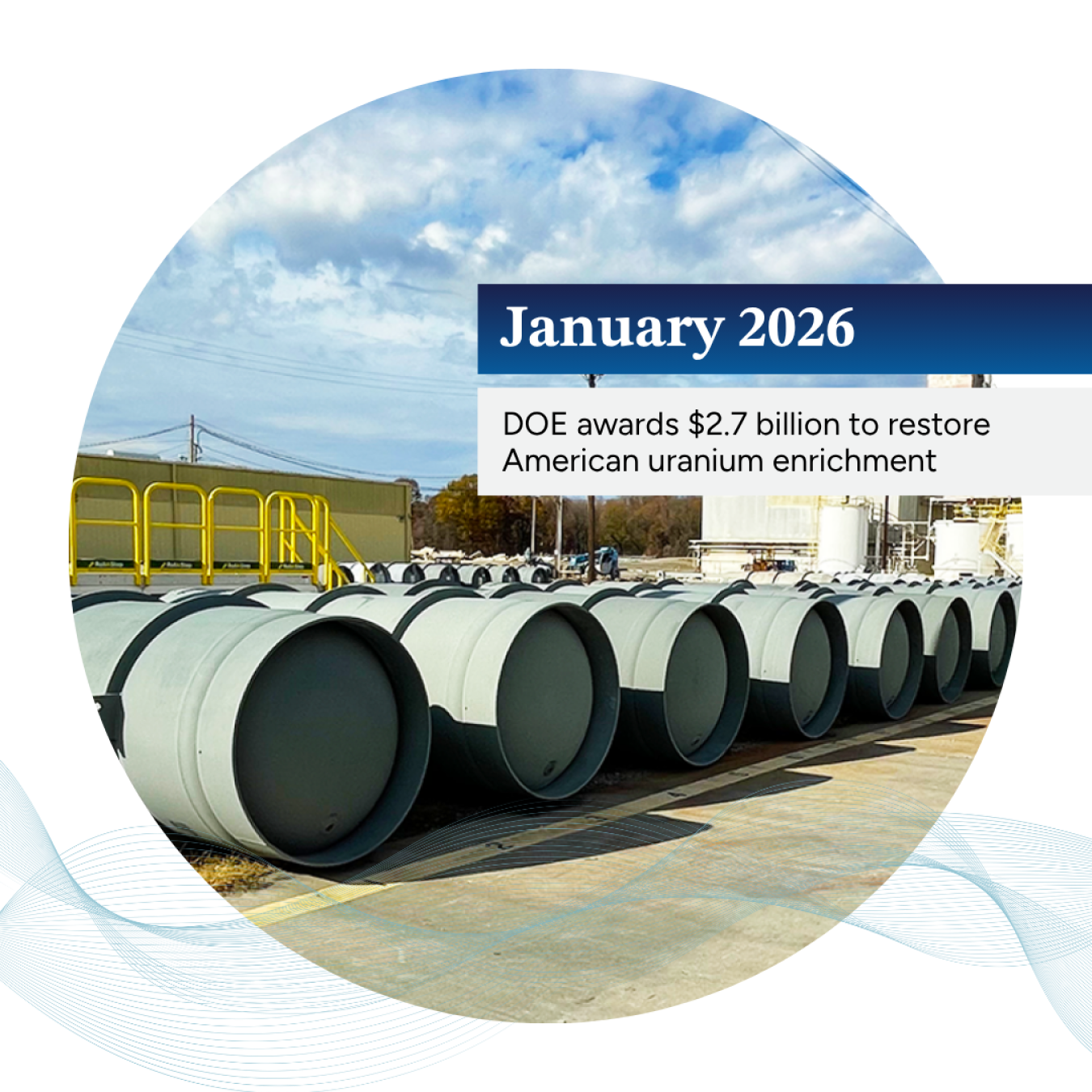
In January 2026, DOE awarded $2.7 billion to boost domestic uranium enrichment capabilities and enhance the long-term resilience of the U.S. nuclear energy industry. The announcement provided $900 million contracts to three companies to provide low-enriched uranium (LEU) and high-assay low-enriched uranium (HALEU) services over the next decade.
The Department also awarded $28 million to continue advancing next-generation uranium enrichment technology for the nuclear fuel cycle. Additionally, $11 million was awarded for HALEU transportation packages to develop long-term, economical solutions for the transportation of HALEU.
In 2025, DOE also issued conditional commitments to eight advanced reactor developers to help meet near-term HALEU demand and finalized three fuel allocation contracts under the HALEU Availability Program, helping ensure access to fuel for the next generation of nuclear reactors. These allocation contracts were also critical to supporting President Trump’s goal of achieving reactor criticality by July 4, 2026. Supporting near-term HALEU availability for American advanced reactor deployment is expected to stimulate sustained long-term demand for domestically produced HALEU.
Together, these historic initiatives support President Trump’s commitment to enhance energy security, reduce reliance on foreign suppliers, expand U.S. nuclear fuel supply capacity and create high-quality American jobs.
Defense Production Act Consortium
The Department also established a consortium under the Defense Production Act (DPA) to address supply chain issues that affect the domestic nuclear fuel cycle by collaborating with industry in ways that have previously been impossible. In April 2026, the DPA Consortium announced an ambitious new initiative involving representatives from more than 90 companies to address all facets of the nuclear fuel supply chain including milling, conversion, enrichment, deconversion, fabrication, recycling, and reprocessing.
GOAL: Deploy U.S. Reactors for AI and Military Bases
Mighty Microreactors
President Trump’s executive order Deploying Advanced Nuclear Reactor Technologies for National Security instructed DOE to provide technical advice to the Department of War (DoW) on the “design, construction, and operation of any advanced nuclear reactor on a military installation.” DOE is working closely with the U.S. Army and the U.S. Air Force to provide support for several efforts, including Project Pele, the Janus program, the Eielson Air Force Base pilot program, and the Advanced Nuclear Power for Installations (ANPI) program.
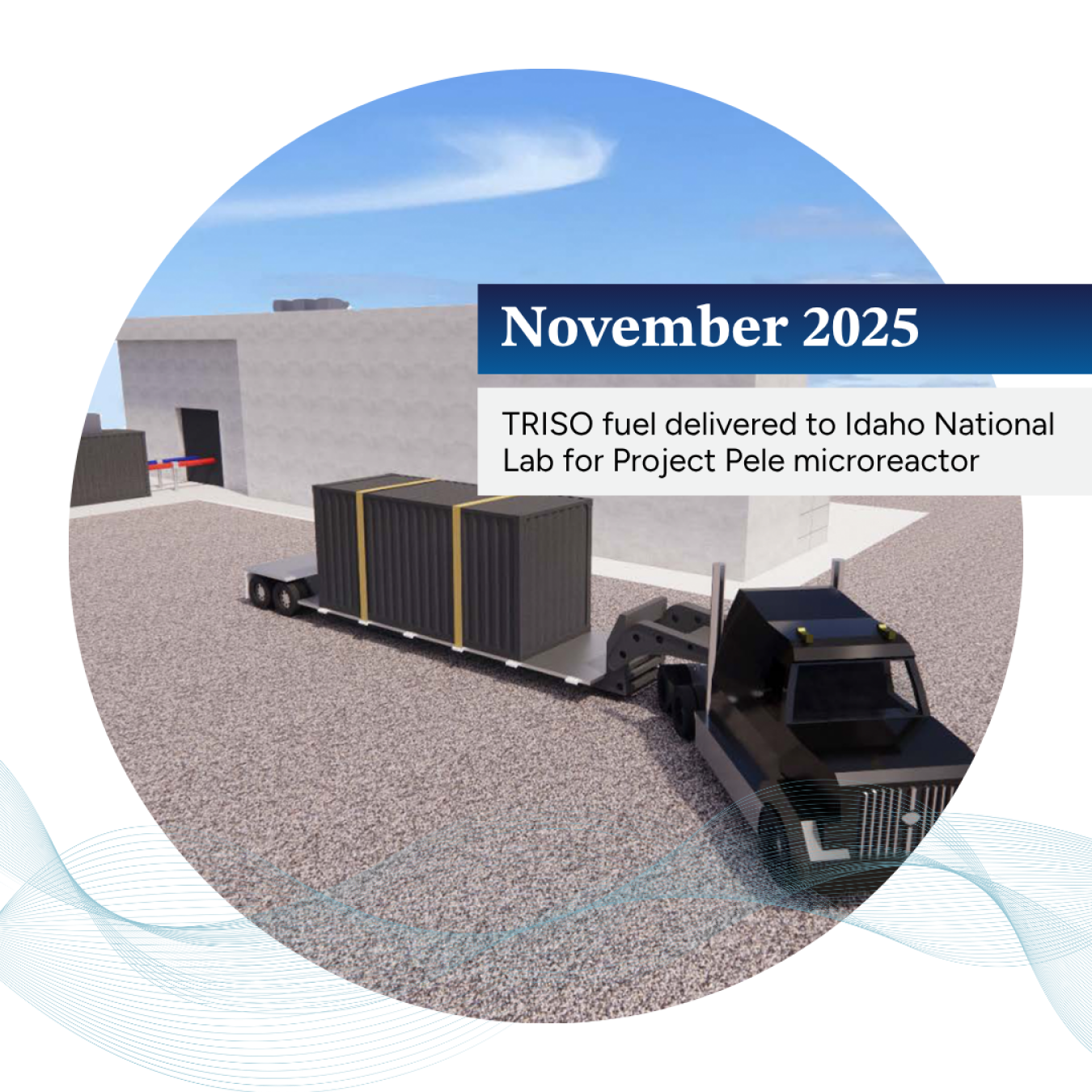
Project Pele is a first-of-its-kind mobile microreactor prototype designed to provide resilient power for military operations. The project is led by DoW’s Strategic Capabilities Office in partnership with BWXT, DOE, and INL. The delivery of advanced nuclear fuel to INL in November 2025 marked a major milestone for Project Pele.
The Janus program was established to deliver secure, resilient, and reliable energy to support national defense installations and critical missions. In November 2025, the Army identified nine installations as potential locations to demonstrate microreactors and is actively reviewing reactor designs for these installations. The Eielson Air Force Base effort is focused on a fixed-site microreactor (up to 5 megawatts) for resilient remote electricity production in the late 2020s, while the ANPI program aims to build fixed on-site microreactor nuclear power systems on select military installations to support global operations across land, air, sea, and space.
Federal Lands for Nuclear Energy and AI
In September and October 2025, DOE issued four Requests for Applications (RFAs) to seek proposals from U.S. companies to build and power AI data centers with nuclear or other energy generation at INL, Oak Ridge Reservation, Paducah Gaseous Diffusion Plant, and the Savannah River Site. The RFAs received strong proposals that will promote American leadership in AI and leverage federal land assets to quickly deploy cutting-edge data centers and energy generation projects.
Nuclear Energy in Space
In December 2025, President Trump signed another executive order, Ensuring American Space Superiority, establishing a U.S. space policy that calls on the development of multiple technologies — including space nuclear energy — to secure the nation’s vital economic and security interests, unleash commercial development, and lay the foundation for a new space age.
DOE is working with NASA to support the EO direction to enable near-term use of space nuclear power by deploying nuclear reactors on the Moon and in orbit, including a lunar surface reactor ready for launch by 2030. In April 2026, DOE and Idaho National Laboratory also issued a request for information to identify and address gaps in the U.S. industrial base for space reactors.
GOAL: Explore Fuel Recycling and Reprocessing
Used Nuclear Fuel Recycling: Back in a Big Way
Less than five percent of the potential energy in nuclear fuel is extracted after five years of operation in a commercial reactor. The United States hasn’t recycled or reprocessed its commercial used nuclear fuels since the 1970s, but under President Trump’s direction, the nation could once again take advantage of this untapped resource.
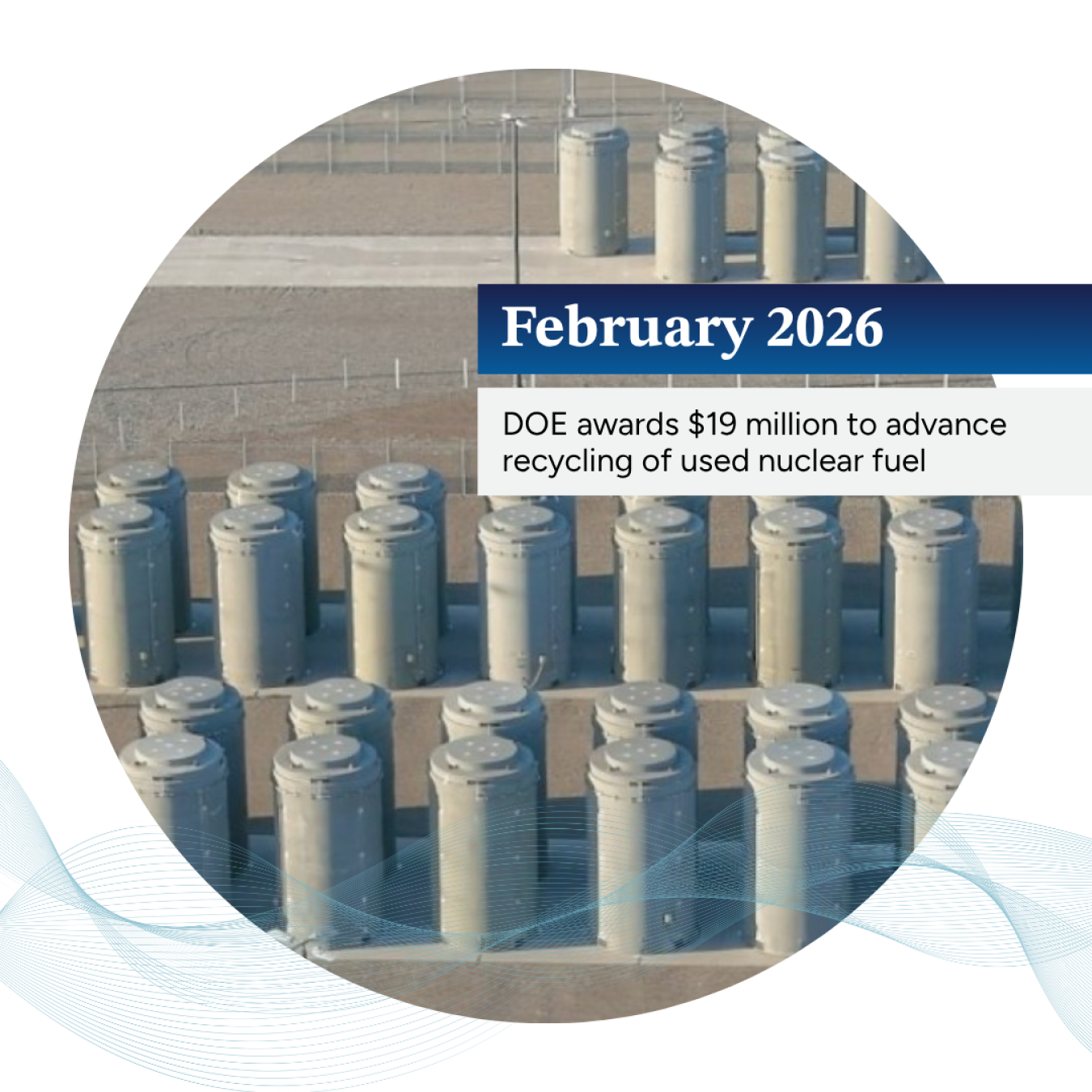
In response to the President’s executive orders, DOE took the historic step of awarding $19 million in February 2026 to five U.S. companies for research and development of recycling technologies for used nuclear fuel. Two months later, DOE’s Office of Nuclear Energy and Office of Environmental Management called for private sector partners to submit proposals to design, construct, and operate nuclear fuel recycling, processing, and fuel fabrication to support the deployment of advanced reactors.
Additionally, in October 2025, the Department issued an RFA to establish a program for making surplus plutonium materials available to industry for advanced nuclear technologies. These projects will support the President’s ambitious nuclear energy agenda by helping to maximize reliable power production, end U.S. reliance on foreign sources of enriched uranium, and drastically reduce the volume of used fuel stored across the country.
GOAL: Bolster the American Nuclear Workforce
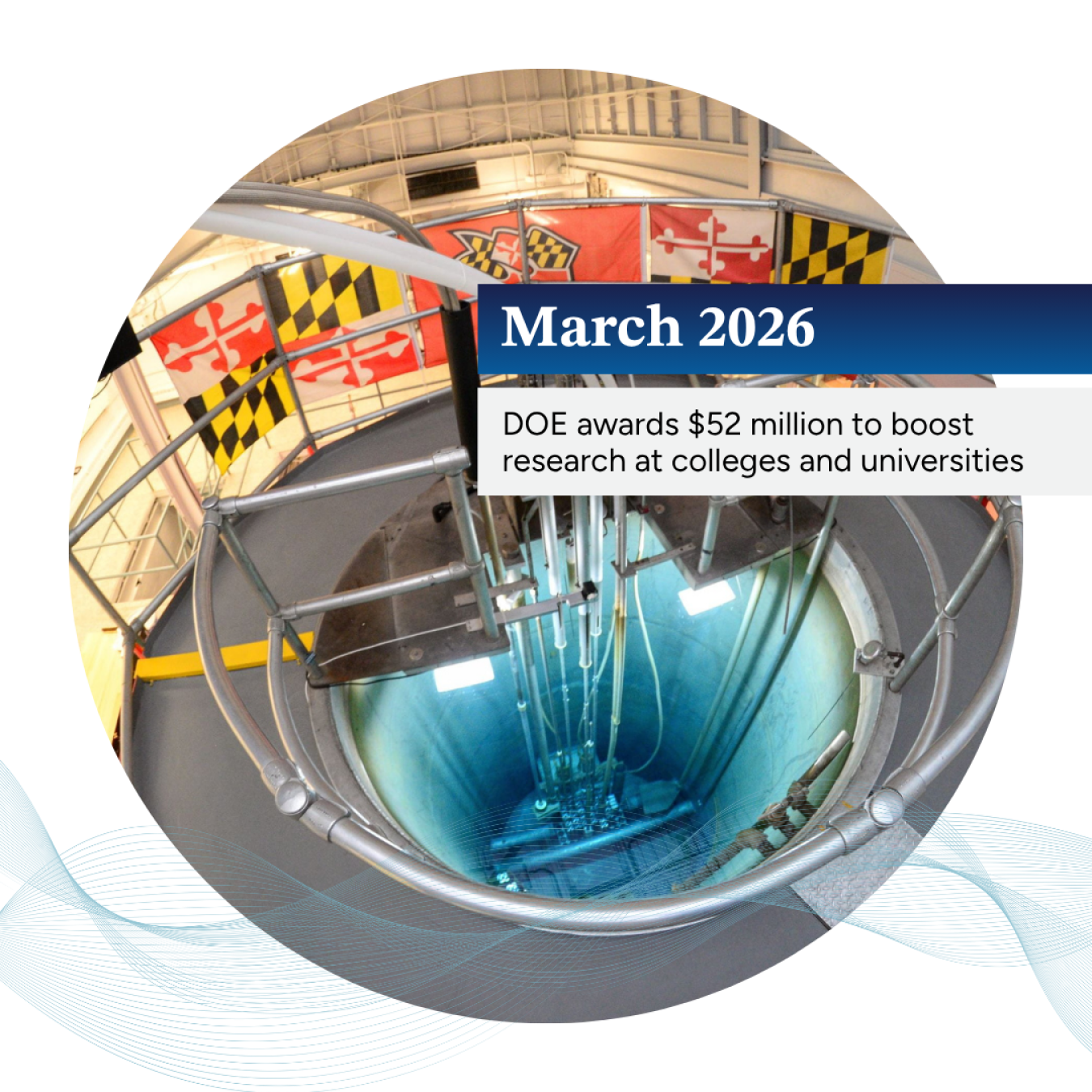
Developing Nuclear Energy’s Leaders of Tomorrow
In 2025, DOE announced 140 student-related awards, including 92 undergraduate level scholarships and 34 graduate level fellowships through the University Nuclear Leadership Program (UNLP) as well as 14 recipients through the Innovations in Nuclear Energy R&D Student Competition, and partnered with the United Kingdom National Nuclear Laboratory to provide existing UNLP graduate fellows the opportunity to tour nuclear facilities and network with nuclear experts across the UK. In May 2026, the latest UNLP Requests for Applications were issued and are open for students to apply for scholarships and fellowships. Further, DOE supported university-led infrastructure projects to strengthen America’s nuclear energy research capabilities and increase nuclear science, engineering, and technology awareness by enabling access to university research reactors.
In December 2025, DOE issued the FY26 university Consolidated Innovative Nuclear Research (CINR), CINR Phase II Continuation, Distinguished Early Career Program, and the Scientific Infrastructure Support Notices of Funding Opportunities (NOFOs). Together, these training opportunities and awards are unlocking access to nuclear energy jobs and careers for students across the nation.
Spotlight on Safety Training
The nuclear energy sector expects unprecedented job growth over the next 25 years. As nuclear power plants continue to extend their lifespan through the renewal of operating licenses, the industry is confronted with an aging workforce and retirements.
In April 2026, DOE awarded $49.7 million to 10 university-led projects that will grow nuclear safety training programs and curricula nationwide through the Nuclear Reactor Safety Training and Workforce Development Program. These awards will help ensure that America’s nuclear energy workers receive robust and rigorous training that promotes the highest standards of safety.
GOAL: Assess Spent Nuclear Fuel Management
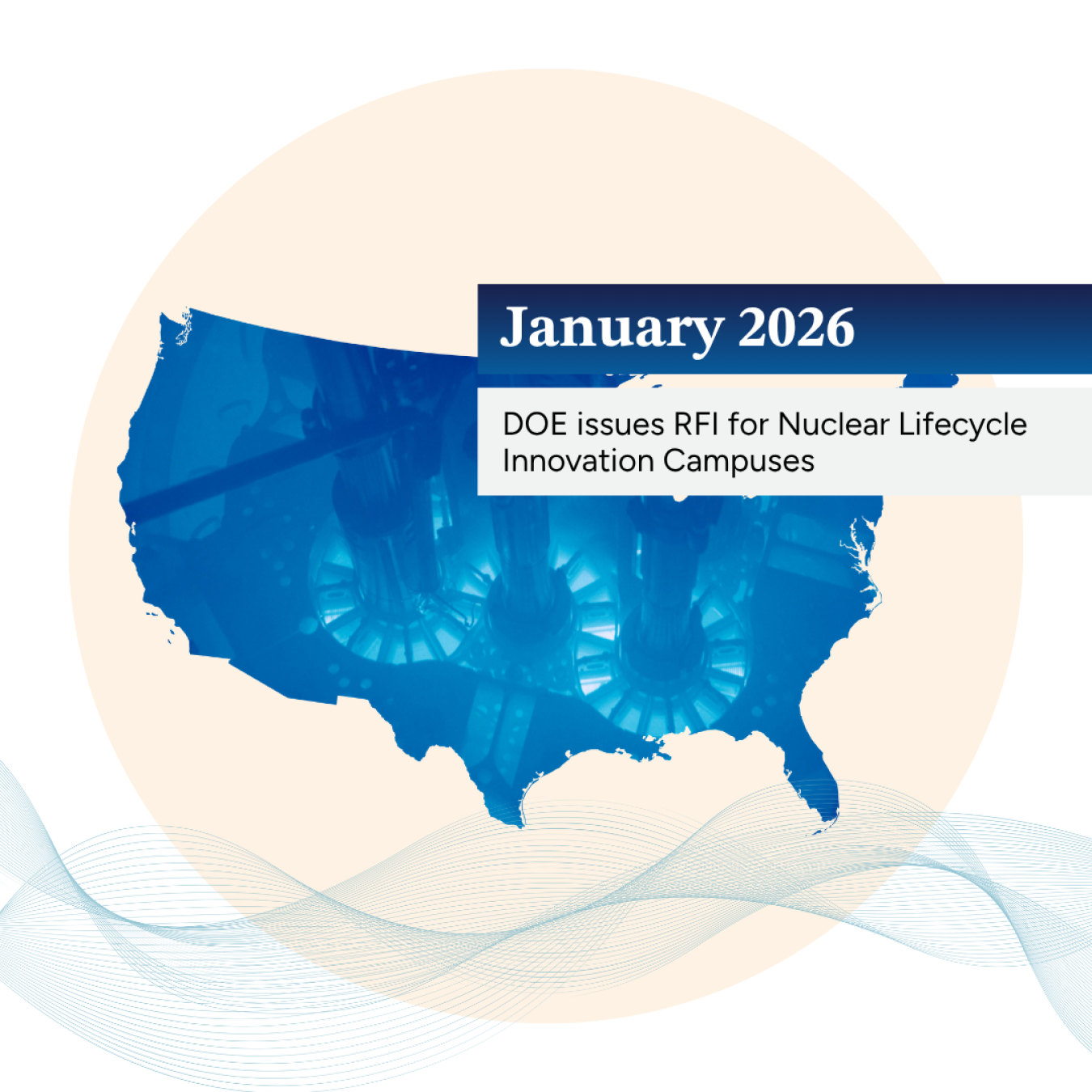
Nuclear Lifecycle Innovation Campuses
In January 2026, DOE released a Request for Information (RFI) inviting states to express their interest in hosting Nuclear Lifecycle Innovation Campuses. The proposed campuses are a new effort to modernize the country’s nuclear fuel cycle and help position the United States as a global leader in nuclear energy.
Innovation Campuses will support activities spanning the full nuclear fuel life cycle, including fuel fabrication, enrichment, reprocessing and the management and disposition of used nuclear fuel and waste. They could also host advanced reactor deployment, power generation, advanced manufacturing or data centers, depending on the state.
More than half of U.S. states responded to the initial RFI, taking the first step toward establishing voluntary federal-state partnerships designed to drive regional opportunity and prosperity and create thousands of high-paying jobs for nuclear scientists, engineers, operators and skilled trades.
What’s Next?
When President Trump’s executive orders set the American nuclear energy renaissance in motion 12 months ago, this Department immediately shifted into high gear.
From day one, the people of DOE have been working at full capacity alongside federal agencies, private industry, the U.S. military, and others to deliver on this bold new vision of a future powered by nuclear energy.
We’ve achieved things no one thought possible in such a short span of time. We’ve seen a wave of enthusiasm and optimism surge into a U.S. nuclear energy industry that was previously starved for progress and strangled by bureaucratic red tape.
And we’ve laid the foundation for the deployment of hundreds of gigawatts of reliable, around-the-clock power that will reinforce and strengthen our electric grid and meet the nation’s growing energy demands.
It has been an unprecedented year for American nuclear energy, but the progress doesn’t stop here.
We’ve got a future to power.