



RSS

Join the January H2IQ Hour on January 26, 2023, at 1 p.m. EST for an overview of the H2NEW (Hydrogen from Next-generation Electrolyzers of Water) Consortium.
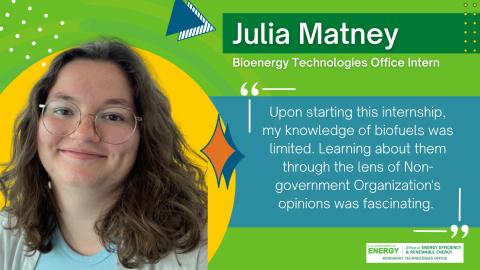
For the last six months, I’ve been learning about the renewable energy industry through a virtual internship with the U.S. Department of Energy’s (DOE) Bioenergy Technologies Office (BETO)...
Precision agriculture offers the possibility of balancing maximum productivity with conserving and protecting the land for future generations, but the challenge has been finding capable tools that can make both goals achievable...
The U.S. Department of Energy (DOE) is committed to using biotechnology and biomanufacturing to improve the lives of Americans and is taking key steps to advance the National Biotechnology and Biomanufacturing Initiative.
An Executive Order (EO) on Advancing Biotechnology and Biomanufacturing Innovation for a Safe, and Secure American Bioeconomy, a major biotechnology initiative in line with the 2012 National Bioeconomy Blueprint, will...
Three projects have been selected for funding under a U.S. Department of Energy (DOE) Bioenergy Technologies Office (BETO) partnership with the Minority Serving Institution STEM Research & Development Consortium (MSRDC).
The U.S. Department of Energy (DOE) Bioenergy Technologies Office (BETO) announced its intent to issue two funding opportunity announcements (FOAs) in early 2023.
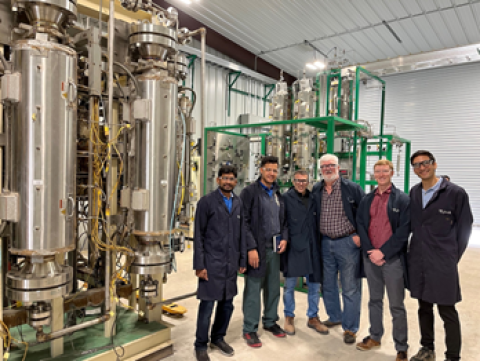
Startup firm Pyran recently took a huge leap forward in the development of its technology to make renewable industrial chemicals, achieving an extraordinary 1,000-times scaleup of its reactor in a single step.
This November, the U.S. Department of Energy Hydrogen and Fuel Cell Technologies Office celebrates Native American Heritage Month by spotlighting two important individuals who work tirelessly in the energy sector for the benefit of their communities.
The Hydrogen and Fuel Cell Technologies Office (HFTO) encourages graduate students to apply to the Graduate Education for Minority Students (GEM) fellowship program.