



RSS


Three teams have been selected as finalists from the 2022 Wood Heater Technology Slam to advance to the 5th Wood Heater Design Challenge. The Technology Slam was held in September 2022 and allowed teams to pitch innovative wood stove ideas to retailers...
With these awards, nine winning teams will each receive $60,000 for their early-stage concepts for novel hydrogen production technologies.
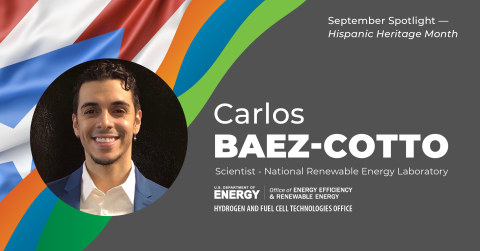
In celebration of National Hispanic Heritage Month, the Department of Energy’s (DOE’s) Hydrogen Program is spotlighting Carlos Baez-Cotto, a scientist at the National Renewable Energy Laboratory (NREL).
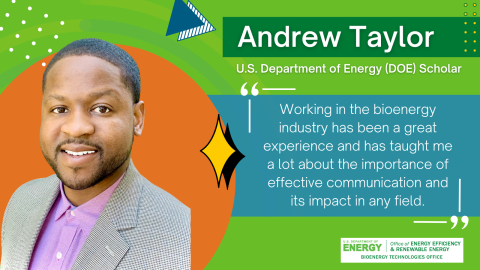
I never thought I would find myself working in the bioenergy industry. I majored in business and graphic design and have always been interested in renewability and cleantech, but I never thought my skills would be applicable in a science-related field.
To achieve SAF Grand Challenge goals, an interagency team worked with government agencies, and partners from national labs, universities, non-governmental orgs, and aviation, agricultural, and energy industries to create the SAF Grand Challenge Roadmap.
A panel of expert judges has selected nine teams as finalists in the U.S. Department of Energy Bioenergy Technologies Office’s (BETO) Wood Heater Design Challenge (WHDC). The finalists will now advance to this year’s Technology Slam...
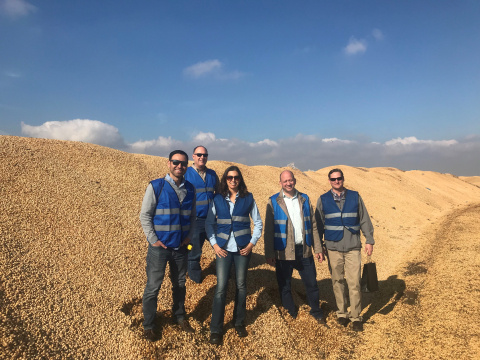
New analysis outlines steps for turning piles of waste into a potentially powerful solution to lower one company’s carbon footprint.
U.S. Secretary of Energy Jennifer Granholm is hosting her counterparts from energy ministries across the world in Pittsburgh, September 21–23, 2022 for the Global Clean Energy Action Forum.
This just-announced amendment to a funding opportunity aims to support the development of nuclear plant thermal integration that would be required for high-temperature hydrogen production or hydrogen-coupled end uses for nuclear energy.
The Hydrogen and Fuel Cell Technologies Office now has a hiring page with several current open positions for technical experts to assist with the office's hydrogen production, fuel cells, and technology acceleration efforts.