



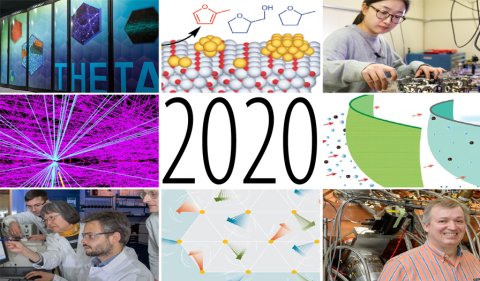
The most popular posts of the year shared by the Office of Science.

Jeffrey Newman is improving methods for determining the distances to the stars, for ongoing and future dark energy experiments.

Nate McDowell studies tree life and death during droughts, showing how vegetation death plays a major role in the global carbon cycle.

The question of how the proton – one of the building blocks of the universe – is constructed drives nuclear physicist Kawtar Hafidi’s research.

U of Pennsylvania physics professor Christopher Mauger measures neutrino properties, investigating the transformation of neutrinos between types.
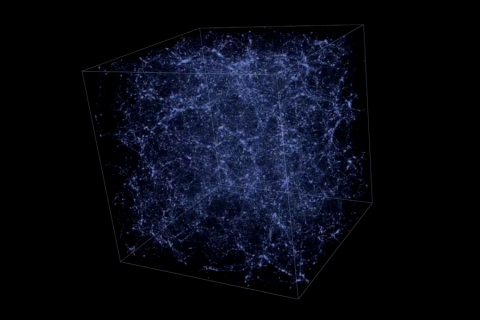
The Office of Science has been investing in applied math and computational science for 40 years, leading to world-class infrastructure and research.
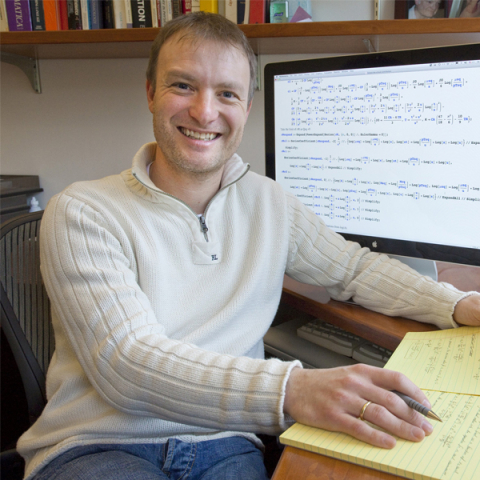
Large data sets require software specifically written to increase precision. Christian Bauer develops that software for new physics discoveries.

Producing lead selenide quantum dot films by atomic layer deposition is paving the way to new applications in nanoscale materials.

Virginia Tech’s Patrick Huber is modeling reactor neutrino fluxes, improving our understanding of neutrino properties and their role in the cosmos.
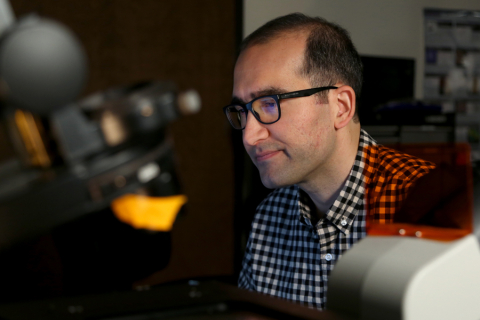
“Electric bacteria” pass electrons through cell walls to solid minerals outside the cell. El-Naggar studies how and why this amazing process happens.