



Perumalla’s work on reversible computing is overcoming challenges in exascale computing.
At the Center for Nanophase Materials Sciences, Director Karren More leads her team in pushing the known edge of nanomaterials research.
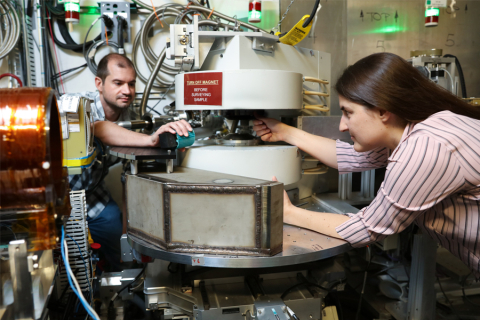
When nuclear scientists use different techniques to measure the neutron lifetime, they get different results. Could this be pointing to new physics?
University of Nebraska-Lincoln’s Martin Centurion is capturing images of molecules in real time, on a timescale of less than a trillionth of a second.
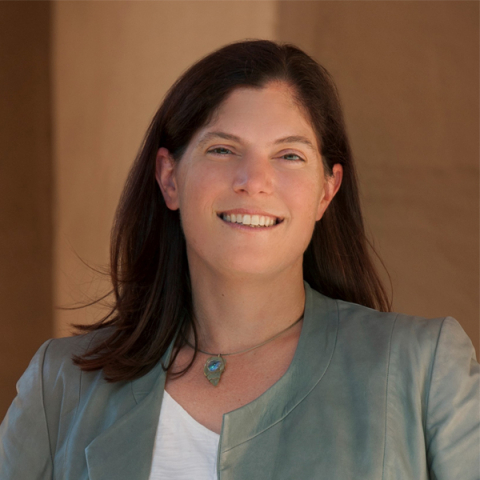
Studying microorganisms from extreme environments is leading to new, multi-disciplinary approaches towards understanding microbial symbiosis.

Over the course of two decades, Chris Polly has been investigating the difference between measurement and theory in muons, a fundamental particle.
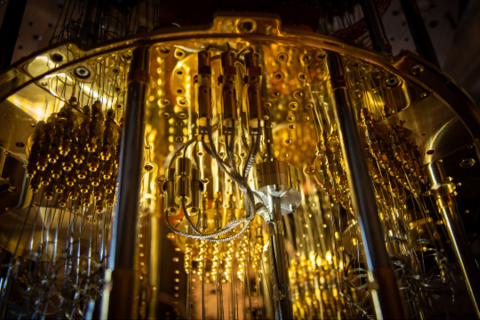
Exascale and quantum computers both offer the potential to transform scientific research. But they’re also complementary technologies.
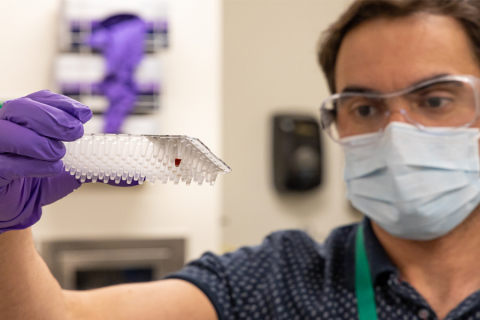
The NVBL is bringing the national laboratories together to tackle the pandemic.
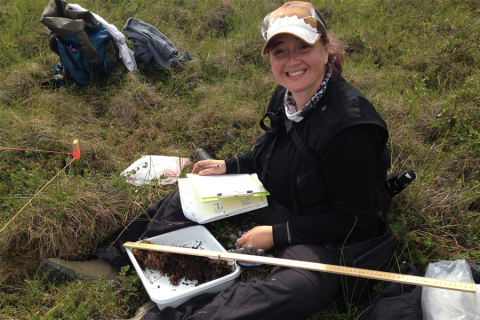
Plant roots are just as essential to ecological systems as the parts above ground. Colleen Iversen works to understand these dynamics.
Athena Safa Sefat focuses on superconductors to understand the design of quantum materials, to predict the next generation of materials.