



Susannah Tringe studies complex interactions among microbes, nutrients, water, and other features to better understand greenhouse gas emissions.
University of Minnesota professor Paul Dauenhauer is developing methods for converting non-food biomass into fuels, chemicals, and materials.
Aaron S. Chou’s search for holographic noise has led to more precise studies of galactic dark matter and quantum information science devices.

Timothy Bertram is studying how atmospheric chemistry regulates the concentrations of air pollutants, greenhouse gases, and aerosol particles.
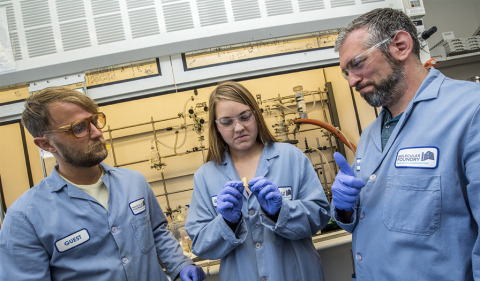
Better understanding plastics’ underlying chemistry may revolutionize how we use these ubiquitous materials.

Suzanne Lapi heads a research group focused on the radiochemistry and development of production techniques of isotopes for medical imaging and therapy
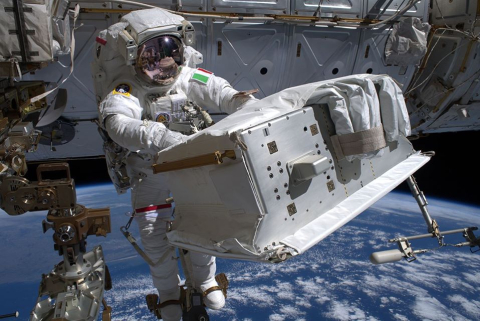
The DOE’s Office of Science is collaborating with NASA to bring our space research to new heights.

Ryan Hayward studies organic polymers and molecules that conduct electricity.

Daniel Frederickson studies metallics to develop strategies for creating materials able to merge different functional domains at the nanometer scale.

The Office of Science has led the Department of Energy’s research and development efforts to respond to COVID-19.