



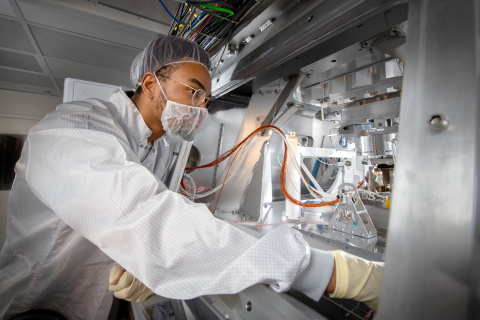
Pioneering technique key to economic security, national defense, and computing breakthroughs of the future.
The Office of Science Advisory Committee has published the Genesis Mission Frameworks for AI-Accelerated National Breakthroughs report.
Quantum computing is becoming a revolutionary tool for scientific discovery.

With a twist between layers of graphene, scientists supported by the DOE’s Office of Science created the foundation for twistronics.
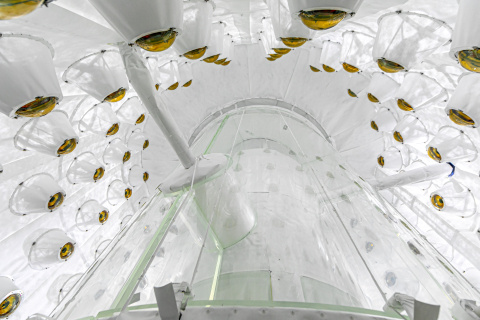
The LUX-ZEPLIN experiment observed an unusual particle interaction, but researchers will need more data to confirm.
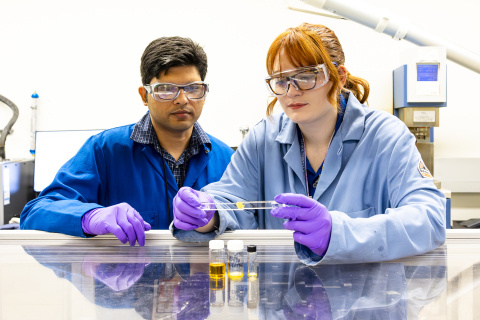
When exploring how to break down waste plastic, researchers at DOE’s Oak Ridge National Laboratory created a material with a surprising application.
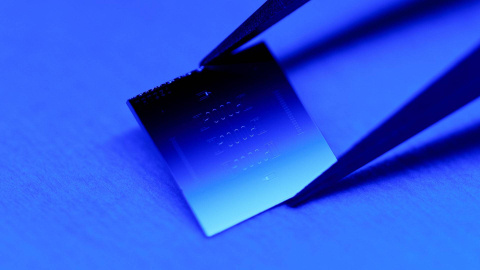
How the Department of Energy’s support for basic research in 1985 set the foundation for today’s quantum technology.
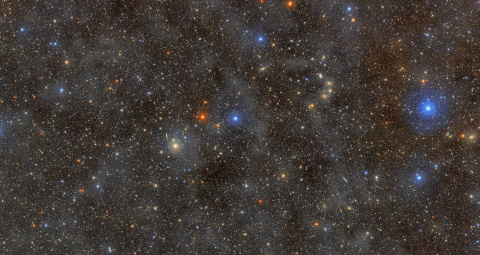
The 10-year Legacy Survey of Space and Time has officially started, marking the beginning of a new era in astronomy and astrophysics
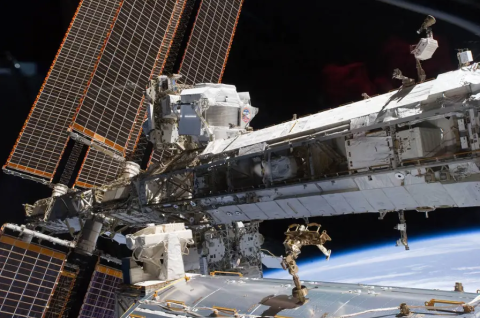
The Alpha Magnetic Spectrometer (AMS-02) on the International Space Station is revealing new insights into our universe.

This entry in the Basic to Breakthrough series describes how the Department of Energy has supported stellarator designs that could help harness the power of the stars here on Earth.