



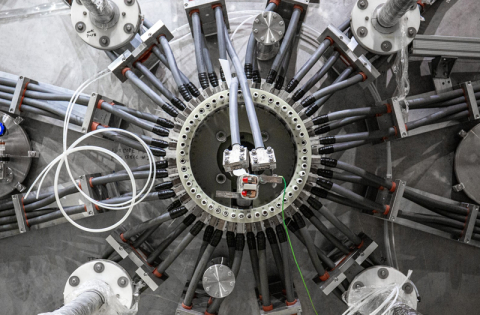
A new experiment at DOE’s Princeton Plasma Physics Laboratory will provide insight into a fundamental process in plasma.
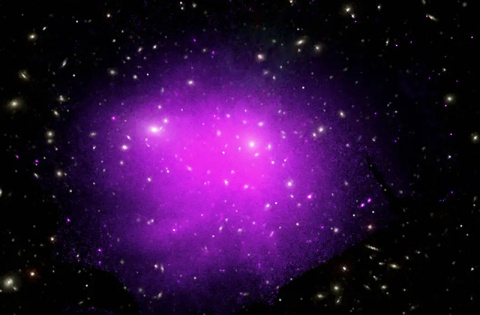
Scientists compared data on galaxy clusters from simulations and telescopes to check if the observed data is representative enough to test theory.
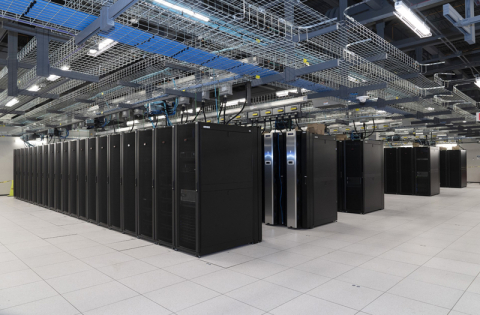
Turning a long-standing user facility into a data center helped increase space at Brookhaven National Laboratory while saving money and materials.

Silviu Covrig Dusa developed technologies to make precision measurements at subatomic scales possible in the search to answer fundamental questions.
Office of Science Director Berhe and national laboratory scientists discuss what the NCA5 is and its importance.
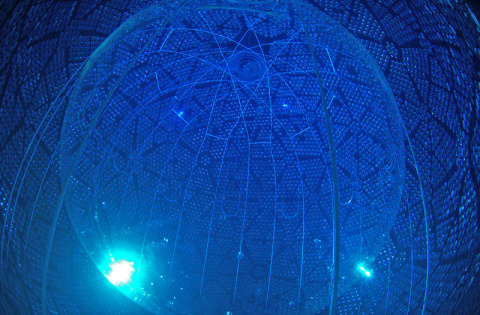
While the SNO+ experiment is focused on particle physics, it has also revealed insights into using neutrinos for nuclear non-proliferation.
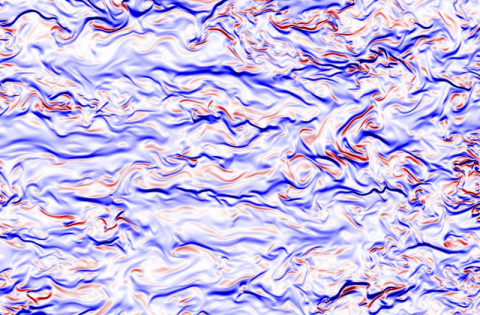
A new, more precise model of turbulence is helping scientists better understand how heat moves through the ocean.

A new approach to materials by Joshua Zide and his team turns semiconductors into nanocomposites with different properties and new applications.

Snowpack in mountains acts as water storage for downstream communities. They could face low-to-no snow winters under certain emissions scenarios.
The Office of Fusion Energy Sciences, at DOE's Office of Science, announced the release of its vision, Building Bridges: A Vision for the Office of Fusion Energy Sciences, during the Fusion Energy Sciences Advisory Committee hearing on December 13, 2023.