



RSS
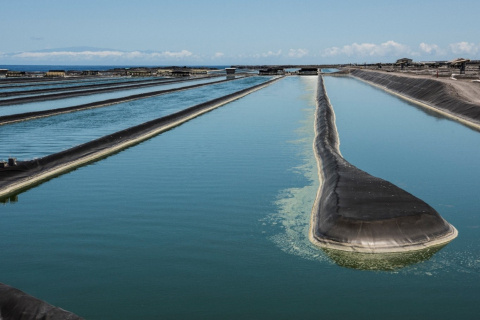



A new report from the U.S. Department of Energy (DOE) national laboratories investigated the economic and environmental implications of siting and deploying large-scale microalgae farms for cultivation and conversion to biofuels and bioproducts. The report, “Economic, Greenhouse Gas, and Resource Assessment for Fuel and Protein Production from Microalgae: 2022 Algae Harmonization Update,” was developed by Argonne National Laboratory, National Renewable Energy Laboratory, and Pacific Northwest National Laboratory, with funding from DOE’s Bioenergy Technologies Office (BETO).
The U.S. Department of Energy (DOE) announced awards for the FY24 Phase I Release 2 of the Small Business Innovative Research (SBIR) and Small Business Technology Transfer (STTR) program. Across DOE, 229 projects in 39 states received $52 million to pursue energy research and development (R&D), and eventual demonstration projects. The Bioenergy Technologies Office (BETO) selected 13 small businesses working to accelerate bioenergy R&D as part of this announcement. The companies, located across 10 states, have been selected to receive up to $206,500 each for this Phase I SBIR award. Of the 13 BETO awards, six are first-time awardees, four are located in Historically Underutilized Business (HUB) Zones, two are in socially and economically disadvantaged areas, and one is a woman-owned business.
Join our monthly H2IQ Hour webinar on July 25, 2024, at 12 p.m. ET for an update on the National Renewable Energy Laboratory's Advanced Research on Integrated Energy Systems (ARIES) hydrogen system research.
The U.S. Department of Energy (DOE) Bioenergy Technologies Office’s (BETO’s) Feedstock-Conversion Interface Consortium (FCIC) today announced their intent to issue an Industrial Partnership Call (IPC) to allow collaboration between industry stakeholders and FCIC researchers. These partnerships will address the cost and risk impacts of feedstock and process variability across the bioenergy and bioproducts value chain.
Since being selected as finalists for AlgaePrize 2023–2025, student teams from across the country have been rolling up their sleeves to turn smart research proposals into results. Now only approximately 5 months into the competition, the U.S. Department of Energy Bioenergy Technologies Office (BETO) is thrilled to celebrate the progress they have already made.
As a recent college graduate, Javier Santana was working in the petrochemical industry when he decided to make a career change. Seeking more opportunities for innovation, he turned to biomanufacturing — a growing industry that uses microbes to create chemicals, fuels, materials, and food products.
The U.S. Department of Energy (DOE) Bioenergy Technologies Office (BETO) has released a Request for Information (RFI) on Renewable Propane Production Technologies and Uses to better understand the supply chains for production and uses of renewable propane and other renewable gaseous intermediates. Specifically, this RFI (DE-FOA-0003389) seeks input from industry and other stakeholders who produce, or are considering producing, renewable propane on the potential to increase its viability to pursue new production pathways to sustainable aviation fuels and other high-impact products.
The U.S. Department of Agriculture (USDA) has released the Production of Biofuel Feedstocks using Climate-Smart Practices Request for Information (RFI). The purpose of this RFI is to understand procedures for quantifying, reporting, and verifying the effect of climate-smart farming practices on the emissions associated with U.S.-grown biofuel feedstock crops.
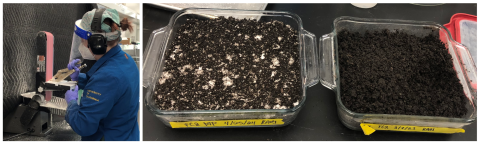
A new study from a U.S. Department of Energy (DOE) Bioenergy Technologies Office (BETO) funded startup, Algenesis Corporation, has demonstrated the ability to formulate high quality polyurethane products, including waterproof fabrics and cell phone cases, that generate no persistent microplastics. By utilizing some clever chemistry and sourcing oil from algae instead of petroleum, they can produce polyurethane plastics that biodegrade naturally in the environment.
The U.S. Department of Energy (DOE) Bioenergy Technologies Office’s (BETO) Chemical Catalysis for Bioenergy Consortium (ChemCatBio) is made up of more than 120 researchers across eight DOE labs. Each researcher has their own story.