



RSS



The potential funding will focus on advancing technologies for hydrogen production, hydrogen infrastructure, and fuel cells, as well as demonstrating hydrogen and fuel cells in new, high-impact applications.
Emerging bioenergy technologies are transforming the foundation of our lives, everything from clothing to plastics to fuels. Through biotechnology and biomanufacturing, biomass across the United States can be converted into new materials and provide an alternative to petroleum-based production for fuels and products. The U.S. Department of Energy’s (DOE’s) Bioenergy Technologies Office (BETO) is doing its part to strengthen America’s bioeconomy and supply chain to support energy innovation.
The U.S. Department of Energy (DOE) announced awards totaling $142 million for small businesses through DOE’s Small Business Innovation Research (SBIR) and Small Business Technology Transfer (STTR) Phase II funding. Across DOE, 123 projects in 34 states received funding to pursue energy research and development projects. The average Phase II award is $1.1 million for a period of two years.
The second release of FY 2024 Phase II Small Business Innovation Research and Small Business Technology Transfer awards includes 15 projects selected by the Hydrogen and Fuel Cell Technologies Office for R&D of hydrogen and fuel cell applications.
The U.S. Department of Energy (DOE) Bioenergy Technologies Office (BETO) is overseeing a call for industry partnerships to connect industry stakeholders with the capabilities of the Feedstock-Conversion Interface Consortium (FCIC). This funding opportunity will provide resources that allow partners to collaborate with FCIC researchers to address the cost and risk impacts of feedstock and process variability across the bioenergy and bioproducts value chain.
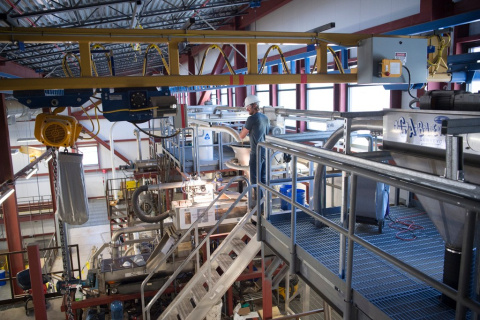
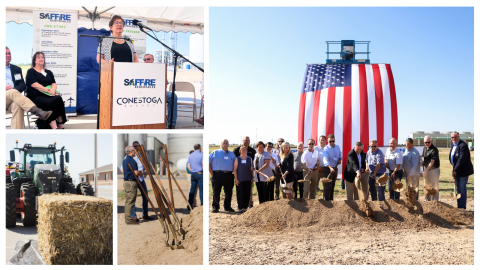
SAFFiRE Renewables Fuel broke ground on a pilot plant that represents a firm step toward meeting the goals of the Sustainable Aviation Fuel (SAF) Grand Challenge. The SAFFiRE plant, located at Conestoga Energy’s Arkalon Energy facility in Liberal, Kansas, will ultimately be capable of processing 10 tons of corn stover daily, yielding cellulosic ethanol that can be upgraded into SAF with a carbon footprint at least 83% lower than conventional jet fuel. In 2021, the U.S. Department of Energy's (DOE's) Bioenergy Technologies Office (BETO) provided initial funding for the plant, which Southwest Airlines matched.
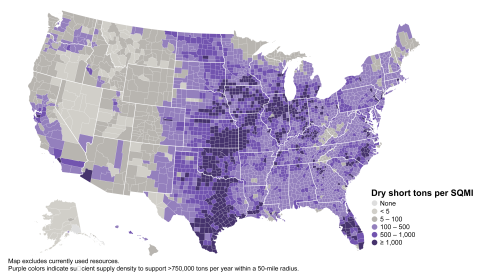
Stakeholders, such as farmers, industry, and local, regional, and national planners, have a powerful, free, and easy-to-access data portal at their command to unlock the power of bioenergy: the U.S. Department of Energy’s (DOE’s) Bioenergy Knowledge Discovery Framework, or BioenergyKDF. The portal, stewarded by Oak Ridge National Laboratory (ORNL) for DOE’s Bioenergy Technologies Office, is the nation’s premier source of information on biomass potential, providing high-quality data that can guide funding in support of a robust bioeconomy with low-carbon energy sources.
DOE's Office of Fossil Energy and Carbon Management announced $8.8 million for 11 university-based research and development projects to improve the performance of hydrogen-fueled turbines.
Seaweed, in its many forms, serves distinct purposes. It’s a vitamin-rich snack, with many health benefits. In the water, it provides a safe habitat for sea creatures, absorbing gases and nutrients like carbon dioxide, nitrogen, and phosphorous. It’s even used as an extra ingredient in ice cream, thickening it and preventing ice crystals from building up.
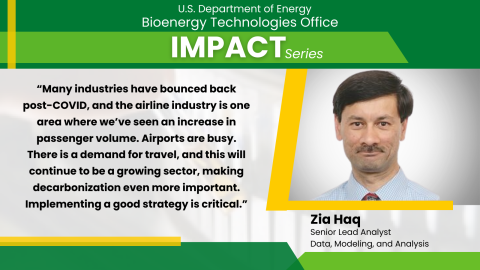
Accelerating emissions reduction targets and building a renewable future across the aviation industry are key priorities for the U.S. Department of Energy’s (DOE’s) Bioenergy Technologies Office (BETO).