



RSS

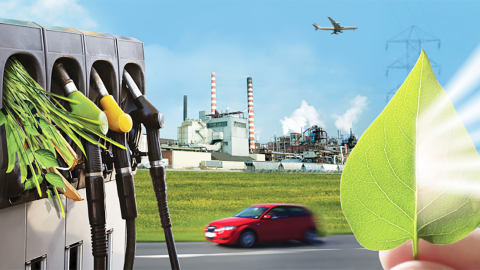
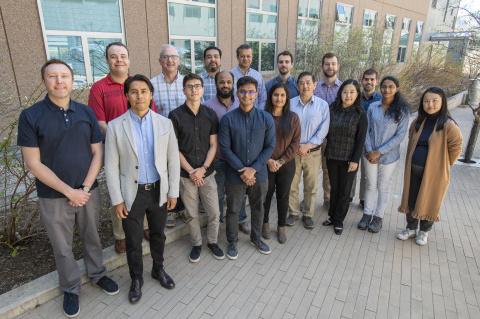


The U.S. Department of Energy’s (DOE) Office of Technology Transitions (OTT) announced $41.4 million in federal funding for 50 impactful projects across 17 National Laboratories to propel energy solutions. The funding is made available through the Fiscal Year (FY) 2024 Technology Commercialization Fund (TCF) Base Annual Appropriations Core Laboratory Infrastructure for Market Readiness (CLIMR) Lab Call.
The U.S. Department of the Treasury and the Internal Revenue Service (IRS) released Notice 2024-49 on how to register for the Section 45Z Clean Fuel Production Credit. Section 45Z of the Inflation Reduction Act (IRA) provides a tax credit for the domestic production of clean transportation fuels.
The U.S. Environmental Protection Agency (EPA) has approved the registration and use of a renewable gasoline blendstock. This blendstock was developed by Vertimass, LLC, and uses Oak Ridge National Laboratory (ORNL) technology that can significantly reduce the emissions profile of vehicles when added to conventional fuels.
Join our monthly H2IQ Hour webinar on June 20 at 12 p.m. ET for a presentation summarizing the results of the National Petroleum Council’s study on low-carbon hydrogen and its potential to support the U.S. in achieving a net-zero emissions future.
Eligible hydrogen and fuel cell-related topics include hydrogen production, electrolysis and fuel cell components, safety, storage, systems analysis, and techno-economic analysis.
The Joint Office of Energy and Transportation last week opened applications for a historic $1.3 billion funding opportunity for electric vehicle charging and alternative fueling infrastructure—including hydrogen fueling infrastructure.
As seen in two U.S. Department of Energy Bioenergy Technologies Office-funded NREL studies, techno-economic analysis (TEA) and life cycle assessment (LCA) can be powerful tools to help stakeholders realize the best fiscal and environmental returns.
The Hydrogen INTERN program will support up to 10 six-month research internships per year for graduate students interested in professional development and training for careers that support the emerging hydrogen economy.
Join the U.S. Department of Energy (DOE) Bioenergy Technologies Office’s (BETO) Chemical Catalysis for Bioenergy Consortium (ChemCatBio) on June 12, 2024, 2:00pm – 2:45pm ET, for a webinar on artificial intelligence (AI) for catalysis. AI has the potential to play a crucial role in accelerated catalyst design, discovery, and optimization of chemical processes for reducing emissions. With the help of a range of AI tools—such as machine learning, deep learning, and large language models—researchers can uncover useful guidelines for designing new and improved catalysts, for both low- and high-technology readiness level research activities.
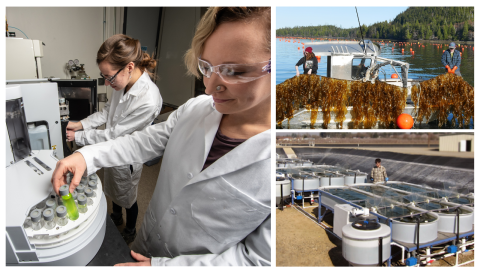
Fifteen student teams from across the country were selected as finalists for the AlgaePrize 2023–2025 competition. As the nation’s premier algal-based student research competition, the AlgaePrize challenges students to pursue innovative ideas for the development, design, and invention of technologies within the commercial algae value chain. The 15 teams are presently conducting their proposed research and will provide research updates over the next few months. As we follow their progress, below are three facts to fuel your algae curiosity.