



RSS
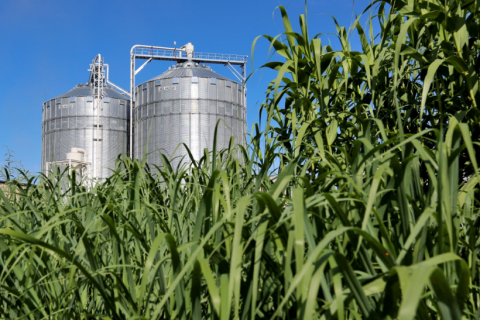
Selected projects will conduct pilot-scale testing of advanced carbon dioxide removal technologies—including a project to produce carbon-negative hydrogen from biomass.
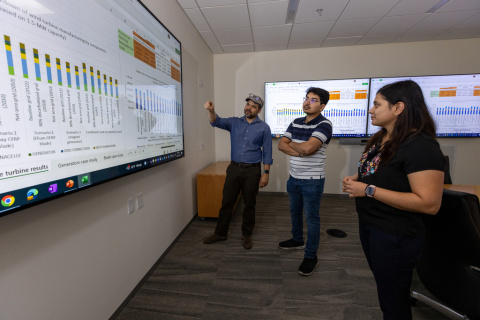
Researchers and analysts at the National Renewable Energy Laboratory (NREL) are using a sophisticated modeling method known as system dynamics to understand the intricacies of energy systems, such as biofuel economics and supply chains.
The City of Duluth, Minnesota, and its local development partners will receive DOE support to develop hydrogen and renewable energy systems, as well as an energy workforce, to enable the deployment of a green iron plant in the region.
Registration is now open for the BRIDGES Bioenergy 101 Virtual Workshop hosted by the U.S. Department of Energy (DOE) and the National Association of Biology Teachers (NABT). The workshop will be held from 6 p.m. to 7 p.m. ET on Thursday, October 17, 2024.
PHMSA adds technical and policy expertise to support the Center's mission of promoting hydrogen safety and best practices worldwide
In recognition of National Hydrogen and Fuel Cell Day, DOE's Hydrogen and Fuel Cell Technologies Office and the Office of Science are highlighting H2LinkSC—a unique approach to strengthen connections between fundamental and applied science in hydrogen.
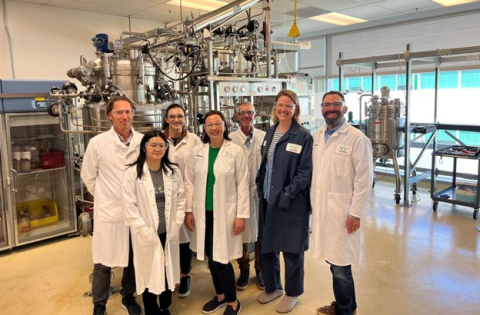
Researchers at the U.S. Department of Energy’s Bioenergy Technologies Office (BETO) funded Agile BioFoundry (ABF) and the Advanced Biofuels and Bioproducts Process Development Unit (ABPDU), have successfully scaled up a bio-based process that converts ethanol into a valuable precursor for consumer products, such as paints, coatings, and diapers. The researchers worked with industry partner, Industrial Microbes, to develop the technology.
Each year, the hydrogen community eagerly counts down the days to October 8. Why? Because 10/08 = 1.008, the same sequence of numbers as the atomic weight of hydrogen! And the U.S. Department of Energy is keeping the fun rolling all week long.
The U.S. Department of Energy's (DOE's) Office of Fossil Energy and Carbon Management recently announced up to $4 million in federal funding to advance clean hydrogen production through the use of reversible fuel cells.
A multi-country, government-led initiative dedicated to advancing the global transition to a bio-based economy, unveiled a new Global Biomass Resource Assessment, providing groundbreaking data on current and future biomass supplies around the world.