



RSS
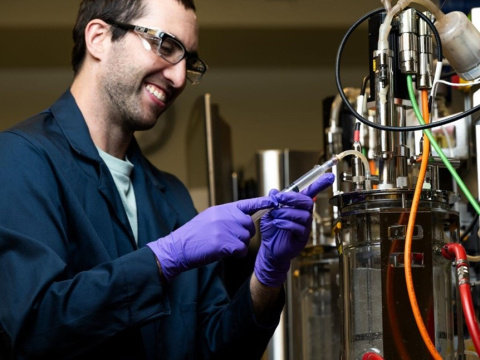

The U.S. Department of Energy's Agile BioFoundry is hosting its 2026 Industry Day on February 17, 2026, from 8:00 AM – 6:00 PM PT (11:00 AM – 9:00 PM ET) in Emeryville, CA.
Pacific Northwest National Laboratory (PNNL) is advancing the future of our nation’s bioeconomy through AI models! By using AI to predict the performance of bioproducts, PNNL can increase production, save time, and reduce costs.
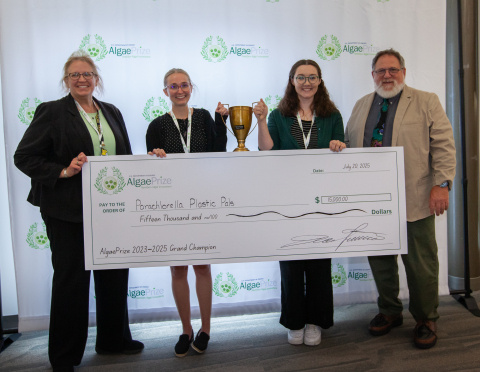
The U.S Department of Energy (DOE) Bioenergy Technologies Office (BETO), in partnership with the Algae Foundation and NREL, announced the grand champion and top four winning teams of the 2023 - 2025 DOE AlgaePrize Competition!
The U.S. Department of Energy (DOE) today selected 27 innovators and entrepreneurs to join the latest cohorts in its Lab-Embedded Entrepreneurship Program (LEEP).
Join our H2IQ Hour webinar on April 24, 2025, at 12 p.m. ET for updates on the energy potential of geologic hydrogen and current engineering efforts to bring this budding energy resource from underground to the surface.
The U.S. Department of Energy Bioenergy Technologies Office (BETO) announced $1.35 million in Phase 2 funding for three projects to accelerate wood heater innovation and develop the next generation of efficient and clean wood heaters. .
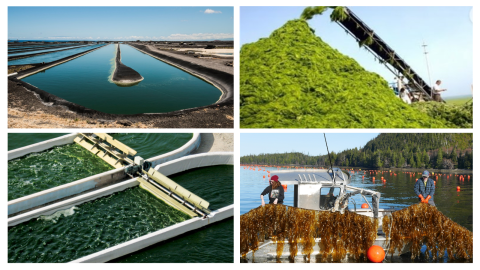
The U.S. Department of Energy (DOE) Bioenergy Technologies Office (BETO) announced up to $10 million in funding to support high-impact research and development (R&D) focused on algae system cultivation and preprocessing.
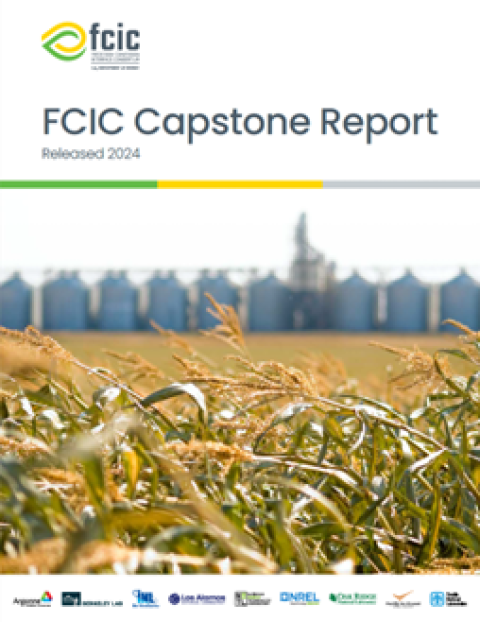
The U.S. Department of Energy (DOE) Bioenergy Technologies Office (BETO) released the Feedstock-Conversion Interface Consortium (FCIC) Capstone Report. The report summarizes the FCIC’s goals, research activities, and achievements over the past three years.
Today, the U.S. Department of Energy released the 45ZCF-GREET model. This announcement follows the U.S. Department of the Treasury and Internal Revenue Service guidance on the Clean Fuels Production Credit (section 45Z) released on January 10, 2025.
Discover how BETO is impacting the bioeconomy and taking steps to meet these goals, which require significant and rapid advances in technology development and innovation across the entire biomass-to-bioenergy supply chain.