Savannah River Fact Sheet on Liquid Waste Tank Farms
July 20, 2026 Estimated Read Time min

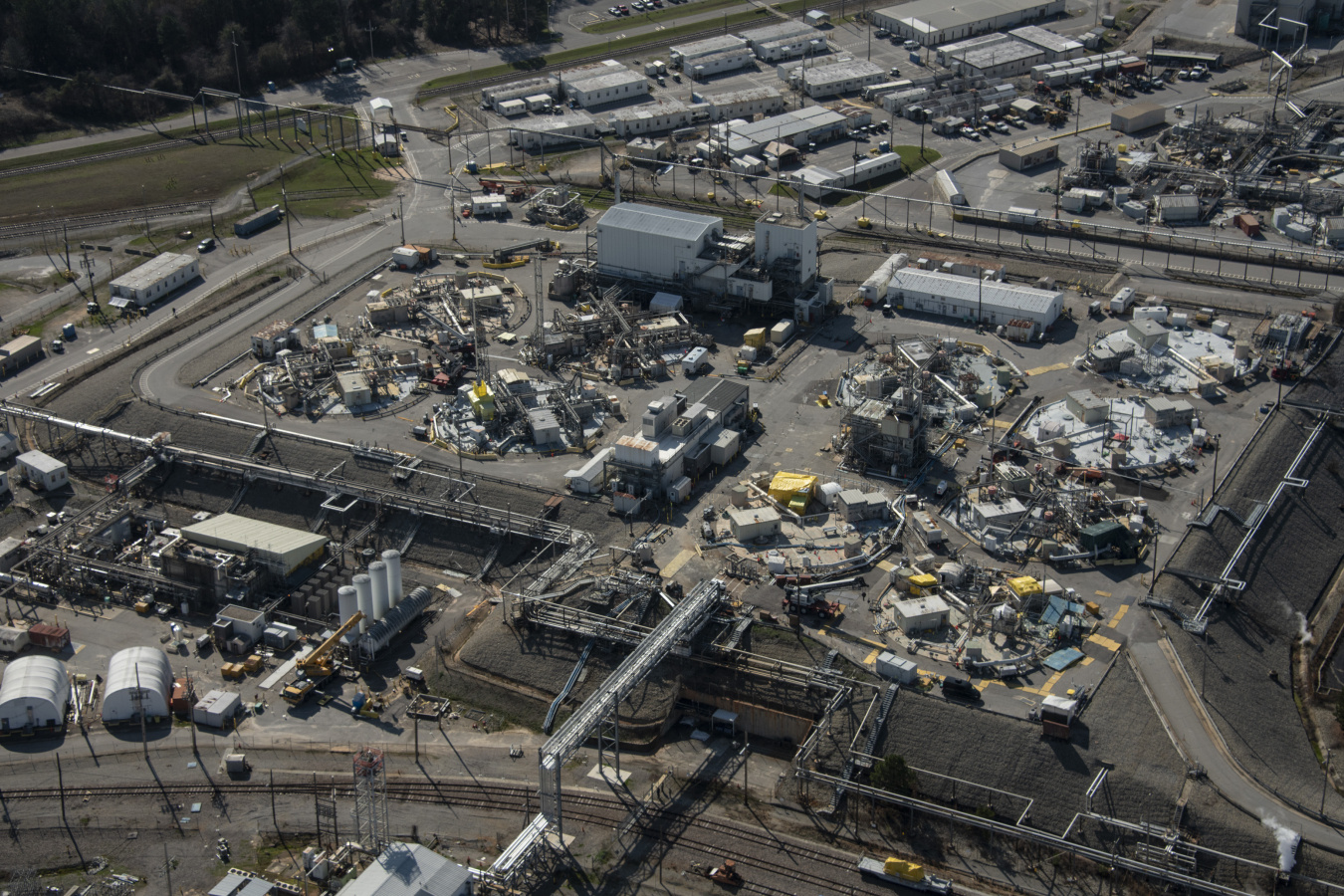
Radioactive liquid waste generated by Savannah River Site (SRS) chemical separations processes is stored in the SRS Tank Farms in both solid and liquid forms. Over 165 million gallons of radioactive liquid waste have been generated and concentrated by evaporation to a present volume of approximately 32 million gallons.
SRS has a total of 51 waste tanks built in the Site’s F and H Areas; eight of those tanks have been operationally closed. Several of the remaining 43 waste tanks are in various stages of the waste removal, cleaning, and operational closure process. Waste from all the tanks will be removed with priority given to the Type I, II, and IV tanks.
In waste tanks, the insoluble solids in the waste settle to the bottom, forming “sludge.” Liquid above the sludge, referred to as salt waste, is concentrated by evaporation to reduce its volume. As the concentrated salt waste cools, a portion crystallizes forming a solid “saltcake.” This concentration process not only reduces the volume, but also makes the waste less mobile.
Types of Waste Tank Designs Since
1954, SRS waste tanks have provided safe and environmentally sound storage for nuclear waste. All of SRS’s radioactive waste tanks are below ground with only the tank tops exposed for access. These tanks include four designs.
Type I and II Tanks
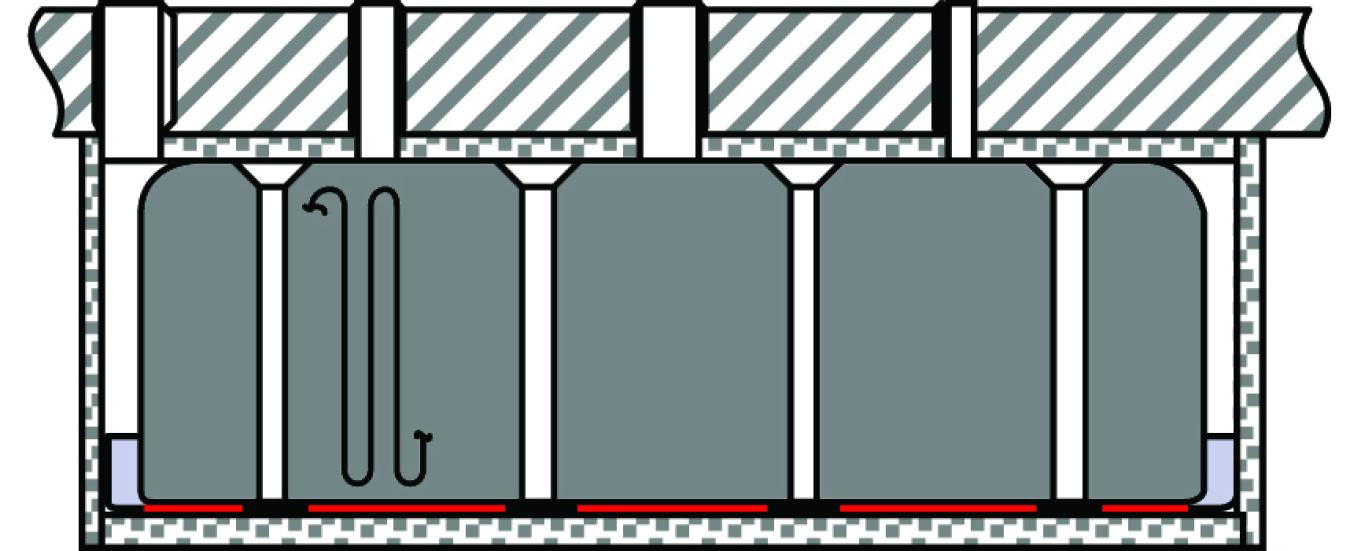
The oldest tanks, Types I and II have partial height steel secondary containment pans within a concrete vault and forced cooling systems. Some of these tanks previously developed small hairline cracks that allowed leakage of small volumes of salt solution into secondary collection pans below the tanks. The cracks were induced by high nitrate concentration in the waste solutions and residual stresses near weld sites. Waste levels within those tanks have been lowered below known leak sites.
Waste Tank Inventory

Type I
- 12 tanks; built between 1951-1953
- Three Type I tanks are operationally closed and grouted
- 750,000-gallon capacity; 75 feet in diameter by 24.5 feet high
- Partial secondary containment with leak detection
- Nine tanks containing a total of about 3.6 million gallons of waste
- Five of these tanks have leaked into the annulus space; the amount of waste stored is kept below the known leak sites that have appeared over the decades of operation, and there are no active leak sites
Type II
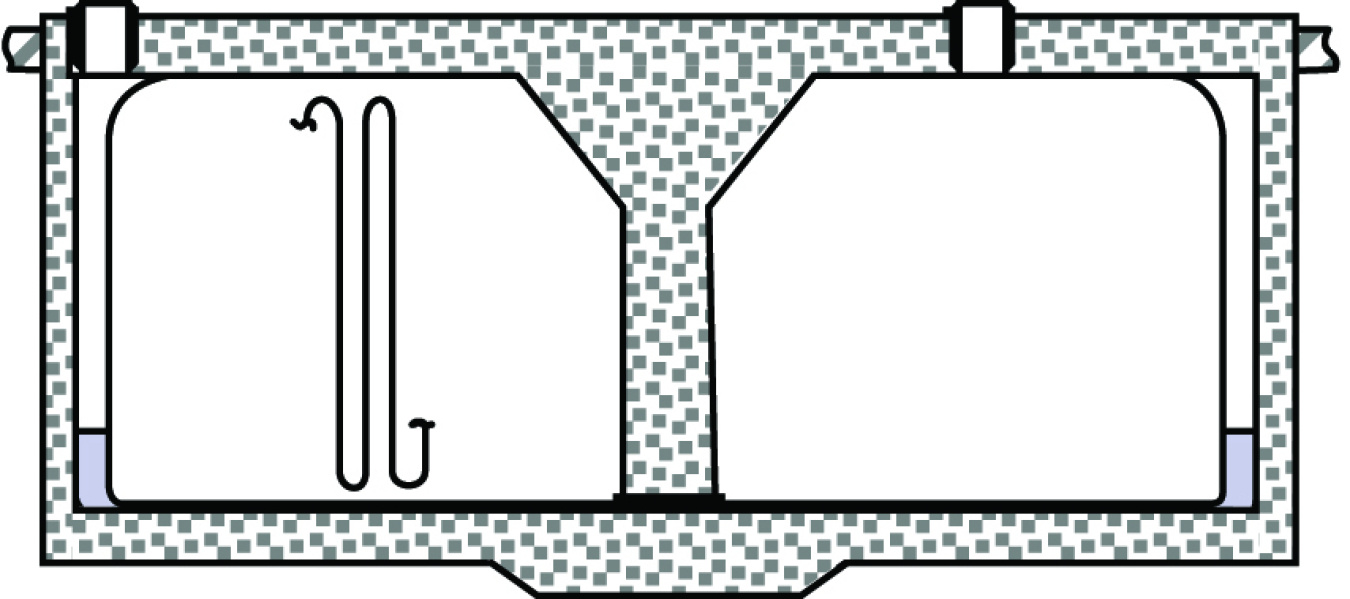
- Four tanks; built between 1955-1956
- One tank is operationally closed and grouted
- 1-million-gallon capacity; 85 feet in diameter by 27 feet high
- Partial secondary containment with leak detection
- Three tanks containing less than 1 million (920k) gallons of waste
- Tanks still storing waste have leaked waste into the annulus space
- Waste is stored below known leak sites, and there are no active leaks
Type III/IIIA Tanks
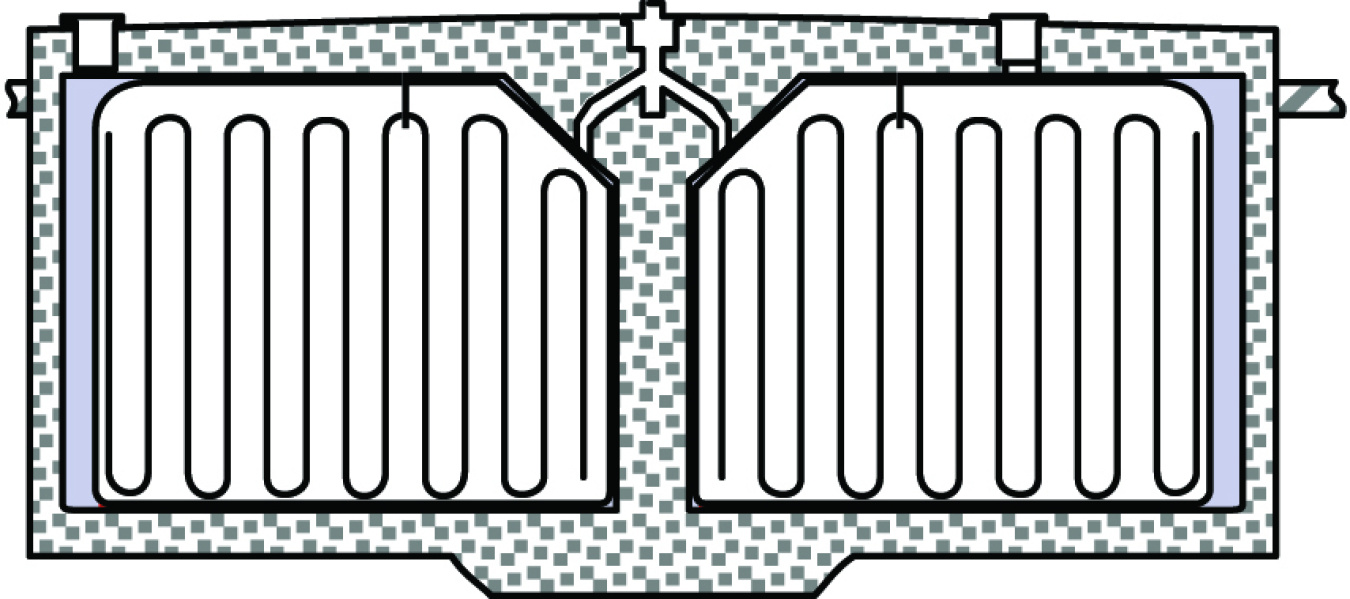
The type III/IIIA design has a maximum storage capacity of approximately 1.3 million gallons and is 33 feet high and 85 feet in diameter. Type III tanks have forced cooling systems inserted in risers while type IIIA tanks had cooling coils installed in the tanks during construction. Type III/IIIA tanks have full-height secondary containment, i.e., they are a tank within a tank. These tanks, mostly built in the late 1960s and 1970s, have been stress relieved to prevent stress corrosion cracking. No cracks or leaks have occurred in any of the Type III/IIIA tanks.
- 27 tanks; built between 1969-1981
- 1.3-million-gallon capacity; 85 feet in diameter by 33 feet high
- Most modern tank design at SRS, including heat stress relief on the tank walls to prevent cracking
- Full height secondary containment with leak detection
- Contain about 25.7 million gallons of waste
- No tanks have leaked
Type IV Tanks
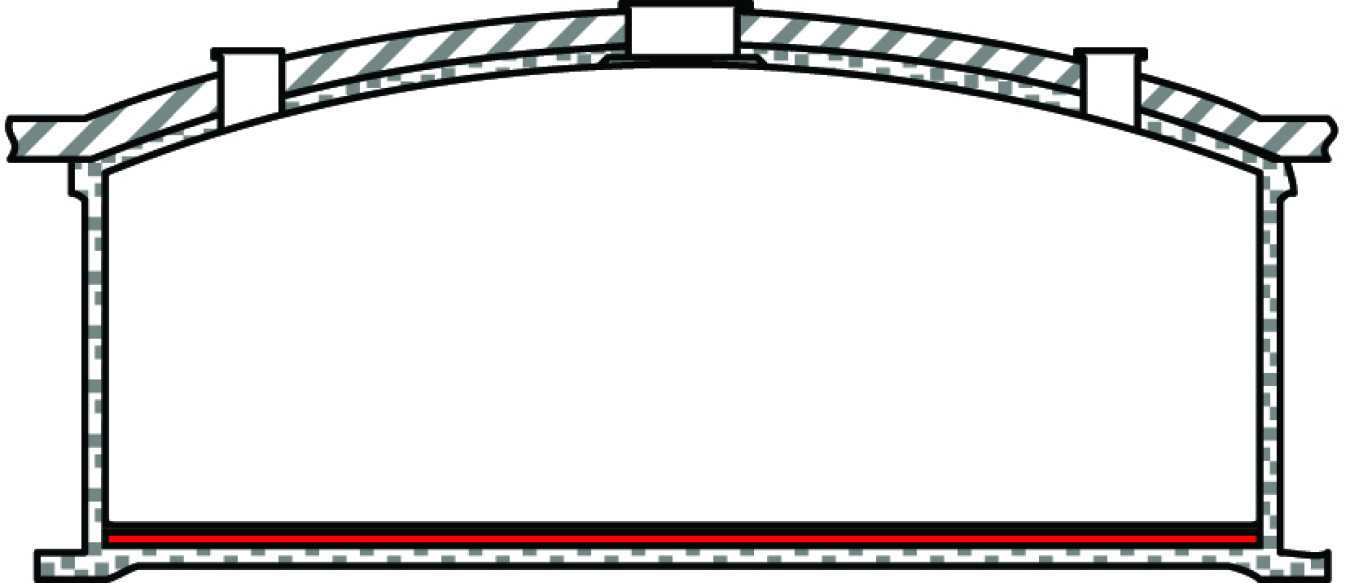
Type IV tanks have a single wall and do not have a forced cooling water system. Type IV tanks are designed for waste storage that does not require auxiliary cooling. This tank type has a steel liner encased in concrete and a domed roof. Each tank has a maximum capacity of approximately 1.3 million gallons and is 85 feet in diameter and 34.5 feet high.
- Eight tanks; built between 1953-1963
- 1.3-million-gallon capacity; 85 feet in diameter by 34.5 feet high
- Has leak detection but no secondary containment
- Four tanks are operationally closed and grouted
- Contain about 4 million gallons of waste
- None of the four tanks still storing waste have leaked
Preliminary Cease Waste Removal
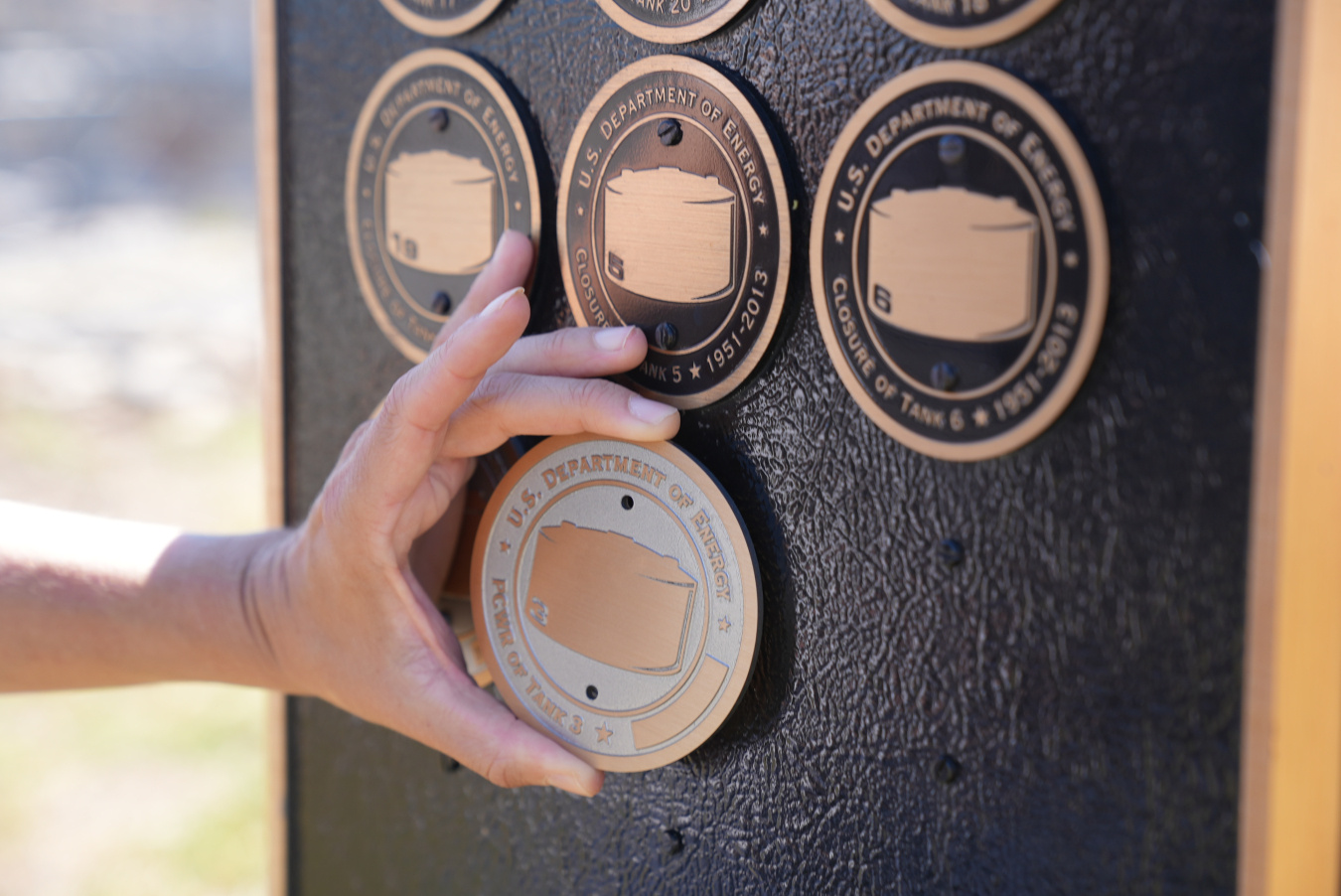
Preliminary Cease Waste Removal (PCWR) is the regulatory milestone that means our state and environmental regulators agree that the waste has successfully been removed from the tanks and the next steps in the operational waste tank closure process can proceed.
PCWR designates agreement between DOE, the U.S. Environmental Protection Agency, and the S.C. Department of Environmental Services that, based on preliminary information, there is reasonable assurance that performance objectives for tank closure will be met. This regulatory concurrence also means that work can begin on the sampling and analysis phase for these tanks as part of the tank closure process. This next phase will verify these conclusions, based on laboratory analysis of any remaining material, and final residual volume determination, prior to stabilization and final isolation of the waste tank.
PCWR has been completed on Tank 3, Tank 4, Tank 8, Tank 9, Tank 10, Tank 11, Tank 15 and Tank 15 — all seven to 27 months ahead of the agreed-upon deadlines outlined in the SRS Federal Facility Agreement (FFA). The agreement establishes a procedural framework, including liquid waste-tank milestone agreements, such as the schedule for waste removal and operational tank closures, and other site cleanup priorities.
PCWR for Type I tanks: Tanks 11, 10, 9, 8, 4 and 3
PCWR for Type II tanks: Tanks 15 and 14