



Growing peak electricity demand, transmission and distribution infrastructure constraints, and the range of electricity generation resources can challenge the electrical grid. As the grid becomes increasingly complex, demand flexibility can play an important role in maintaining grid reliability and improving energy affordability.
In regions with grid constraints, a facility’s peak demand, not just its overall energy consumption, can increasingly affect utility bills. Some utilities offer generous rebates through demand response programs for facilities that temporarily reduce consumption on a small number of peak days per year. Demand flexibility is a primary tool for reducing demand costs and capitalizing on demand response rebates.
Funded by the Federal Energy Management Program (FEMP) and managed by Lawrence Berkeley National Laboratory (Berkeley Lab), the Federal Demand Flexibility Program helps federal agencies and facilities access resources and receive support to reduce utility costs and enhance grid resilience by adopting demand flexibility technologies and strategies. Facility directors or energy managers and others who are responsible for federal buildings or building performance can request free support from the program.
The Federal Demand Flexibility Program includes technical assistance, resources, and training to help federal agencies understand, adopt, and implement demand flexibility strategies. Participating federal facilities may also receive assistance in assessing relevant utility rebate opportunities that support the implementation of these strategies.
On This Page:
- Learn Demand Flexibility Basics
- Review Technologies and Eligible Buildings
- Get Technical Assistance
- Access Trainings and Resources
Search for Programs and Rates
The Federal Energy Management Program developed profiles of demand response programs and time-variable pricing rates throughout the United States.
Demand Flexibility Basics
Demand flexibility encompasses a variety of strategies that target building load adjustments in specific time periods. For a building owner, the objectives of demand flexibility are typically to minimize utility bill costs by targeting load shift or load reductions during time periods where the utility rates are higher; and/or participate in utility demand response programs, which offer incentives for temporarily reducing building loads on a limited number of days in a year. Each of these strategies is described in more detail below.
Utility Bill Reduction Through Load Shift or Load Reduction
Customers on time-variable pricing (TVP) plans, such as time-of-use (TOU) rates, have varying charges based on when their electricity is consumed, not just the total amount. These customers can reduce their utility costs by reducing usage during on-peak hours or shifting usage to off-peak hours, when electricity rates are lower (see Figure 1 and Figure 2).
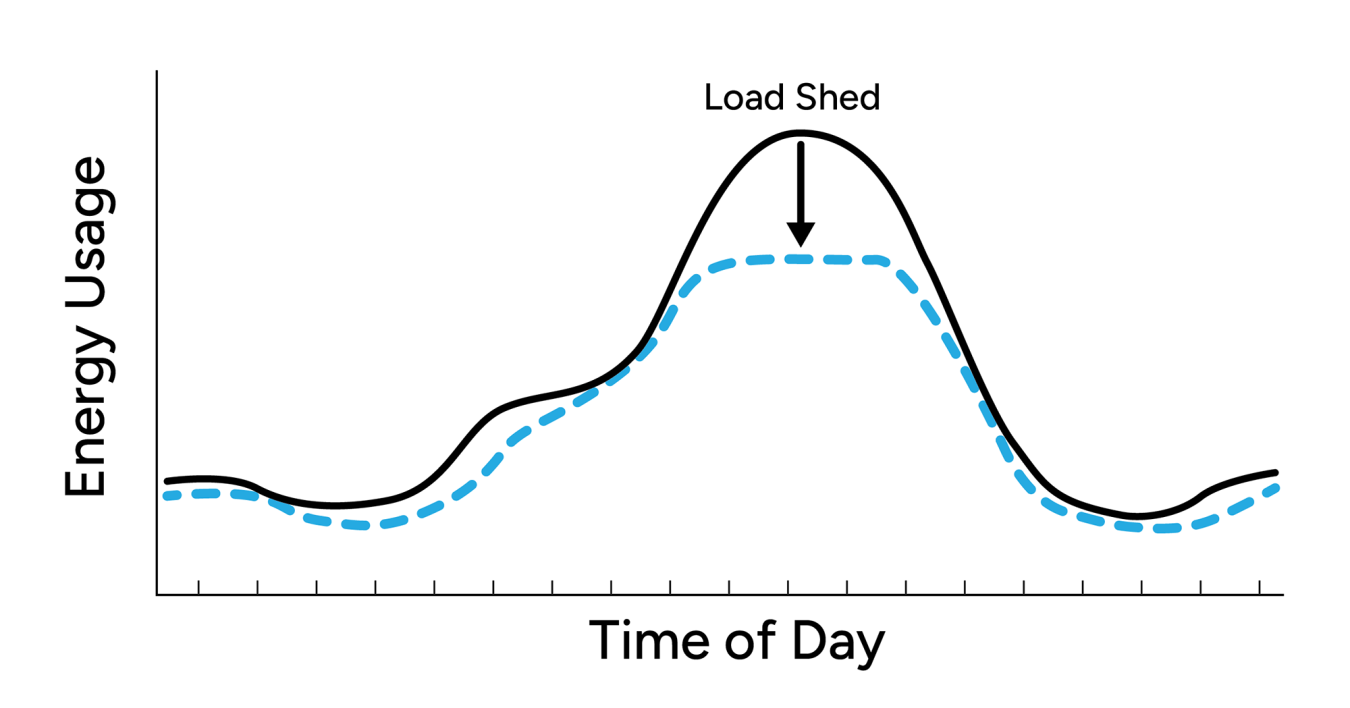
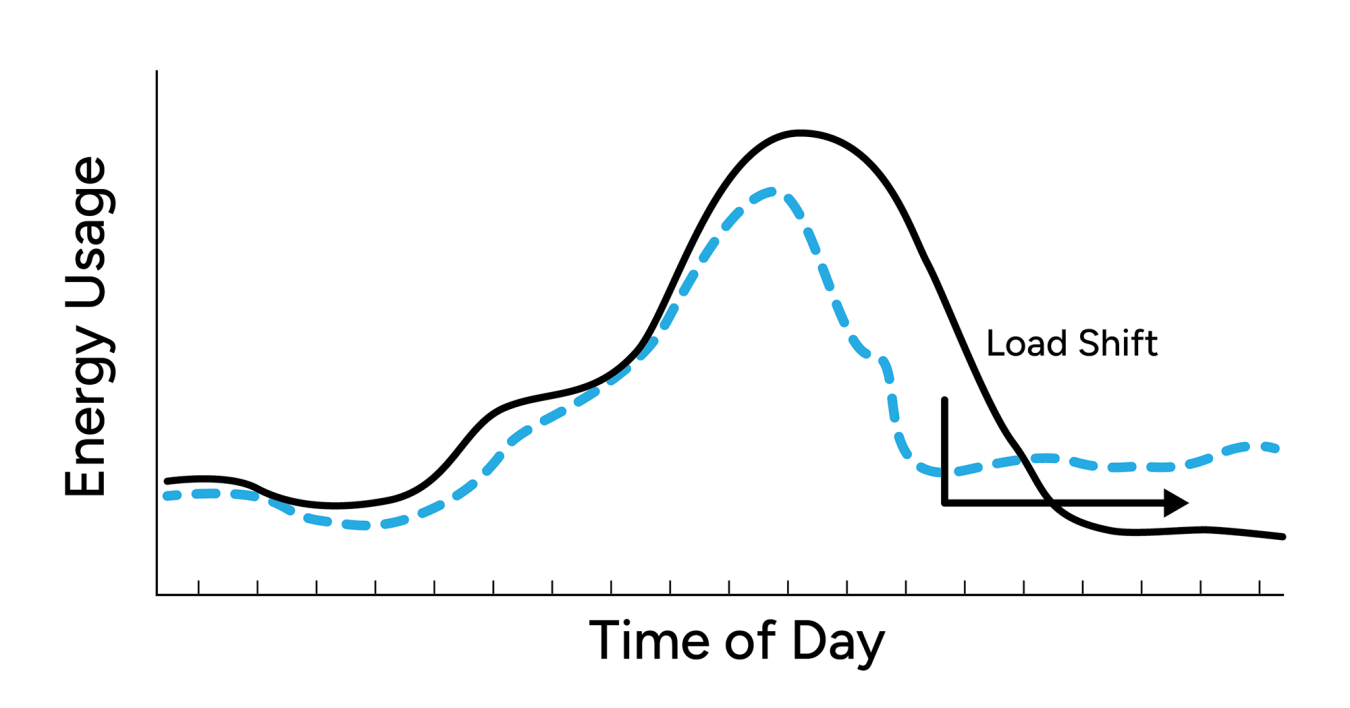
A given utility may offer multiple options for these types of TVP plans, and most utilities offer at least one for any given customer class.
Additional types of TVP include:
- Real-time pricing (RTP): The price charged to customers each hour closely matches either the underlying wholesale electricity market or the utility's cost of production.
- Day-ahead hourly pricing: The provider publishes its prices (reflecting its cost of acquisition or production) for the following day.
- Block-and-index pricing (sometimes called block-and-swing pricing): A combination of fixed pricing and RTP (i.e., the customer locks in some of its load at fixed prices and faces market pricing for additional usage).
There are other types of TVP, but most are variants of those listed above.
In addition to energy charges, most utility bills include a monthly charge, known as the demand charge, based on the customer’s highest electricity demand (in kilowatts) during a billing cycle. Managing peak loads—by spreading usage out (load shifting) or actively reducing non-essential operations during your site's typical peak demand period (load reduction)—can help lower this portion of the bill.
Whether you're currently enrolled in a TVP rate, considering enrollment, or have high demand charges under a different rate structure, there are practical strategies to reduce your monthly bills. For example, non-essential equipment can be scheduled to run during off-peak hours to take advantage of lower rates.
Similarly, staggering equipment start-up times or using thermal energy storage can reduce peak demand, helping to avoid costly demand charges. By aligning electricity use with both pricing and demand patterns, customers can optimize savings while also easing strain on the grid.
Utility Demand Response Programs
Demand response (DR) is a short-term, voluntary decrease in electrical consumption by end-use customers that is generally triggered by compromised grid reliability or high wholesale market prices. In exchange for curtailing (and sometimes just committing to curtail) their load, customers receive a rate discount, a bill credit, or some other remuneration. The best way for federal customers to receive remuneration is through a bill credit, as there are specific rules governing how federal sites can accept and process financial incentives. In many cases, accepting the incentive as a utility bill credit is the most straightforward and compliant approach. However, it is important to coordinate with the appropriate contracting, financial, and legal representatives at your site to determine the most appropriate and allowable path based on your agency’s requirements.
Demand Response Made Easier: The Role of Curtailment Service Providers
Learn how curtailment service providers help agencies navigate program requirements, coordinate participation, and maximize value of DR programs.
The majority of U.S. utilities offer their commercial and industrial customers some form of DR incentive. DR events may be triggered by emergency conditions or economic signals and will vary with utilities and the programs they offer. The steps below provide a quick overview of how DR program enrollment and participation work.
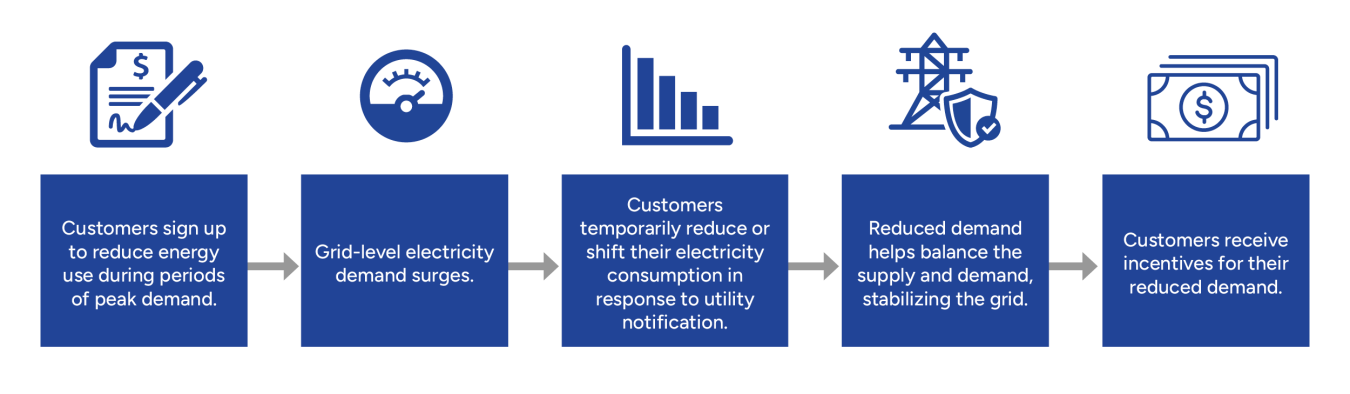
The country's seven independent system operators/regional transmission organizations (ISO/RTOs) each sponsor DR programs or enable owners of DR capabilities to bid into their markets for energy, capacity, or other grid-support services. DR capabilities often involve the ability to temporarily reduce consumption or use a behind-the-meter resource (e.g., on-site diesel backup generators, or a combination of solar and storage) to serve a load that otherwise would be served by the grid or some combination of the two.
DR programs and TVP arrangements reflect the dynamic nature of electricity availability, delivery, and production costs. These costs can vary over time, even every few minutes. These programs provide incentives for electricity consumers to manage loads by encouraging load curtailment and/or shifting, thereby mitigating some of these fluctuations and risks.
Customers stand to gain substantially from participating in DR programs and TVP options, especially if they can adjust their electricity usage occasionally in response to market signals such as DR event notifications or price fluctuations.
Demand Flexibility Technologies
Demand flexibility technologies optimize energy consumption and enhance grid stability. The following are technologies that can be used at sites:
- Building automation systems (BAS) automate control of heating, ventilation, and air conditioning (HVAC), lighting, and other systems to respond to demand signals and optimize energy use in real time.
- Advanced metering infrastructure (AMI) provides real-time or near real-time data on energy usage, enabling more responsive and optimized load management.
- Thermal energy storage stores cooling or heating energy during off-peak hours for use during peak demand periods, reducing electrical load when grid stress is highest.
- Battery energy storage systems store excess energy during off-peak times for use during peak times.
- Grid integration of distributed energy resources maximize use of on-site energy-generation projects and purchases.
Eligible Buildings and Rate Structures
Facilities with certain types of electricity loads and utility rate structures can benefit from Federal Demand Flexibility Program support, including:
- Buildings with noncritical controllable loads, like HVAC.
- Buildings with noncritical electricity demands that can be moved outside the peak time window.
- Facilities with time-variable pricing rates or high demand charges.
- Facilities considering participating in utility programs such as demand response, emergency load reduction, or demand flexibility equipment incentives.
The FEMP team can conduct an analysis of your facility’s utility bills and compare with other available utility tariffs. We will guide you on the best suited electricity rate structure based on your usage. To get started, review the Evaluating Utility Rate Options webpage.
Existing Building Equipment
Many demand flexibility strategies work with the equipment facilities are already using, including smart scheduling, HVAC optimization, or simply manual intervention to participate in demand response programs. On-site generators may also be used to address short-term demand flexibility needs (though it should be noted that certain types of emergency generators may only be used for a limited number of hours per year and before using any generator, sites should ensure compliance with federal, state, and local regulations). Your agency can request insight into low-cost measures from the FEMP federal demand flexibility team.
Technical Assistance
On behalf of FEMP, Berkeley Lab provides Federal Demand Flexibility Program participants with technical assistance to help you successfully pursue goals through strategic implementation of demand flexibility measures. Your agency can request guidance on assessment methods, support with analyzing interval data, information on best practices, and referrals to other programs. In addition to direct one-on-one technical assistance, participants can access FEMP resources and training webinars.
Action Plans
Your agency can work with Berkeley Lab to develop an action plan for delving deeper into achieving your demand flexibility potential. The action plan process includes planning and action phases.
During the planning phase, agencies or subagencies determine their current demand flexibility capabilities and potential and develop a demand flexibility action plan. They also identify opportunities to rapidly pilot and implement simple demand flexibility technologies and strategies for quick wins.
During the action phase, participants implement additional demand flexibility technologies and strategies that work toward achieving the targets set in their action plan. Berkeley Lab provides resources, tools, and support to implement this work.
Scope of Work
The level of technical assistance provided is dependent on the ongoing availability of funding. For an example of offerings, refer to the scope of work template.
The Federal Demand Flexibility Program is not intended to replace formal site audits or engineering studies. While FEMP provides high-level insights based on your facility’s energy data and building characteristics, detailed on-site assessments are best handled by a qualified consultant or your internal facility team.
Additionally, the federal demand flexibility team cannot provide HVAC system design or engineering services. For HVAC system sizing, replacement planning, or detailed mechanical evaluations, FEMP recommends working with a licensed engineer or building professional. Additionally, FEMP cannot provide support for equipment purchases, including drafting requests for proposals to install demand flexibility technologies.
Data Requirements
You’ll need to gather basic energy use data and other information about your site to help FEMP understand your site’s potential for demand flexibility. This includes:
- Building location
- Building energy use and cost through utility bills and interval meter data (ideally over the past year)
- Utility rate(s)
- Types of buildings in the facility and information on which ones support critical operations
- Types of building equipment (such as HVAC systems) and whether your building uses smart controls.
You can also share if you have photovoltaic panels or batteries, expect major changes in demand soon, or already participate in a demand response program. Additionally, you can share documentation of any recent facility-level audits or analyses.
The sample scope of work template includes a list of data requirements, though some are optional. The type and depth of analysis will depend on what data is made available to the team.
Trainings, Tools and Resources, and Case Studies
FEMP provides a variety of resources to help federal agencies understand and implement demand flexibility strategies. Access training, resources, and case studies below.
FEMP Training
Training courses that support demand flexibility are crucial in helping federal agencies understand demand flexibility concepts and implement demand flexibility strategies. On-demand training courses have been developed and curated to support demand flexibility adoption in federal buildings.
Tools and Resources
- Utility Open Houses for Federal Customers: Utility Open Houses are events co-hosted by FEMP and utilities that provide federal agencies with insights into utility offerings and incentive programs, focusing on key pathways to achieving federal energy goals. This webpage lists upcoming events.
- Utility Program Navigator: FEMP helps federal agencies and other organizations identify opportunities for energy and water project incentives, demand response programs, and time-variable pricing, execute these opportunities, and fully capture their benefits.
- Utility Open Houses for Federal Customers: Utility Open Houses are events co-hosted by FEMP and utilities that provide federal agencies with insights into utility offerings and incentive programs, focusing on key pathways to achieving federal energy goals. This webpage lists upcoming events.
Grid-interactive efficient buildings (GEBs) represent a specific building-focused implementation of demand flexibility that integrates energy-saving measures, distributed energy resources, and automated controls to enable sustained, optimized load modulation.
- Grid-Interactive Efficient Buildings for Federal Agencies: This is a FEMP website for technical reports and factsheets for grid-interactive efficient buildings. It includes references for key technologies, best practices for performance contracts, cybersecurity considerations, best practices for resilience, and two case studies on smart buildings projects in federal facilities.
- FEMP's GEB Strategies and Technologies Guidance Workbook (file includes macros): the workbook helps building owners, energy managers, and facility managers prioritize potential grid-interactive strategies, technologies, and controls upgrades in federal and commercial buildings.
- Grid-Interactive Efficient Buildings for Federal Agencies: This is a FEMP website for technical reports and factsheets for grid-interactive efficient buildings. It includes references for key technologies, best practices for performance contracts, cybersecurity considerations, best practices for resilience, and two case studies on smart buildings projects in federal facilities.
- REopt Energy Optimization Overview: REopt is a no-cost online tool that uses limited site inputs to identify cost-optimal combinations of on-site generation, storage, and related technologies to meet cost and resilience objectives.
- Evaluating Your Utility Rate Options: This FEMP webpage explains how electric utility costs depend on load patterns and rate structures, and why sites may want to evaluate their utility rates. It outlines electricity cost components, how load shape affects bills, and provides steps to assess alternative utility rate options.
- REopt Energy Optimization Overview: REopt is a no-cost online tool that uses limited site inputs to identify cost-optimal combinations of on-site generation, storage, and related technologies to meet cost and resilience objectives.
- Utilities Offering Federal Utility Energy Service Contracts (UESCs): This FEMP webpage provides maps that depict the service territories of electric and natural gas utilities that actively provide UESCs and offer significant energy-saving programs to federal agency customers.
- Utility Program and UESCs: This FEMP webpage offers several resources for UESCs that offer project support, contacts, case studies, incentive and load management, etc.
- Energy Savings Performance Contracts for Federal Agencies: This FEMP webpage offers several resources for ESPCs that support quality assurance, sales agreements, contacts, case studies, etc.
- Utilities Offering Federal Utility Energy Service Contracts (UESCs): This FEMP webpage provides maps that depict the service territories of electric and natural gas utilities that actively provide UESCs and offer significant energy-saving programs to federal agency customers.
Energy and Cybersecurity Integration: This FEMP webpage describes how FEMP supports federal agencies in improving cybersecurity for operational technology (OT) in facilities. It explains OT risks, relevant federal cybersecurity policies, and the tools, training, and technical assistance FEMP provides to strengthen facility cybersecurity posture.
Case Studies
Learn how federal agencies have used demand flexibility programs to improve grid reliability and energy affordability at their sites.
Need Assistance?

Need help finding a document or tool? Ask FEMP.