




Collisions of lead with smaller nuclei allow taking images of the fluctuating nuclear shape

Collisions of oxygen and neon nuclei show how nuclear shapes can influence collective particle flow in small systems.
A potential tool could use Bose Einstein condensates to produce intense beams of neutrinos.
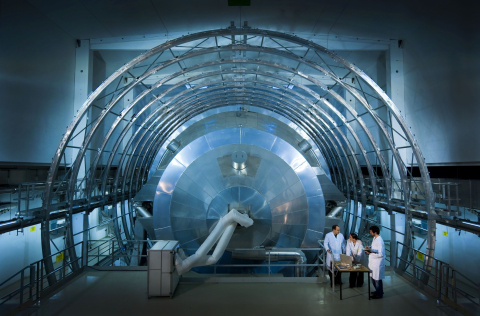
A direct search shows that neutrinos are at least a million times lighter than electrons.
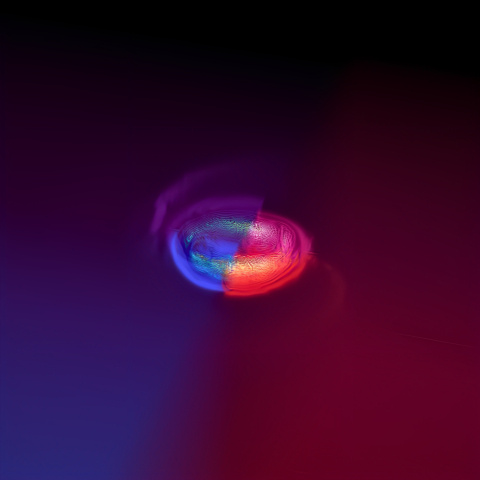
Scientists have developed a simulation of the merger of two neutron stars that includes the oscillation of different neutrino flavors into one another.
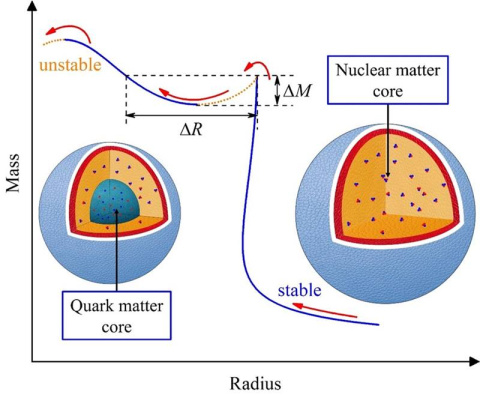
Scientists have new insights into factors that determine how twin neutron stars—stars with the same mass but different sizes and compositions—can coexist.
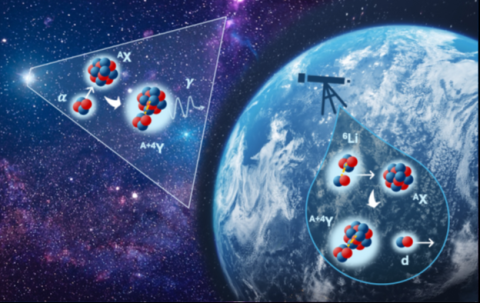
Theoretical calculations enable more accurate determination of reaction rates for modelling primordial lithium-6 abundance and massive stars’ lifecycle.
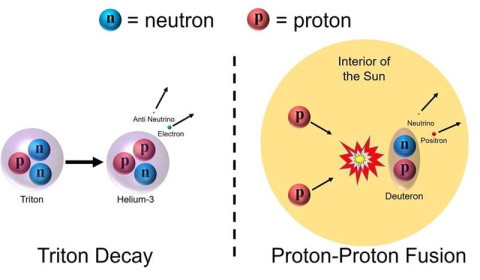
Remarkably, the rate of proton-proton fusion in the sun is not precisely understood, but it can be better predicted using the process of triton decay.
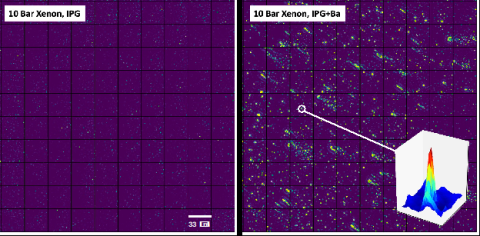
Researchers imaged individual barium ions in dense xenon gas, offering a new path toward ultra-low-background searches for neutrinoless double beta decay.
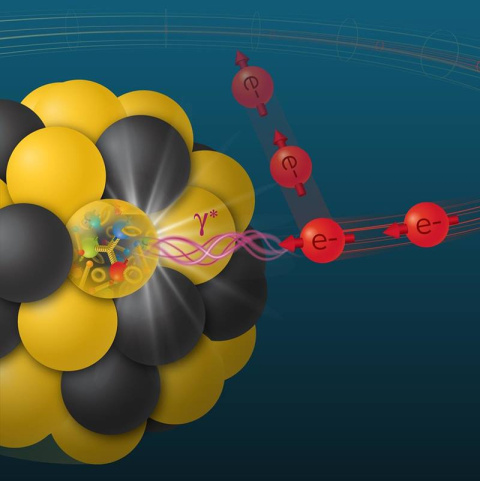
Calculations of charge distribution in mesons provide a benchmark for experimental measurements and validate widely used 'factorization' method.