



The Department of Energy is focused on building a more affordable, reliable, and secure energy system to support American energy dominance, strengthening U.S. leadership in artificial intelligence, and lowering energy costs for the American people.
Data centers are reshaping the way Americans live, work, and connect by enabling advances in artificial intelligence (AI). They power critical services Americans rely on every day, support scientific discovery, strengthen national security, and help drive economic growth in communities across the country.
The nation that leads the AI race controls technological advancements, economic development, and military power. For these reasons, AI dominance is essential. The United States cannot afford to fall behind in the race to develop and deploy AI. Maintaining America’s leadership will require building the energy infrastructure, developing computing capacity, and expanding the skilled workforce necessary to drive innovation at home. As outlined in President Donald J. Trump’s Winning the Race: America’s AI Action Plan, DOE plays a central role in the Administration’s strategy to rapidly expand digital infrastructure while lowering energy costs for American families and businesses.
As energy resources and demand grow, DOE is working to ensure that the development of data center infrastructure strengthens America’s energy system, protects hardworking American families and businesses from increased energy costs, and delivers economic benefits to communities across the country.
ENSURING AFFORDABLE ENERGY FOR AMERICAN FAMILIES
President Trump’s Ratepayer Protection Pledge
As data centers fuel the next wave of American innovation, DOE is committed to protecting American families and businesses from undue costs by securing a robust energy infrastructure, ensuring the United States remains the global leader in AI and advanced technologies.
President Trump's Ratepayer Protection Pledge establishes a framework to address energy infrastructure needs and lower electricity customer rates. The Ratepayer Protection Pledge requires technology companies to:
- Build, bring, or buy new power supplies to support their energy demands
- Pay for all new required power delivery infrastructure upgrades
- Negotiate new, separate rate structures
- Invest in local job creation and workforce development
- Coordinate with grid operators to contribute to a more reliable grid.
BUILDING MORE POWER FOR AMERICA
America’s growing electricity demand reflects economic growth, technological leadership, and renewed investment in domestic manufacturing and industry. Energy addition, including an increase in reliable, dispatchable generation resources, is required to ensure projects come online quickly and responsibly while protecting American taxpayers.
- DOE is supporting investments in reliable power generation. In February 2026, the Office of Energy Dominance Financing closed a $26.5 billion loan package to Georgia Power and Alabama Power that will add more than 16 GW of reliable, dispatchable power to the grid, while delivering $7 billion in savings to millions of customers in Georgia and Alabama.
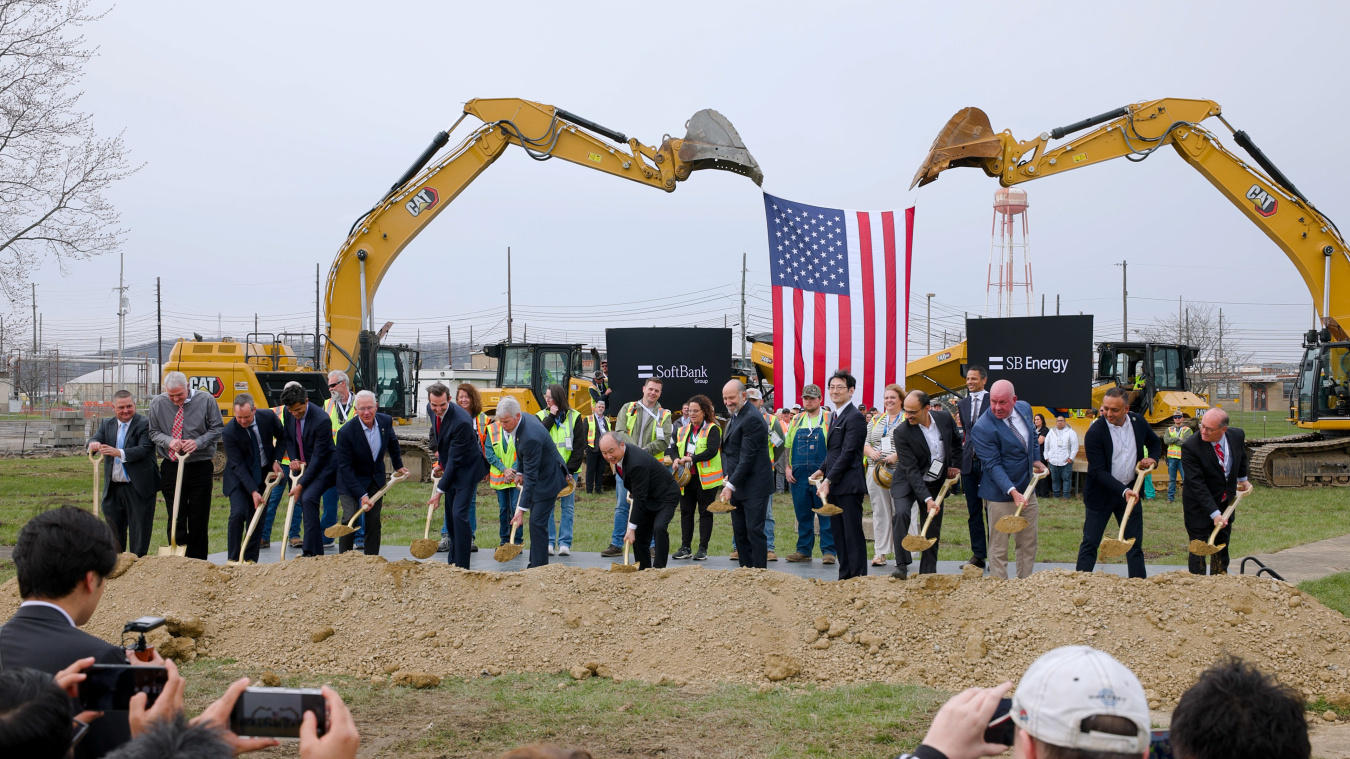
- DOE is evaluating opportunities across its federal land sites to partner with the private sector on next-generation AI infrastructure and energy projects. At DOE’s Portsmouth Site in Ohio, DOE is partnering with SoftBank and AEP Ohio to deliver 10 GW of new power generation. Once complete, it is set to become the largest data center and power complex in the world, providing enormous economic benefits to the region and surrounding communities. The project is expected to generate 10,000 construction jobs and more than 2,000 permanent positions.
- President Trump signed a series of Executive Orders to quadruple U.S. nuclear capacity, from about 100 GW today to 400 GW by 2050. Since then, DOE has taken bold action to revitalize nuclear power in America:
- DOE launched the Utility Power Reactor Incremental Scaling Effort (UPRISE) initiative to accelerate domestic nuclear energy production by leveraging existing nuclear infrastructure, with a goal to facilitate at least 5 GW of power uprates to existing reactors and have 10 new large reactors under construction by 2030.
- DOE is restarting closed nuclear reactors. EDF funded a $1.52 billion loan to Holtec to restart the Palisades Nuclear Plant in Michigan. Palisades, which ceased operations in 2022. It will be the nation’s first nuclear power plant to return to service after entering decommissioning. EDF also closed a $1 billion loan to Constellation Energy Generation in November 2025 to help finance the restart of the Crane Clean Energy Center, a nuclear power plant in Londonderry Township, Pennsylvania.
- In December 2025, DOE selected the Tennessee Valley Authority (TVA) and Holtec Government Services to support early deployments of advanced light-water small modular reactors (SMR) in the United States. The project teams will receive up to a combined $800 million in federal cost-shared funding to advance initial projects in Tennessee and Michigan.
- In January 2026, DOE awarded $2.7 billion to boost domestic uranium enrichment capabilities and enhance the long-term resilience of the U.S. nuclear energy industry. The award, as described in the announcement, provided $900 million contracts to three companies to provide low-enriched uranium (LEU) and high-assay low-enriched uranium (HALEU) services over the next decade.
- Several projects supported by DOE’s Advanced Reactor Demonstration Program (ARDP) reached historic milestones in the past year, including TerraPower’s Natrium fast reactor project in Kemmerer, Wyoming. TerraPower received its construction permit in March 2026 — the first ever issued by the NRC for a commercial non-light-water power reactor — and broke ground on the Natrium plant construction the following month.
STRENGTHENING GRID RELIABILITY
America’s growing demand for electricity requires a stronger, more reliable grid. DOE is taking action to expand grid capacity, improve resilience, and help states, utilities, and grid operators plan for future growth.
- DOE is accelerating upgrades to America’s transmission system through the Speed to Power through Accelerated Reconductoring and other Key Advanced Transmission Technology Upgrades (SPARK) funding opportunity. This $1.9 billion program supports faster deployment of advanced transmission technologies that increase grid capacity, improve reliability, and reduce costs.
- DOE is focused on reversing years of energy subtraction policies which threatened America’s grid reliability. Through its emergency authorities, DOE works closely with grid operators, utilities, and state leaders to prevent disruptions to critical energy infrastructure. DOE is also working to leverage backup generation resources at data centers and other industrial sites to reduce blackout risks during emergencies. In advance of Winter Storm Fern, Secretary Wright issued a letter to the Reliability Coordinators and Balancing Authorities to leverage these backup generation resources as a last resort to prevent blackouts. Several RTOs/ISOs requested and were issued such orders. work with grid operators to reduce blackout risks, lower costs, and save lives.
- DOE is investing in research and development that improves energy efficiency, increases demand flexibility, and helps large energy users support grid reliability while lowering costs. Through the Resource-secure Energy Flexibility (REFLEX) project, DOE is developing innovative approaches that allow large electricity users to operate more flexibly, helping reduce strain on the grid during periods of peak demand.
- DOE is also supporting technical analysis and best practices through initiatives such as the Energy Systems Integration Group (ESIG) Large Load Task Force—jointly funded by DOE and Meta—which is helping partners better integrate to support industry growth while maintaining affordability and reliability for existing customers.
- DOE provides technical assistance, planning support, and analytical resources to state energy offices, public utility commissions, and local stakeholders to help communities with large energy projects and plan for future growth. Through programs such as The Energy Innovator Fellowship Program, the State Energy Program (SEP), and the National Association of State Energy Officials (NASEO), DOE is helping local communities strengthen energy planning, improve grid reliability, and lower costs for American families.
DELIVERING BENEFITS TO AMERICAN COMMUNITIES
Data centers are generating billions of dollars in investment, creating thousands of jobs, and driving economic growth in communities nationwide. Data centers are essential digital infrastructure that support modern life and America’s future competitiveness. DOE is working to ensure these benefits are realized.
- DOE is working with the White House to implement President Trump’s Ratepayer Protection Pledge.
- In October 2025, Secretary Wright directed the Federal Energy Regulatory Commission (FERC) to consider reforms that would improve the timely and orderly interconnection of large electricity users to the transmission system, helping to strengthen reliability and provide greater certainty for consumers and project developers.
- DOE and the National Energy Dominance Council are working with Mid-Atlantic governors to urge PJM to make electricity more affordable for residential customers and strengthen grid reliability. DOE also is providing more than $15 billion in reliable baseload power generation.
- DOE is building strategic partnerships and hosting regional convenings to help communities understand and maximize the benefits of data center growth.
- In Virginia, the data center industry supports 74,000 jobs, generates $5.5 billion in labor income, and contributes $9.1 billion annually to the state’s economy. Loudoun County alone saw more than $875 million in tax revenue from data centers in a single year. That tax revenue exceeded Loudoun Country’s operations budget and funded not only the county’s operations budget and but also critical local services.
- In Louisiana, increased tax revenue and economic activity associated with a data center investment helped fund bonuses of more than $50,000 for teachers in Richland Parish.
TECHNOLOGICAL INNOVATION
Innovation is helping data centers do more with less—using energy and water more efficiently while strengthening the technologies that power America’s AI future.
- DOE is accelerating the development of advanced cooling technologies through the Data Center Cooling Collaborative, helping bring more efficient cooling systems to market faster and reducing the time and cost of new technologies.
- Through the National Alliance for Water Innovation (NAWI), DOE is supporting new water‑reuse solutions to help data centers use water more efficiently.
- DOE supports energy optimization through tools and programs such as the Data Center Optimization Initiative, that helps federal agencies identify opportunities to improve efficiency in their facilities and reduce costs.
- DOE is strengthening the domestic supply chains that support America’s digital infrastructure. The Office of Critical Minerals and Energy Innovation announced up to $500 million in funding to expand U.S. critical mineral and materials processing and battery manufacturing and recycling. These are key technologies that enhance grid reliability and support continuous, efficient data center operations.
DATA AND TRANSPARENCY
Building America’s AI future requires transparent, reliable information. DOE and its National Laboratories provide regular and unbiased data on energy supply, demand, and market trends to help the public and industry leaders understand how growing electricity demand is shaping America’s energy future.
- In the U.S. Data Center Energy Usage Report 2025 Update, researchers at the Lawrence Berkeley National Laboratory estimate that data centers could account for 11.8% of total U.S. electricity use by the end of the decade, with scenarios ranging from 9.5% and 15.3%.
- The updated report extends the forecast horizon to 2030 and provides analysis that considers new sensitivity scenarios to pinpoint key drivers shaping data center energy demand. The estimates are based on an energy-use modeling framework based on projected shipments of data center equipment, and do not directly address potential growth in grid or on-site energy supply.
- Importantly, the analysis highlights the role that ongoing improvements in operational practices and energy management strategies can play in maximizing efficiency and optimizing data center power needs.