



A significant opportunity for widespread power production from geothermal resources lies in enhanced geothermal systems (EGS), where innovative technology development and deployment could provide exponentially more power than existing geothermal technology. EGS projects use human-made reservoirs to capture heat where the subsurface lacks the permeability or fluid saturation found in naturally occurring geothermal systems.
One of the Office of Geothermal’s primary objectives is to realize the nation’s full geothermal resource potential through the use of cost-competitive EGS electricity generation. In pursuit of this goal, the Office of Geothermal actively engages in research, development, and demonstration (RD&D) to validate cutting-edge EGS analysis, improve performance, and reduce costs.
The U.S. Department of Energy (DOE) funds several large-scale EGS demonstration projects, currently and in previous years. The data and scientific findings collected from these demonstrations are critical to supporting commercialization and guiding the Office of Geothermal’s funding in EGS technology.
More information about efforts to test and demonstrate EGS technologies and techniques is available on the Office of Geothermal’s EGS page and through the Office of Geothermal's Peer Review project presentations.
Current Initiatives
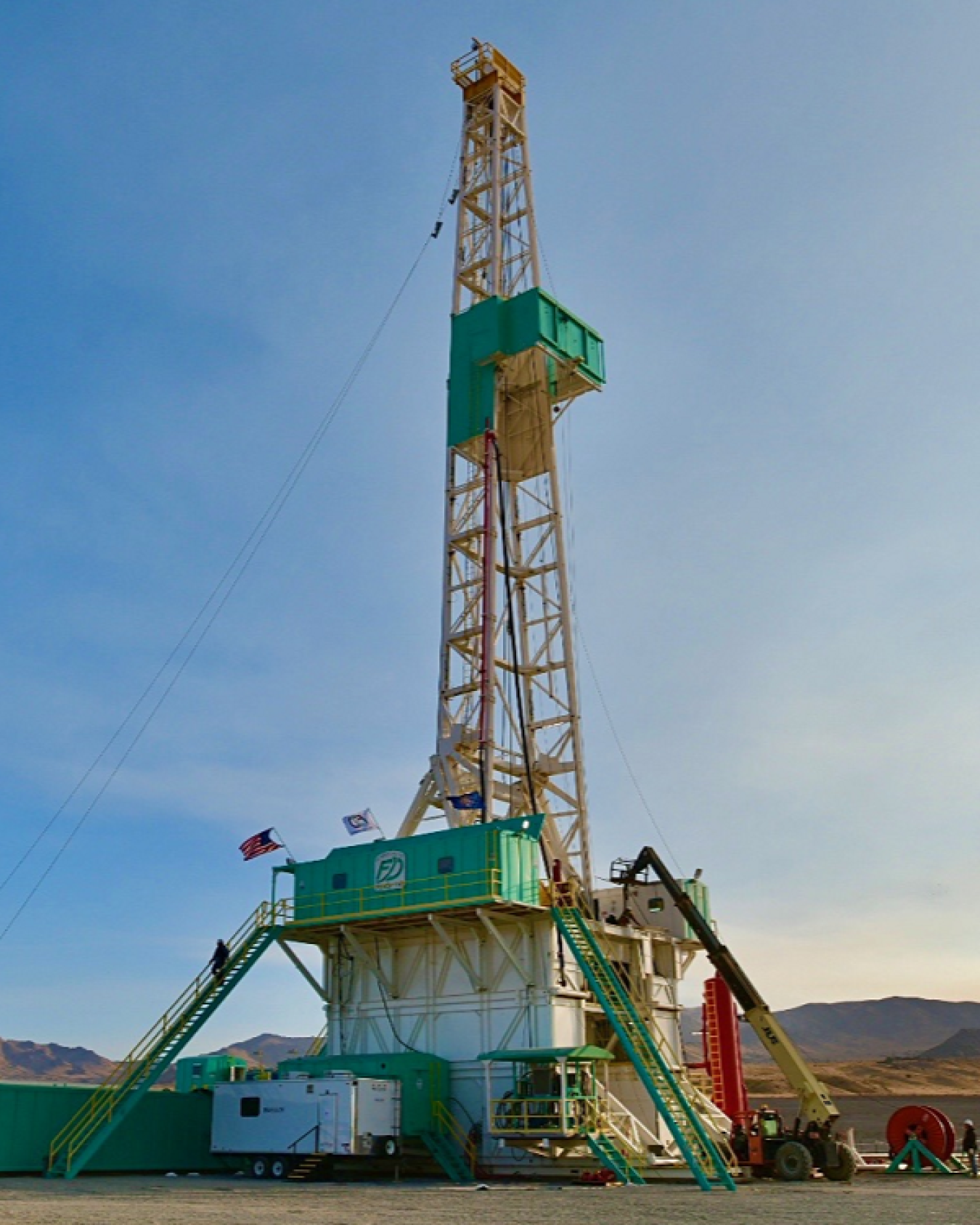
EGS Field Tests
The Office of Geothermal selected five projects to support field-scale EGS tests at depths and temperatures appropriate for full-scale project development in order to fill important gaps in technology and innovation.
EGS Pilot Demonstrations (Infrastructure Investment and Jobs Act)
Office of Geothermal-selected projects under the Infrastructure Investment and Jobs Act EGS Pilot Demonstrations initiative will support advances in EGS technologies in a range of geographic sites with varying geologic conditions. The Office of Geothermal selected three projects in the first round of this rolling funding opportunity, as well as an additional project in the second round.
FORGE
The Office of Geothermal’s largest EGS demonstration initiative is the Frontier Observatory for Research in Geothermal Energy site, or FORGE, in Milford, Utah. Led by the University of Utah, FORGE is a dedicated field site to develop, test, and accelerate breakthroughs in EGS technologies and techniques. The Office of Geothermal also previously supported a multiple-national-laboratory project to conduct laboratory-scale EGS demonstration research through the EGS Collab initiative.
Previous Projects
Location: Bend, Oregon
Partner: AltaRock Energy, Inc.
DOE Funding: $21.4 millionAltaRock's EGS demonstration project at Newberry Volcano near Bend, Oregon, represented a key step in geothermal energy development, demonstrating that an engineered geothermal reservoir can be developed at a greenfield site. Preliminary results from the AltaRock Energy EGS demonstration suggested that the project successfully created three separate zones of fluid flow from a single well where none existed before—a first-of-its-kind achievement. AltaRock completed reservoir stimulation in January 2013.
Newberry marked a critical achievement in options to reduce the cost of geothermal development.
Publications and Data:
- Results from Newberry Volcano EGS Demonstration (Conference Paper)
- Newberry Seismic Deployment Fieldwork Report (Technical Report)
- Newberry Volcano EGS Demonstration - Phase I Results (Conference Paper)
- Newberry EGS Demonstration Report: Stimulating the Existing Fracture Network (Phase 2.1 Report)
- Newberry EGS Demonstration Report: Repairing and Re-stimulating Well 55-29 (Phase 2.2 Report)
Location: Middletown, California
Partner: Lawrence Berkeley National Laboratory
DOE Funding: $6 millionThe Geysers represents the nation's first sustained EGS demonstration success. Operators at The Geysers deepened and stimulated two previously abandoned geothermal wells along the outer edges of an operating geothermal field (Watch a video of geothermal drilling at The Geysers and view the transcript here). Using cost share from the Office of Geothermal, Calpine Corporation's EGS demonstration in Middletown, California, created a new and distinct reservoir that successfully yielded enough steam to produce 5.8 MW of electricity. Because of existing infrastructure, this EGS reservoir demonstrated that stimulating hot rock on the margins of existing hydrothermal fields can secure higher productivity at low cost.
Publications and Data:
Location: Churchill County, Nevada
Partner: Ormat Technologies
DOE Funding: $4.5 millionAt the Brady Geothermal Field EGS demonstration site in Nevada, Ormat improved well injectivity to commercial levels and robust hydraulic connection between the well and the producing field in its hydraulic stimulation of the target well using EGS technology. The project's success encouraged future use of EGS well stimulations to improve flow to commercial production levels, yielding clean, domestic, baseload geothermal energy.
Publications and Data:
Location: Churchill County, Nevada
Partner: Ormat Technologies
DOE Funding: $5.4 millionIn April 2013 DOE recognized the nation's first commercial EGS project to supply electricity to the grid. Leveraging $5.4 million in DOE funding matched by $2.6 million in industry investment, Nevada-based Ormat Technologies increased power output by 38% within an operating geothermal field at Desert Peak, Nevada, generating an additional 1.7 MW of electricity production.
Ormat Technologies stimulated a non-commercial well on the periphery of its operating conventional geothermal system at Desert Peak, Nevada. Extending the life of unproductive wells using new technologies is one example of these innovations. With an increased injection rate of up to 1,500 gallons per minute (gpm), the well stimulation at Desert Peak established new revenue, greater resource reserve, and production certainty, which can boost investor confidence. The Desert Peak success demonstrated that EGS technologies are within reach.
Publications and Data:
Location: Raft River, Idaho
Partner: University of Utah
DOE Funding: $8.6 millionAt the Raft River geothermal field in Idaho, the University of Utah developed and demonstrated techniques to create and sustain EGS reservoirs, including thermal and hydraulic stimulation, with the ultimate goal of improving the overall performance and output of the field. The University of Utah successfully completed well rework operations at U.S. Geothermal's Raft River field in 2012. This set the stage for the thermal and hydraulic stimulation of the target well and, ultimately, demonstration of the technical viability of EGS technology at this site. The Raft River demonstration contributed to ongoing research into EGS well stimulations to improve the flow characteristics of sub-commercial wells to the levels of commercial production.
Publications and Data: