



The U.S. Department of Energy’s Office of Environmental Management has revised and released its strategic plan to complete the tank waste cleanup mission at the Savannah River Site. April 7, 2026
Office of Environmental Management
April 7, 2026 Estimated Read Time min
AIKEN, S.C. — The U.S. Department of Energy’s (DOE) Office of Environmental Management (EM) has revised and released its strategic plan to complete the tank waste cleanup mission at the Savannah River Site (SRS).
Developed by EM with SRS liquid waste contractor Savannah River Mission Completion (SRMC), the SRS Liquid Waste System Plan — available here — outlines the activities required for the disposition of high-level radioactive waste and the removal from service of radioactive liquid waste tanks and facilities at SRS. Essentially, the plan documents production goals and the strategies in place to meet those goals.
With the help of computer modeling, the plan is revised periodically to account for changes, such as new technologies or innovations, project completions and funding scenarios — all of which can impact the mission timeline.
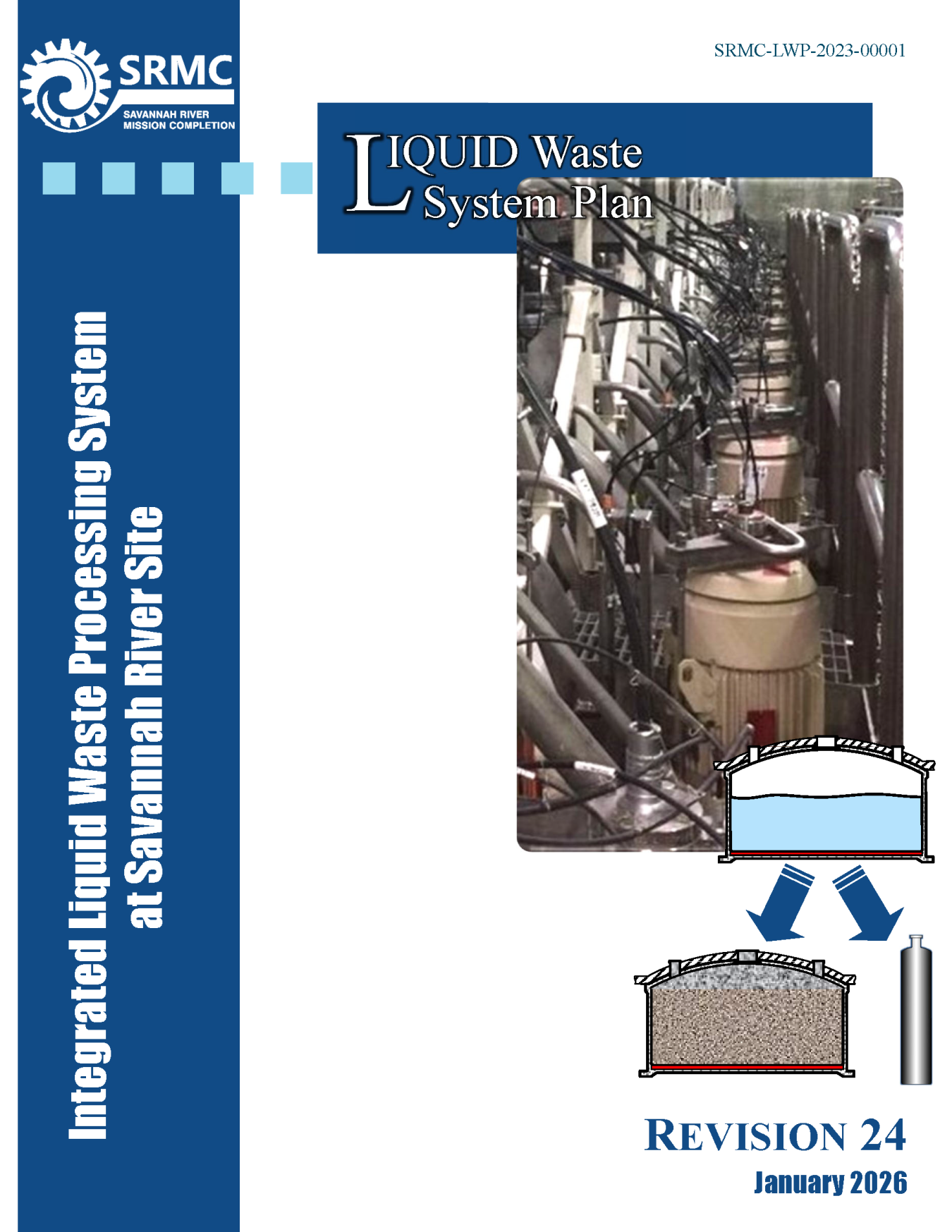
The U.S. Department of Energy’s Office of Environmental Management has published the Savannah River Site Liquid Waste System Plan, Revision 24, strategic plan to complete the site’s tank waste cleanup mission.
The latest revision of the system plan has the timeline to complete waste tank removal and close all tanks between 2037 and 2041, based on various scenarios.
Tony Robinson, DOE-Savannah River acting assistant manager for waste disposition, said a key change in revision 24 is the focus on system availability.
“Due to the highly integrated nature of the liquid waste system, it is critical for the facilities to work together as designed. The improvements to the facilities have increased their operational reliability. The use of innovative technologies like the integrated processing projection tool and livestreaming tank inspections drives efficiency,” Robinson said. “The liquid waste system plan is where we bring all those factors together. As a result, this revised plan provides numerous opportunities to accelerate the liquid waste mission.”
System availability is measured by the operating time of the Salt Waste Processing Facility (SWPF) divided by the total time in a month. SWPF operating time is affected by the waste feed available from the tank farms and the capability to receive material at the Defense Waste Processing Facility and the Saltstone Production Facility. The latest system plan says that an average 65% availability per month is currently needed to meet mission goals.
“Availability is the name of the game now, so we’re going to make sure we’re moving material through the liquid waste system,” SRMC President and Program Manager Thomas Burns Jr. said. “To do that, we’re going to prioritize maintenance at the Defense Waste Processing Facility — a 30-year-old plant that’s been a workhorse for us — and continue to collapse the backend of the mission by making operational tank closure faster and cheaper using drones and 3D-printed tools.”
-Contributor: Colleen Hart
To receive the latest news and updates about the Office of Environmental Management, submit your e-mail address.