



The U.S. Department of Energy Office of Environmental Management and its liquid waste contractor at the Savannah River Site are reconfiguring camera systems used to make inspections of waste tanks, diversion boxes and pump pits available in a matter of minutes. March 3, 2026
Office of Environmental Management
March 3, 2026 Estimated Read Time min
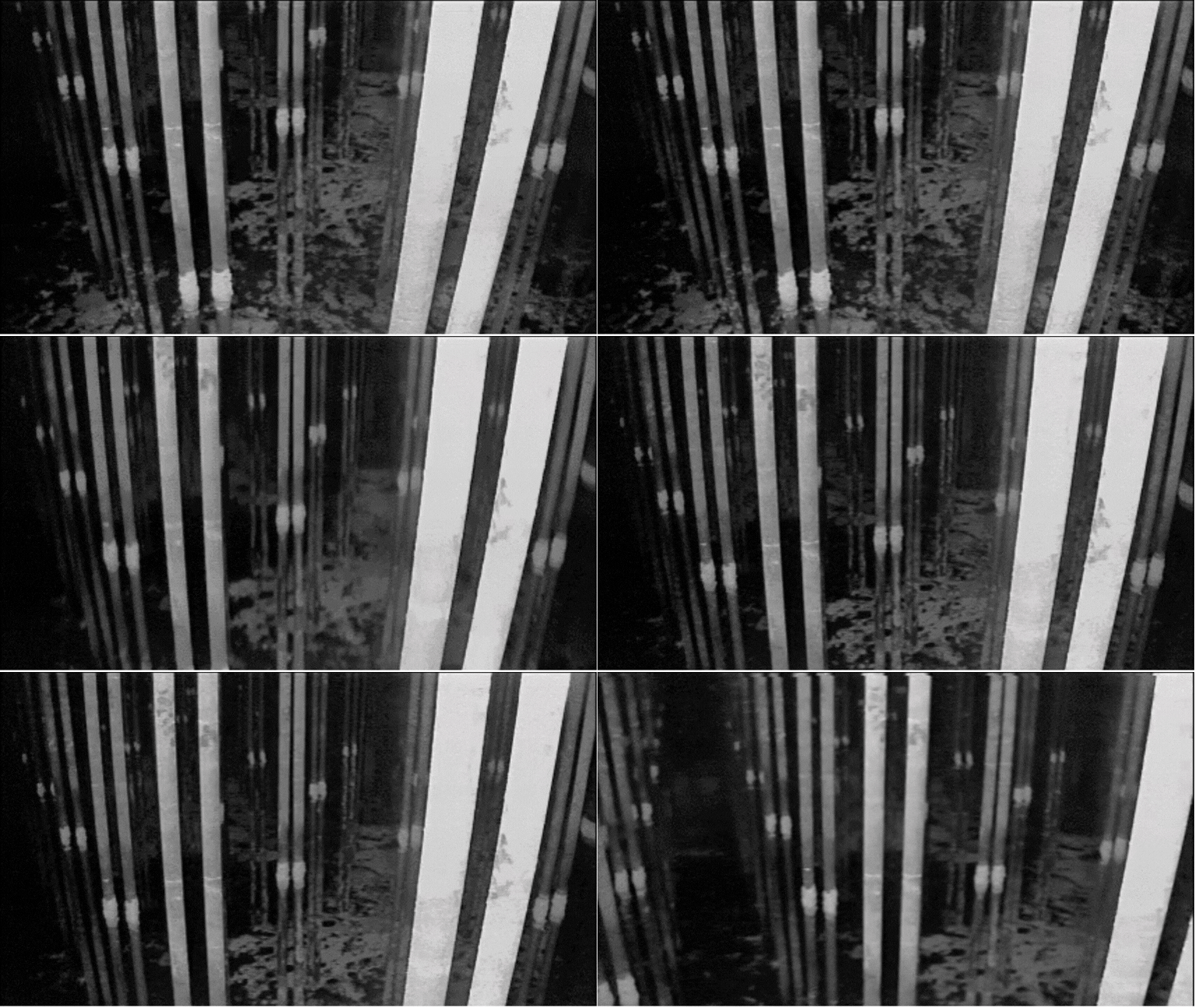
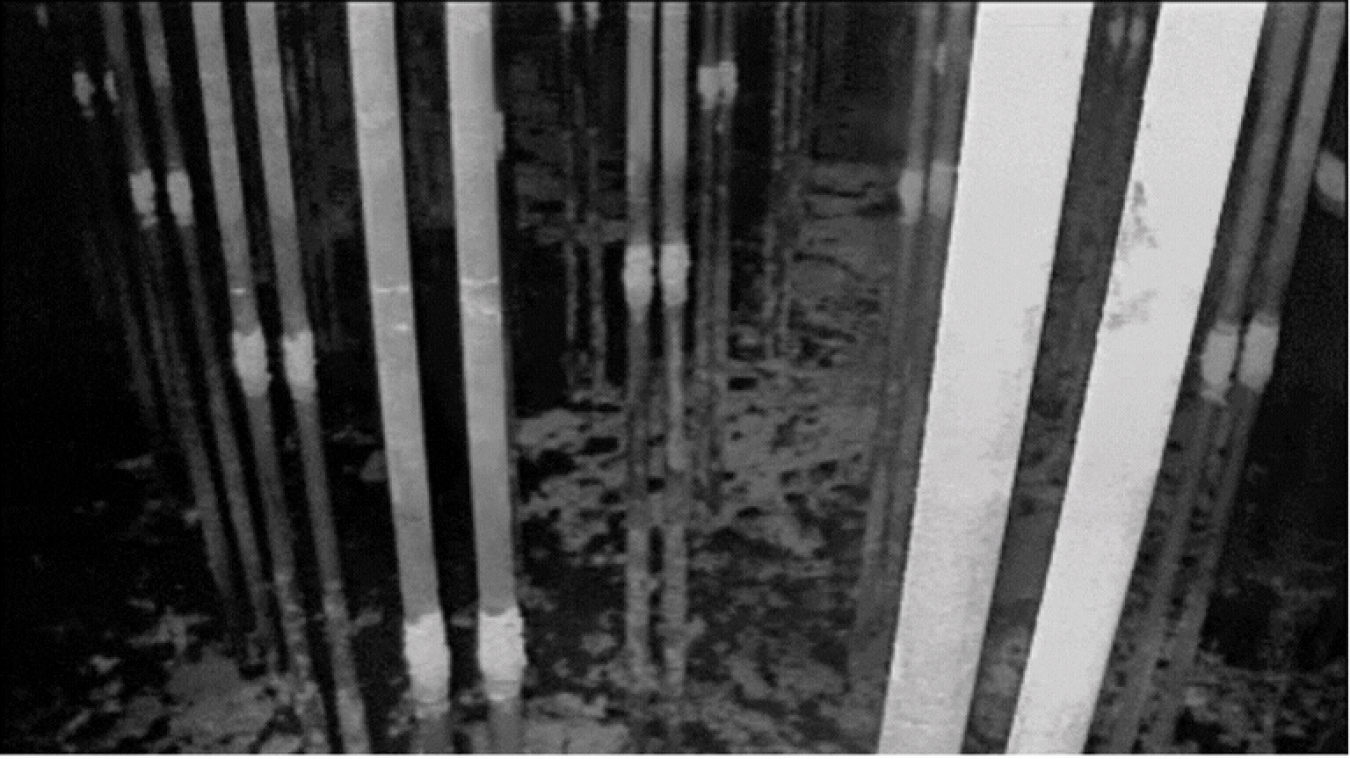
This tank inspection video was livestreamed during a transfer of waste from a tank at Savannah River Site to monitor the liquid level for exposed salt as well as inspect visible equipment.
AIKEN, S.C. — The U.S. Department of Energy (DOE) Office of Environmental Management (EM) and its liquid waste contractor at the Savannah River Site (SRS) are reconfiguring camera systems used to make inspections of waste tanks, diversion boxes and pump pits available in a matter of minutes.
Tank waste at SRS was generated as byproduct from processing nuclear materials for national defense, research, medical programs and missions in outer space. About 33 million gallons remain stored between two tank farms, which are groupings of underground tanks.
Previously, footage from cameras lowered into process areas could only be viewed in the field and downloaded to discs for later distribution and viewing — a process that could take up to 24 hours. Now, crews are installing specialized video transmission equipment and servers in the tank farms to provide streaming capabilities to remotely view the tank footage instantaneously and share it across the facility in minutes.
Livestreaming of tank inspections will streamline distribution of information to aid in making informed decisions more quickly. This efficiency means faster execution of activities, less downtime and an increase in the number of additional activities that can be performed. Each of these efficiencies will enable better use of workers’ time and reduced delays in the performance of activities needed for tank closure, resulting in overall cost savings.
Using a streaming service in 2026 may seem ordinary until you consider the context, according to Savannah River Mission Completion (SRMC) Executive Vice President and Chief Engineer Cliff Conner. SRMC is EM’s contractor managing the tank waste at SRS.
“Streaming video footage is nothing new, but when it’s coming from inside a highly radioactive waste tank, it’s an extremely innovative feat,” Conner said. “By engineering our camera infrastructure to provide streaming video, the tank footage is accessible almost immediately, reducing costs as well as operational delays. This impressive improvement is important to our mission’s acceleration, because it offers real time collaboration to answer important processing questions.”
Tony Robinson, DOE’s acting assistant manager for waste disposition at SRS, said implementing this new technology means informed decisions can be made sooner in the tank closure process.
“Improving access to important camera inspections benefits us greatly as we work to accelerate the SRS liquid waste mission and deliver on our legacy waste cleanup commitments,” said Robinson.
Camera inspections provide valuable information on waste transfer progress, locations of salt and sludge waste, estimations of remaining tank volumes and more.
Streaming inspections also allow users to monitor inspections from anywhere, including live-feed monitoring in the tank farm control room for shift management.
-Contributor: Jim Beasley
To receive the latest news and updates about the Office of Environmental Management, submit your e-mail address.