



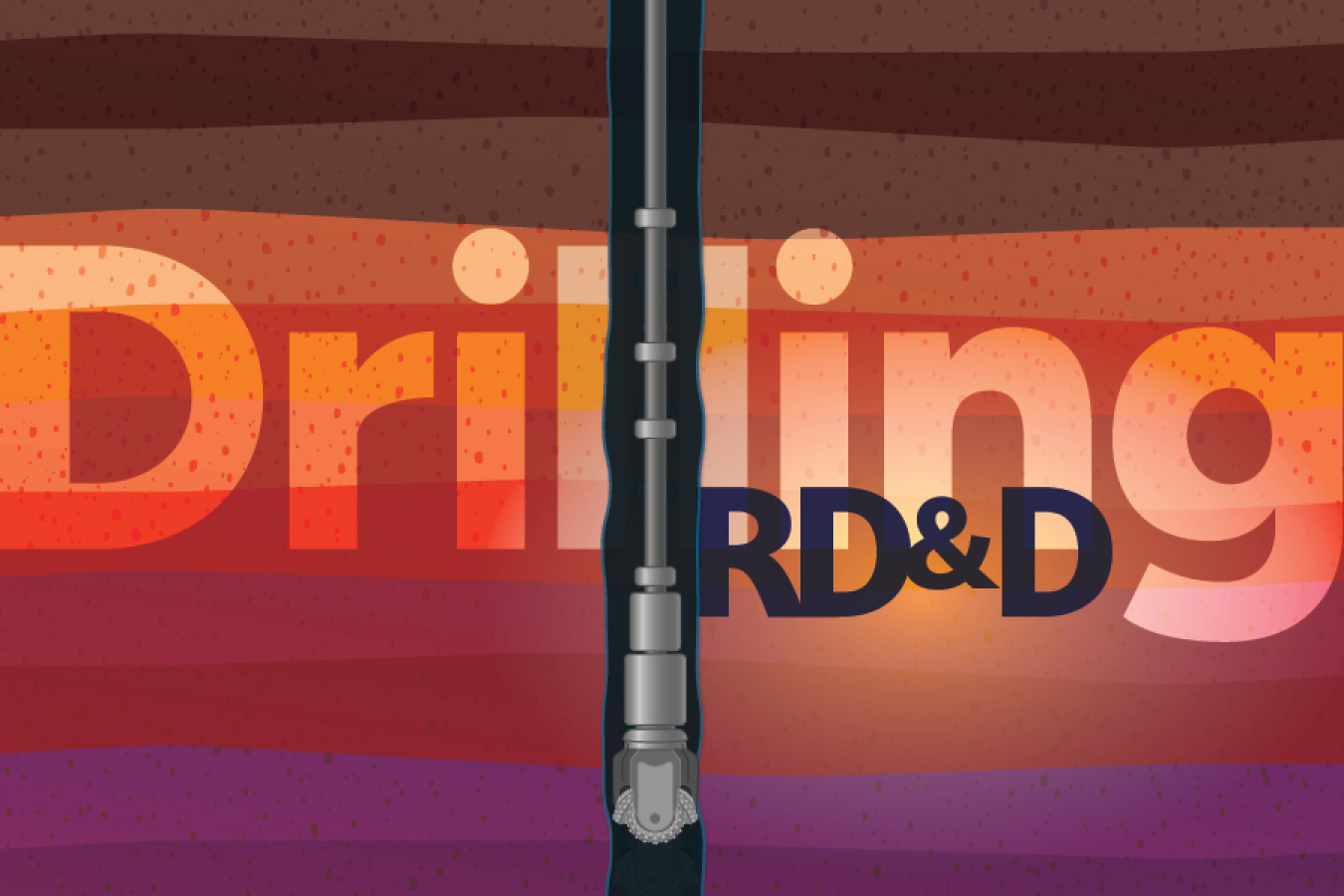
Accessing Earth’s abundant underground geothermal resources requires drilling, which can represent more than half of the total costs of a geothermal project.
The Office of Geothermal funds drilling research, development, and demonstration (RD&D) to help de-risk and substantially reduce costs to develop geothermal energy. Reducing drilling costs and enabling detailed understanding of the subsurface can help make geothermal competitive with other energy sources—in turn, spurring geothermal deployment.
Geothermal drilling RD&D is part of the Office of Geothermal’s work in enhanced geothermal systems and hydrothermal resources. Learn more about other Office of Geothermal initiatives.
Geothermal Resource Characterization and Confirmation
The Office of Geothermal selected 16 projects to support exploration and characterization drilling. These projects will gather the subsurface data needed to characterize and potentially confirm promising next-generation and conventional hydrothermal geothermal resources.
Drilling Demonstrations Initiative
Through the Drilling Demonstrations initiative, launched in February 2022, the Office of Geothermal is funding two projects up to $20 million to reduce the cost of developing geothermal energy by improving drilling rates at least 25%. These projects build on earlier DOE research under work like the Efficient Drilling for Geothermal Energy (EDGE) initiative to advance geothermal drilling technology and methods.
The two projects are Oxy's Geothermal Limitless Approach to Drilling Efficiencies (GLADE) and the Geysers Power Company's Evaluation of Physics-Based Drilling and Alternative Bit Design.
-
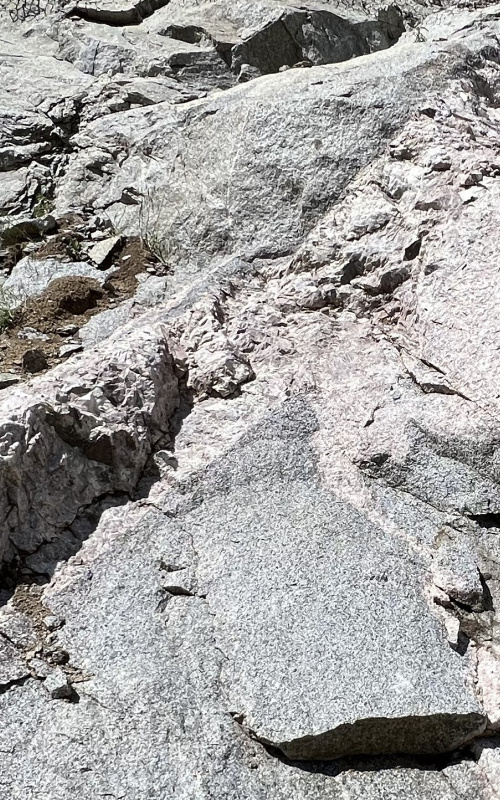 Oxy’s Geothermal Limitless Approach to Drilling Efficiencies (GLADE) project worked to reduce total cycle time of drilling hard, hot, basement rock, from spud to total depth, by drilling twin geothermal wells.July 29, 2026
 -
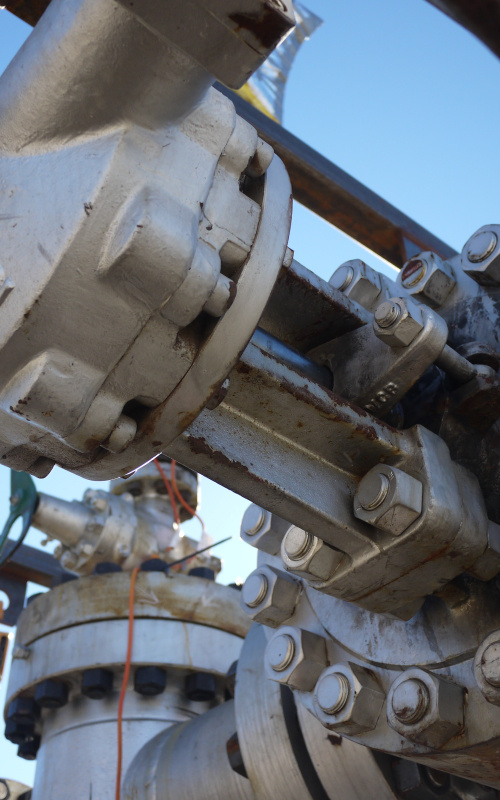 The Geysers Power Company and its partners leveraged innovative drilling technology and methodologies from the Office of Geothermal-funded FORGE site to improve drilling rates for geothermal wells.July 29, 2026
Efficient Drilling for Geothermal Energy (EDGE)
In 2018, DOE announced the selection of seven projects totaling nearly $11.4 million to advance drilling techniques for geothermal energy development. The awardees focused on early-stage R&D projects exploring innovative technologies for drilling geothermal wells that show the ability to reduce non-drilling time, improve rates of penetration, and identify methods to accelerate the transfer of geothermal drilling and related technologies from the laboratory to the marketplace.
Project Name: Development of Advanced Bit Material to Increase ROP in Geothermal Drilling
Location: Argonne, Illinois
Project Summary: Develop more advanced, low-cost materials using superhard nanocomposites combined with ultrafast surface treatment to create new drill bits with tunable properties capable of doubling rates of penetration (ROP) for drilling geothermal wells.
Publications and Data:Project Name: A MEMS Gyro-Based MWD Tool for Reliable, Long-Duration Drilling at 300˚C
Location: Niskayuna, New York
Project Summary: Develop and test a new directional drilling orientation sensor capable of operating at 300°C for 1000 hours. This will enable measurement-while-drilling (MWD) at the significantly higher temperatures needed for geothermal drilling.
Publications and Data:Project Name: Real-Time Drilling Optimization System for Improved Overall Rate of Penetration and Reduced Cost/Ft in Geothermal Drilling
Location: Stillwater, Oklahoma
Project Summary: Develop a new detailed model for common drill bits (PDC) based on tracking cutter wear from rock/bit interactions and design a system to optimize geothermal drilling based on real-time data from that model.
Publications and Data:Project Name: Toward Drilling the Perfect Geothermal Well: An International Research Coordination Network for Geothermal Drilling Optimization Supported by Deep Machine Learning and Cloud Based Data Aggregation
Location: Oregon
Project Summary: Develop a global database of geothermal drilling information in a wide range of geologic settings to optimize geothermal drilling and identify geological factors that lead to drilling success or failure.
Publications and Data:- Toward Drilling the Perfect Geothermal Well: An International Research Coordination Network for Geothermal Drilling Optimization Supported by Deep Machine Learning and Cloud Based Data Aggregation (Technical Report)
- Drilling the Perfect Geothermal Well: an International Research Coordination Network for Geothermal Drilling Optimization Supported by Deep ML and Cloud Based Data Aggregation (Conference Paper)
Project Name: Downhole Sensing and Event-Driven Sensor Fusion for Depth-of-Cut Based Autonomous Fault Response and Drilling Optimization
Location: Albuquerque, New Mexico
Project Summary: Develop sensing tools, algorithms, and actuators for an intelligent drilling architecture which optimizes how deep the drill cutter goes in real-time, leading to longer life for down-hole drilling components, reduced unplanned trips, and more consistent drilling rates.
Publications and Data:Project Name: Rotary Piston Motor for High-Temperature Directional Drilling
Location: Albuquerque, New Mexico
Project Summary: Develop and test a new all-metal down-hole motor that turns drilling fluid flow into torque; this motor will remove current temperature limitations, reduce vibrations, and enable directional drilling into high-temperature geothermal reservoirs.
Publications and Data:Project Name: Targeted Energy Focusing to Induce Micro-Cracking for Reduced Cutting Energy and Increased Rate of Penetration (ROP)
Location: College Station, Texas
Project Summary: Develop and test a new drill bit system that uses nanosecond micro-plasma discharge to create localized shock waves which initiate micro-cracks ahead of the bit, making it easier to cut rock. This system can double ROP for drilling in geothermal wells.
Publications and Data:- Systems and Methods for Forming a Subterranean Borehole (Patent)
- The Effects of Plasma Pre-Cracking on Drilling of Hard Rocks: A Single Insert Cutting Experiment (Journal Article)
- Robust Silane Self-assembled Monolayer Coatings on Plasma-engineered Copper Surfaces Promoting Dropwise Condensation (Journal Article)
- Comparison of Rotary and Linear Cutting Methodology in Determining Specific Cutting Energy of Granite (Journal Article)
- Elucidating the Mechanism of Condensation-Mediated Degradation of Organofunctional Silane Self-Assembled Monolayer Coatings (Journal Article)
- Underwater Plasma Breakdown Characteristics with Respect to Highly Pressurized Drilling Applications (Journal Article)
- Unified Modeling Framework for Thin-Film Evaporation from Micropillar Arrays Capturing Local Interfacial Effects (Journal Article)
- Finite Element Modeling of Orthogonal Machining of Brittle Materials Using an Embedded Cohesive Element Mesh (Journal Article)
Project Name: Changing the Way Geothermal Wells Are Drilled: Physics-Based Drilling Parameter Selection, Workflow Implementation and Training
Location: College Station, Texas
Project Summary: Develop a physics-based workflow and limiter redesign process in attempts to reduce non-drilling and non-productive time.
Publications and Data:Project Name: Developing Advanced Lost Prevention Methods and Smart Wellbore Strengthening Materials for Geothermal Wells
Location: Norman, Oklahoma
Project Summary: Develop and test smart lost circulation materials (LCM) that use shape memory polymers (SMPs) activated by geothermal temperature to prevent the loss of fluid into fractured rock next to the drilled wellbore. The smart LCM expands within the fractures to reduce non-drilling time (NDT) and strengthen the wellbore in high temperature geothermal drilling operations.
Publications and Data:Project Name: The Geothermal Entrepreneurship Organization (GEO)
Location: Austin, Texas
Project Summary: Build a structure and ecosystem to support and accelerate a robust pipeline of cutting-edge research across all relevant science and engineering disciplines into the geothermal drilling and reservoir space.
Publications and Data: