



Two educators in communities near the U.S. Department of Energy’s Portsmouth, Ohio, and Paducah, Kentucky, locations are maximizing resources to help cultivate the next generation of talent to advance the nation’s energy sector and future redevelopment at the DOE sites. May 19, 2026
Office of Environmental Management
May 19, 2026 Estimated Read Time min
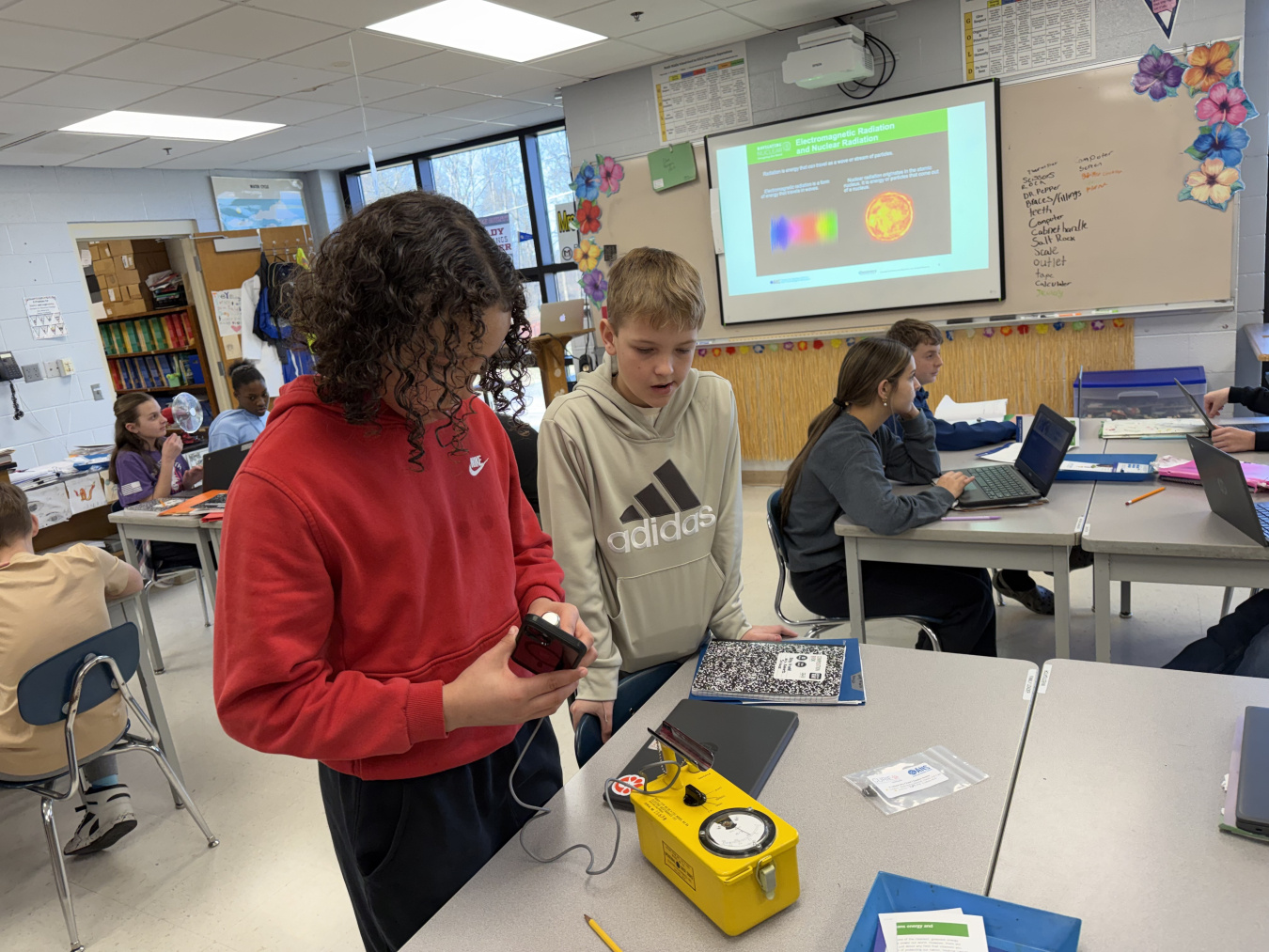
Sixth grade students at Heath Middle School in Kentucky learn about Geiger counters. Teacher Brandy Roberts obtained the equipment and lesson plans through the Waste Management Education STEM Council.
LEXINGTON, Ky. — Two educators in communities near the U.S. Department of Energy’s (DOE) Portsmouth, Ohio, and Paducah, Kentucky, locations are maximizing resources to help cultivate the next generation of talent to advance the nation’s energy sector and future redevelopment at the DOE sites.
Jennifer Buckler, a science, technology, engineering, art, and math (STEAM) and career development teacher for kindergarten through sixth grade at Western Local Schools in Ohio, and Brandy Roberts, a sixth grade science teacher at Heath Middle School in Kentucky, attended the Waste Management Symposia for the second year. Both came away with materials and innovative ideas for their classrooms.
Portsmouth and Paducah team members joined more than 2,500 conference participants who shared knowledge on radioactive materials, decommissioning nuclear facilities and innovative solutions to increase worker safety and project efficiency.
“My favorite part of Waste Management was attending a panel where the different companies shared their outreach stories,” Buckler said. “One organization from Savannah River developed a document with job opportunities and outlined information kids need to get that job,” such as formal academic credentials and alternative career pathways.
Roberts served on the panel, “Creating the Workforce of the Future,” where she and others highlighted recent successes in creating paths for students to support the missions at the Portsmouth and Paducah sites.
“I share everything I bring back from the exhibit hall with my students,” Roberts said. “I also met someone from the United Steelworkers who is going to present to my students about their work and the history of the Paducah Site.”
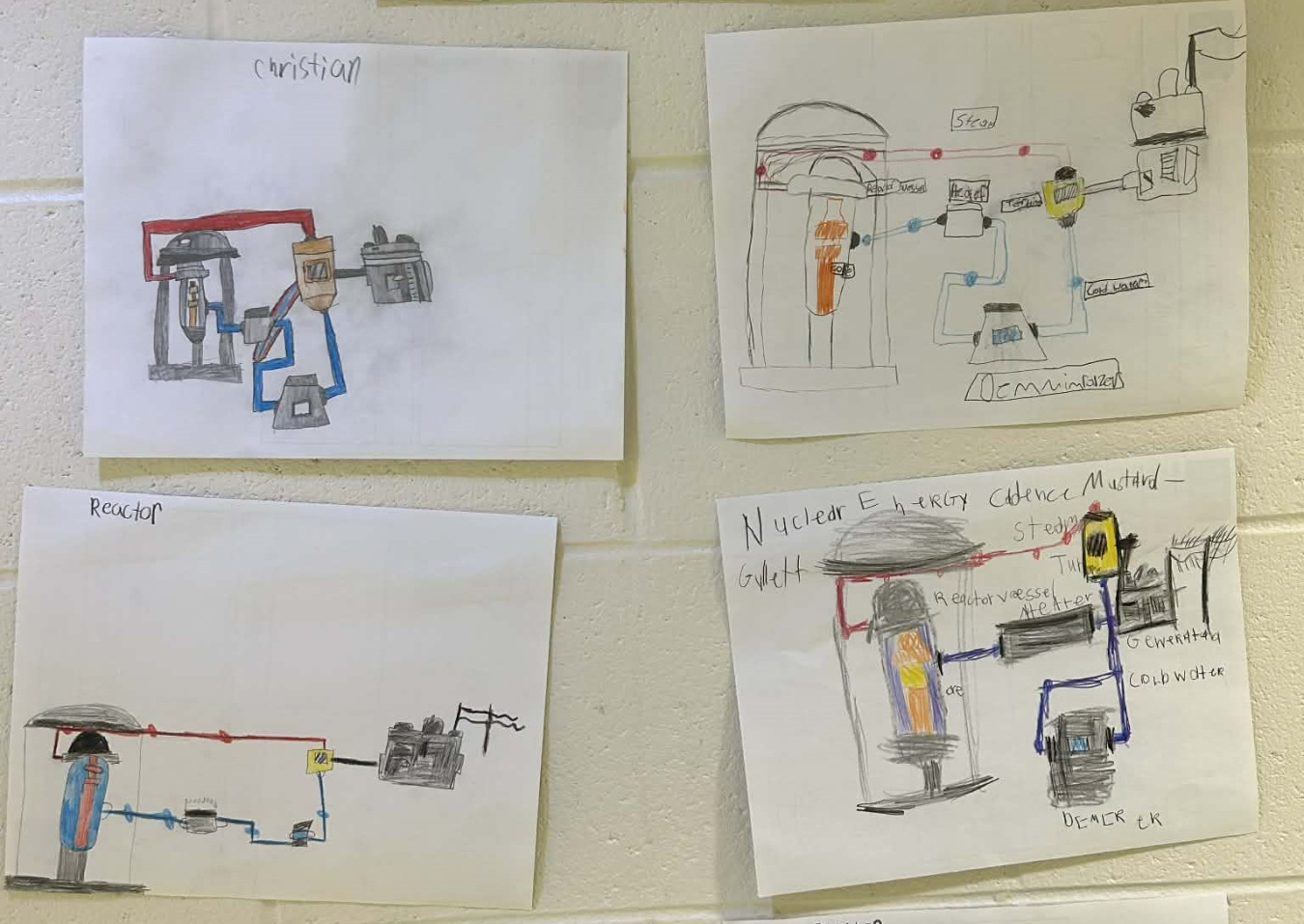
Student drawings of nuclear reactors hang on the wall at Western Local Schools in Ohio. Teacher Jennifer Buckler believes it is important for students to learn about nuclear energy as early as possible.
Both teachers serve on the Waste Management Education STEM Council, which bolsters the ideas and activities teachers carry into their classrooms. Buckler discovered the group through the educational outreach program, STEAM Ahead, from the Portsmouth Site’s deactivation and demolition contractor.
“This program reinforced how critical it is to introduce career awareness and exploration as early as possible,” Buckler said. “Research shows students begin forming ideas about careers as early as elementary school, and early exposure significantly increases their likelihood of pursuing STEM-related pathways later in life.”
Roberts learned about the council when Health Middle School competed in the West Kentucky Regional Science Bowl. She has since obtained lesson plans on subjects like radiation basics.
“The American Nuclear Society donated Geiger counters for my classroom,” Roberts said. “Now, we learn about things like natural forms of radiation and how to use the Geiger counters.”
Buckler’s students explore nuclear energy by creating diagrams of nuclear reactors, and learn the difference between fission and fusion.
Both teachers have educated members of the DOE’s Office of Environmental Management workforce, including Paducah Site General Engineer Mitchell Guthrie. Now, they prepare the next generation for cleanup jobs and future industries at the two sites.
Buckler is organizing the third annual STEAM Career and Community Connects Event, aiming to expose kindergartners through 12th graders to career paths. More than 100 vendors, including site contractors and other tenants, plan to attend.
“We need stronger alignment to ensure students understand the opportunities available and the required skills, especially in rural areas,” Buckler said. “This is not an ability gap, it’s an exposure gap. Intentional partnerships between schools and local industry can bridge this gap and better prepare students for meaningful, in-demand careers.”
-Contributor: Sarah Marko
To receive the latest news and updates about the Office of Environmental Management, submit your e-mail address.