



The U.S. Department of Energy’s (DOE) Office of Geothermal in the Hydrocarbons and Geothermal Energy Office (HGEO) engages with Tribes, Tribal entities, and Native and Indigenous communities to better understand the needs and concerns of Native populations regarding geothermal energy development, and to further opportunities for collaboration. In addition, Office of Geothermal-funded initiatives are working with Tribal, Indigenous, and Native entities to identify opportunities supporting energy sovereignty that includes geothermal energy solutions.
Office of Geothermal-funded Work with Tribal and Native Entities
Geothermal Collegiate Competition (GCC)
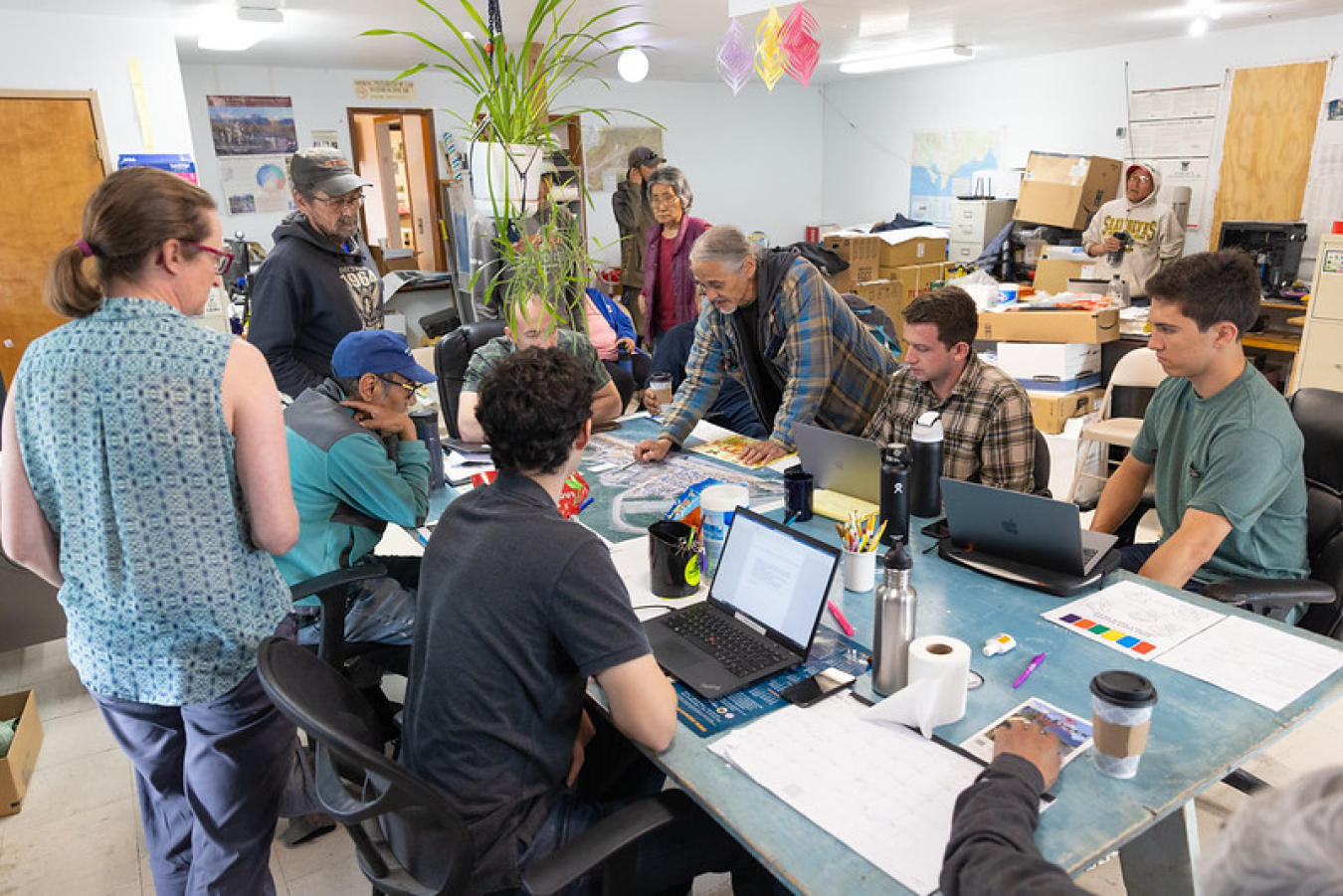
In the Office of Geothermal’s semi-annual collegiate student competition, teams are challenged to design geothermal systems or assess policies and economics for such systems in a community of their choice—often including Tribal and Native communities. Winning teams in the Fall 2023 GCC tracks worked with the Native Village of Elim in Alaska and the Osage Nation in Oklahoma to explore opportunities for geothermal. In 2022, the winning GCC teams also worked with Tribes, designing geothermal systems for the Mandan, Hidatsa, and Arikara Nation in North Dakota and within the Absentee Shawnee Tribe and Potawatomi Nation jurisdiction in Oklahoma.
Read More
- Geothermal Collegiate Competition Helps Communities Explore Renewable Energy
- Geothermal Collegiate Competition Winners Partner With Osage Nation To Address Energy Sovereignty
- Geothermal Under the Midnight Sun
- Community Event Highlights Geothermal District Heating Potential on Tribal Land
- Stakeholder Event Highlights Student Plan to Transition Local Oil and Gas Assets to Geothermal Energy
Geothermal Interagency Collaboration Permitting Task Force
The Office of Geothermal supported the National Laboratory of the Rockies (NLR) to convene federal and state regulators, industry, non-governmental organizations, and Tribes to discuss challenges and opportunities related to geothermal regulatory approvals and permitting. This work included Tribal listening sessions coordinated in consultation with the Bureau of Indian Affairs and the DOE Office of Indian Energy where Tribal participants shared their perspectives on geothermal energy, including concerns and potential pathways to increase deployment. Learn more about permitting for geothermal power development projects.
Makushin Geothermal Project/Qawalangin Tribe in Alaska
Using congressionally directed spending secured by Alaska Senator Lisa Murkowski, the Office of Geothermal is working with the Qawalangin Tribe of Unalaska, Alaska, at the Makushin Geothermal Project. Now in the second phase of the project, the Qawalangin Tribe aims to close key geologic and geothermal data gaps on Unalaska Island and provide a geophysical data package that will be used to develop a precise and actionable drilling plan for future geothermal energy development. Activities in this phase will include collecting high-resolution geophysical data to delineate the Makushin geothermal reservoir; identifying optimal drilling targets for future test wells by integrating new data with legacy reservoir studies and recent academic analyses; and building local and regional capacity in geothermal resource evaluation through partnerships with academic institutions and workforce engagements.
State-Level Community Engagement
With Office of Geothermal support, NLR identified and engaged with Alaskan regions with potential for geothermal development, including the Tanana Chiefs Conference, which is the traditional Tribal consortium of the 42 villages of Interior Alaska. Through this work, the Office of Geothermal and NLR developed meaningful relationships with Alaskan communities, gained a better understanding of the needs of diverse and remote regions in the state, and developed educational tools to help support those communities.
The Office of Geothermal and NLR conducted similar efforts in Hawai’i, including collaborating with Native Hawaiians and facilitating the sharing of information and best practices between Native Hawaiians and the Māori people of New Zealand. Learn more about peer information sharing and NLR’s community engagement in Hawai’i.
The Office of Geothermal is also assessing additional states for community engagement that supports Tribal entities.
Geothermal Power Accelerator
The Geothermal Power Accelerator is a 15-state effort to expand the use of firm, flexible geothermal power by working with states to set statewide geothermal goals, strengthen resource mapping, and advance policies and programs that reduce project costs and address regulatory barriers. Through this initiative, state energy offices are collaborating with industry leaders, federal partners, and national laboratories to identify solutions that drive state-level geothermal investment and deployment. Many participating states identify better understanding and addressing the needs of Tribal, Native, or other indigenous communities as a goal in the state geothermal efforts.
District-Scale Geothermal Energy Pilots
The Office of Geothermal is helping community coalitions design community-scale geothermal heating and cooling systems nationwide. Tribal entities supported under this initiative include the Citizen Potawatomi Nation in Oklahoma, where the University of Oklahoma is leading a project to demonstrate the performance of a solar-geothermal district heating and cooling system with a single ambient- temperature pipe loop and electric-powered heat pumps.
The Office of Geothermal has and will continue to support additional work with Tribal, Indigenous, and Native communities across its research portfolio. Other projects featuring such engagement include the Office of Geothermal’s Play Fairway Analysis projects and earlier research to evaluate the geothermal resource potential within the Pyramid Lake Paiute Reservation in Nevada.