



The Genesis Mission includes a portfolio of National Science and Technology Challenges that brings together the capabilities of the American Science and Security Platform and Federal agencies to accelerate American leadership in science, energy, national security, health, space, and more.
These challenges represent high-impact national priorities where advances in artificial intelligence, advanced computing, experimentation, and data can dramatically shorten discovery timelines, strengthen U.S. competitiveness, and deliver measurable benefits for the American people.
Featured Challenges
-
 The Nation cannot yet trace how the environments in which Americans live, together with lifestyle and genetic variation, drive disease across the life course.August 26, 2026
 -
 We need a way to integrate the disparate experimental results with theoretical knowledge to accelerate discovery.September 3, 2026
 -
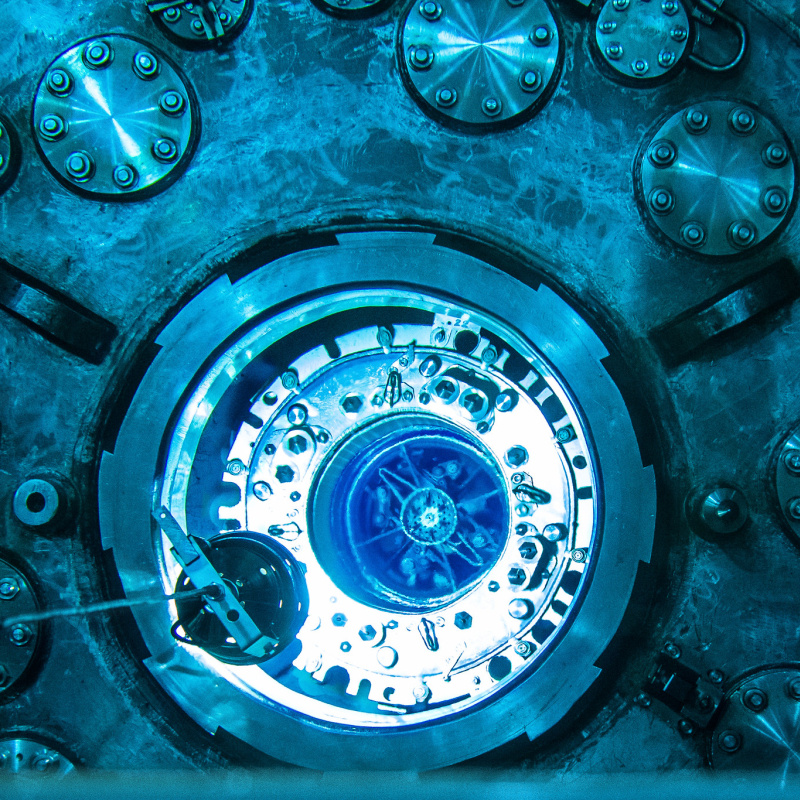 Nuclear power plants have historically been challenged by long development timelines and burgeoning costs, limiting America’s ability to deliver affordable, resilient, and reliable energy as demand continues to grow—particularly from AI data centers.September 3, 2026
 -
 New AI models and advanced simulations can reduce costs, accelerate the discovery of next-generation construction materials and improve the design, operation, and longevity of the Nation's physical infrastructure.August 26, 2026
 -
 Superiority in space begins with the ability to see, predict, and safely maneuver within a domain that is growing more crowded, more contested, and more dynamic by the year.August 26, 2026
 -
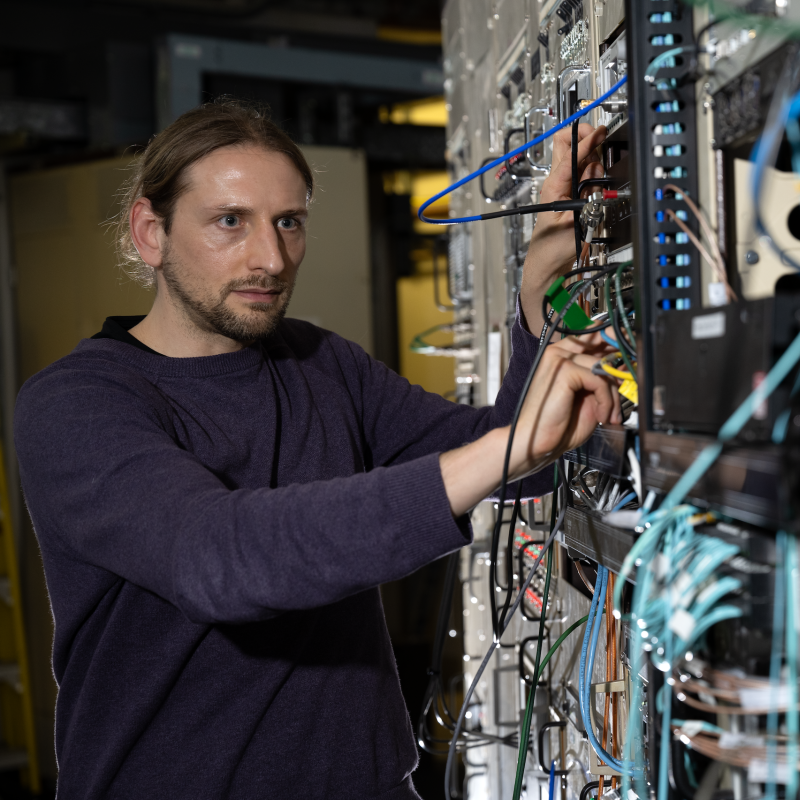 Transforming accelerator-based facilities into highly efficient, autonomous, and more productive capabilities requires a tight integration of AI with design and operation.August 26, 2026
 -
 AI will revolutionize the entire critical minerals supply chain and development of alternative materials by integrating geophysical data, other fundamental science data, process optimization, cost estimation, and economic modeling into one connected system.September 3, 2026
 -
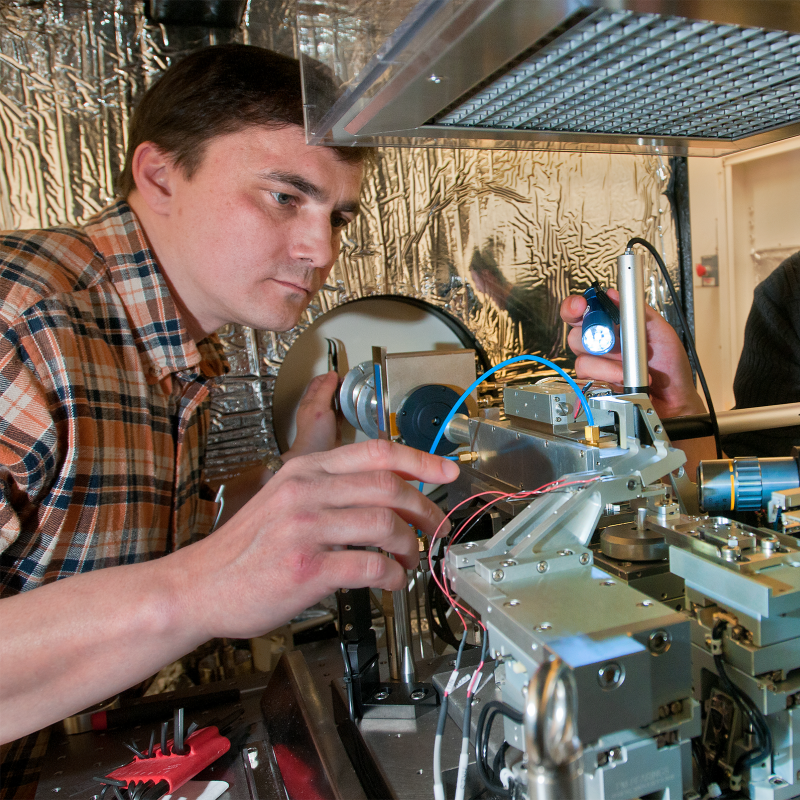 Microelectronics powers all aspects of our lives, including AI, but America faces intense global competition in critical microelectronics applications, including ultra-efficient semiconductors for AI computing, power electronics, and communication networks.August 21, 2026
 -
 The electric grid faces reliability challenges and infrastructure limitations to accommodate dramatic increases in electricity demand from data centers, manufacturing, and electrification while maintaining affordable power for Americans.August 21, 2026
 -
 Recent advancements in agentic and generative AI present opportunities to accelerate discovery and translational science.August 21, 2026
 -
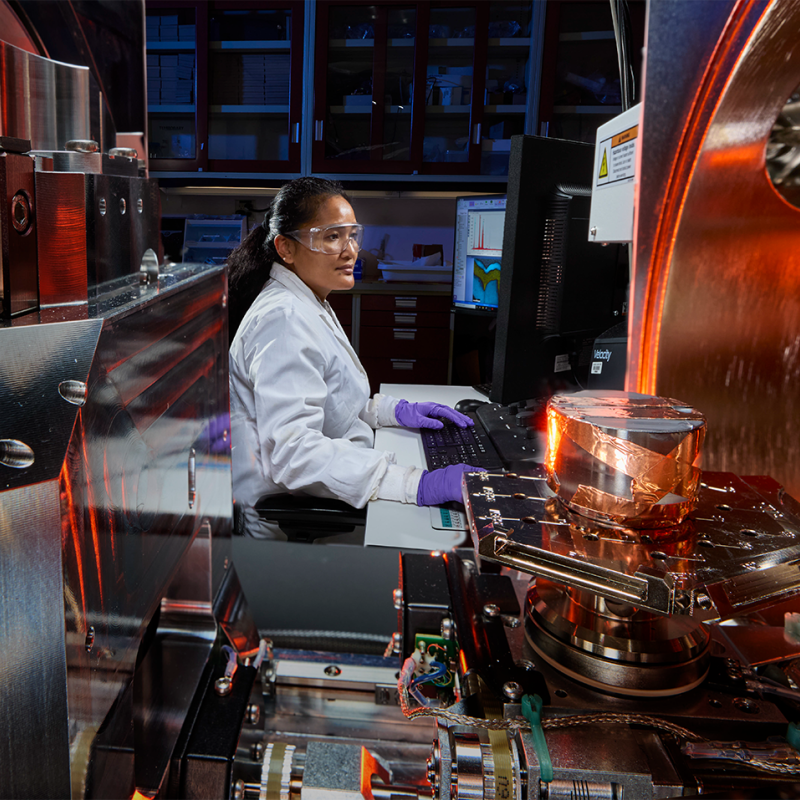 The convergence of current and emerging AI technology with the growing availability of large, curated datasets may be a tipping point for materials discovery, design, and qualification.August 21, 2026
 -
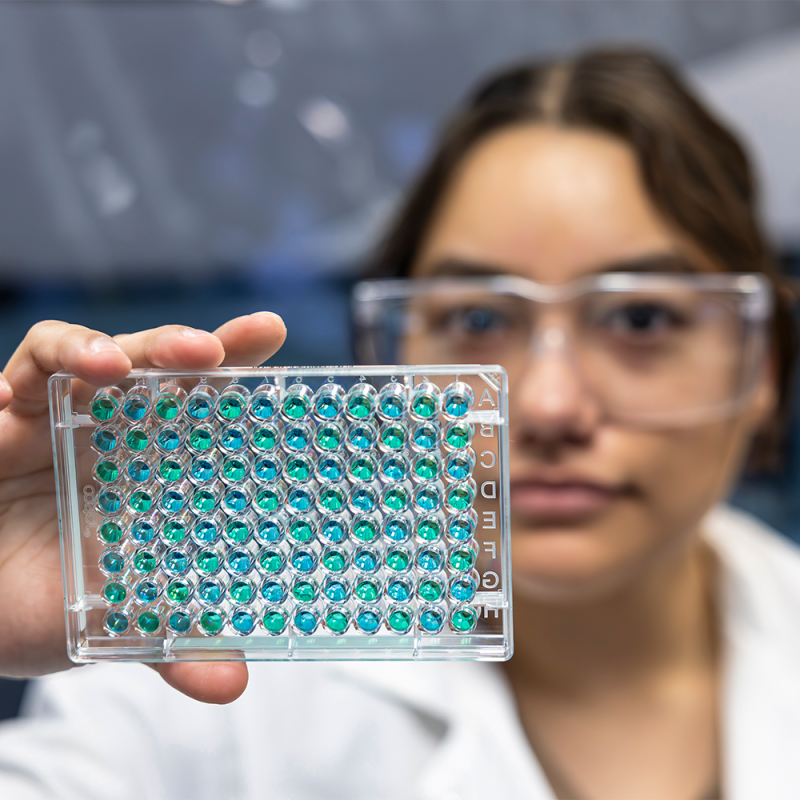 AI will integrate and interpret genomics, multi-omics, imaging, dynamics, and phenomics data into embedded models to establish genotype–phenotype relationships, identify causal control points, and guide autonomous experimentation.August 21, 2026
 -
 Water availability is essential for expanding production and utilization of energy, as well as the nation’s health and security.August 21, 2026
 -
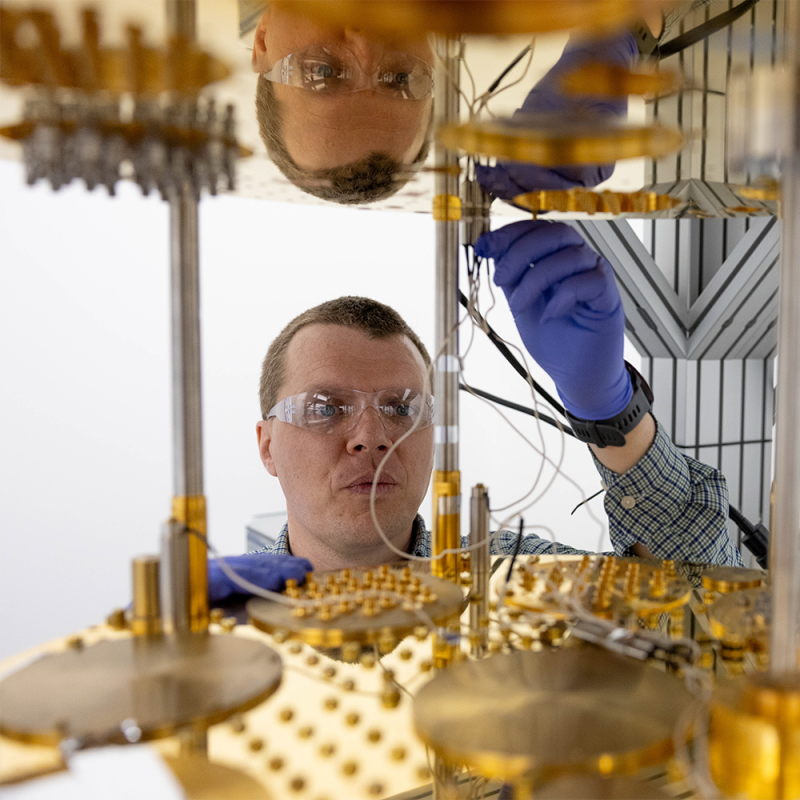 Novel AI could discover new quantum algorithms by automating and optimizing their design and translating them into applications without requiring prior domain knowledge.August 21, 2026
 -
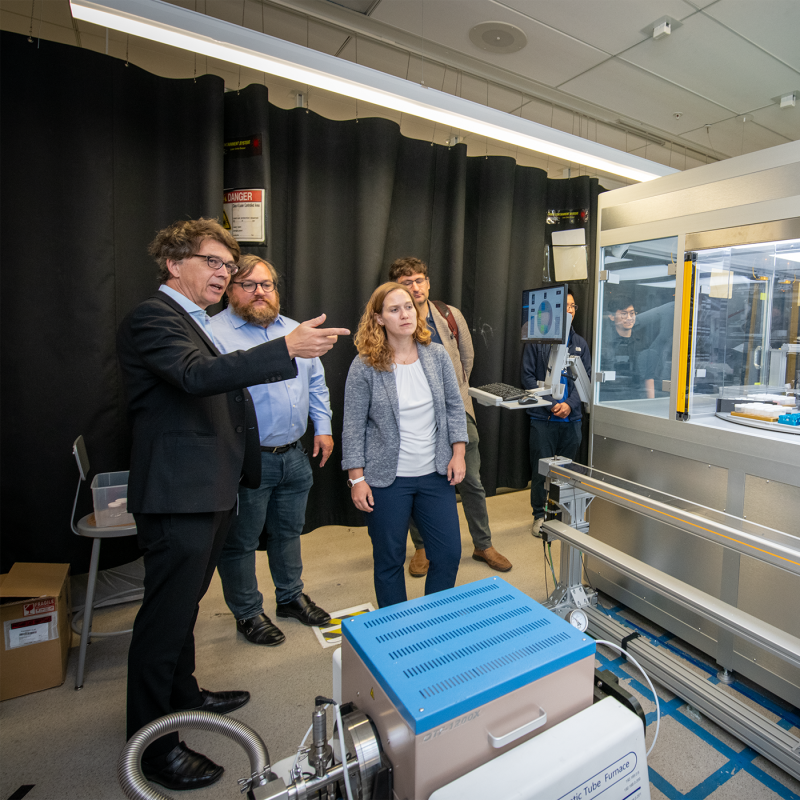 Automating at least some parts of the scientific experimental scheme will both increase the volume of data produced for improved AI models and improve the repeatability of experiments.August 21, 2026
 -
 Building construction faces high costs and long timelines due to fragmented permitting and poor data interoperability.August 21, 2026
Aligned Actions from the National Laboratories
National Challenge:Predicting U.S. Water for Energy
Leading Lab:Oak Ridge National LaboratoryWater availability increasingly constrains U.S. energy production and the resilience of critical infrastructure, yet existing modeling systems are too slow and too coarse to support real-time decision-making.
To address this national challenge, Oak Ridge National Laboratory is leading the development of ORBIT, a unified AI foundation platform that transforms global weather forecasts into sub-kilometer, high-resolution environmental intelligence. Trained on DOE exascale supercomputers and deployable anywhere, ORBIT reduces simulation times from days to seconds while delivering up to 99% prediction accuracy.
This breakthrough enables real-time water forecasting for hydropower operations, flood response, and grid reliability, democratizing access to advanced forecasting capabilities across the energy sector.
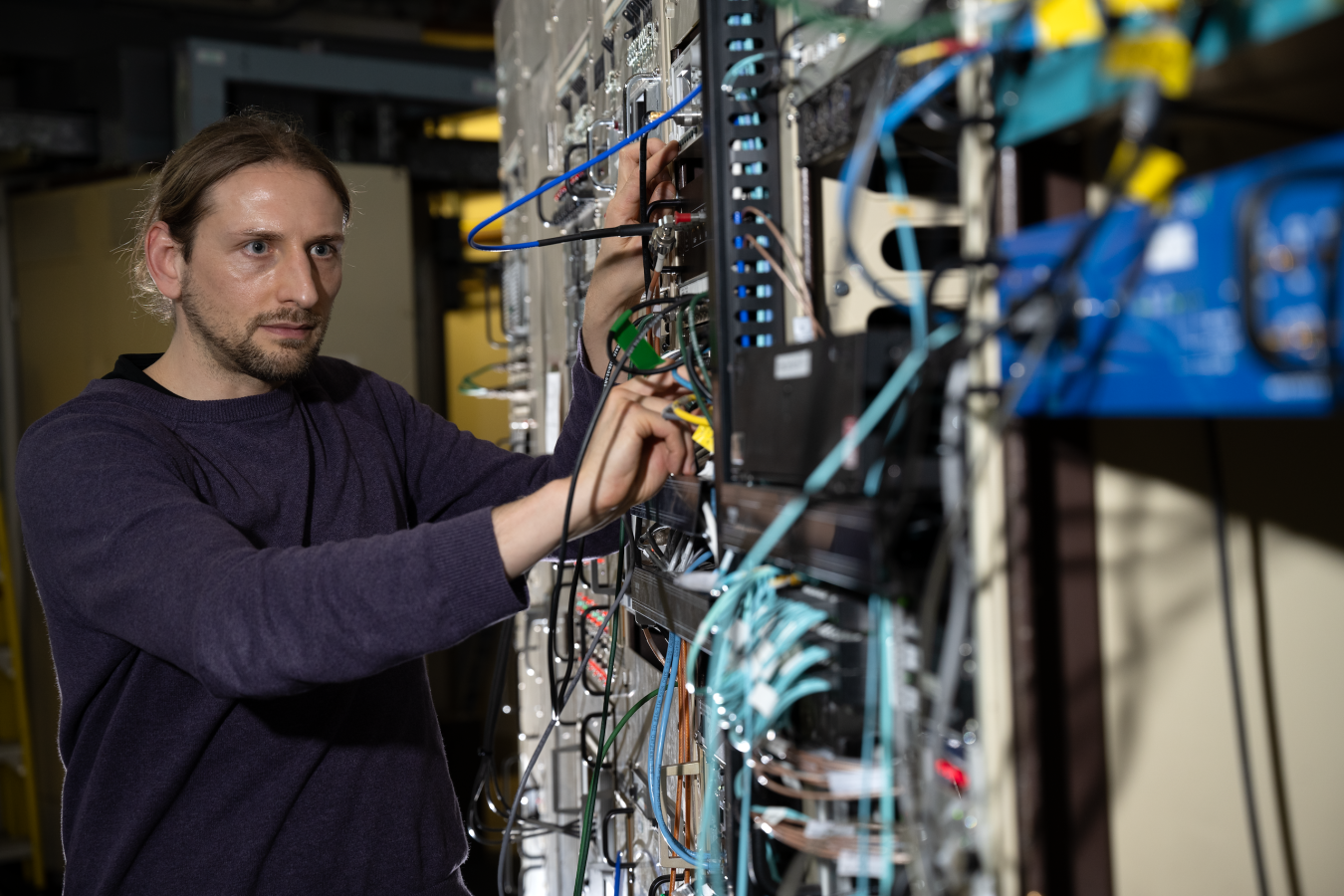 Thorsten Hellert, Berkeley Lab staff scientist and AI Genesis Mission MOAT co-PI, adjusts controls at the Advanced Light Source. (Credit: Thor Swift/ Berkeley Lab. © The Regents of the University of California, LBNL)
National Challenge: Enhancing Particle Accelerators for Discovery
Leading Lab: Lawrence Berkeley National LaboratoryParticle accelerators are strategic infrastructure for science, industry, and medicine—and in the age of AI, how we design and operate them must evolve. To meet this challenge, Lawrence Berkeley National Laboratory created Osprey, an agentic AI platform that streamlines access to accelerator controls and synthesizes information at unprecedented scale. Already installed at eight facilities through the Berkeley Lab-led Multi-Office Accelerator Team (MOAT) project, Osprey is now being co-developed as a community tool by seven national laboratories.
Once fully deployed, Osprey will unlock access to millions of machine parameters and deliver operator queries more than 100 times faster. It will support everything from AI-assisted to fully autonomous operations, including preventive fault detection and automated recovery.
Integrated into the American Science Cloud, Osprey will let researchers across the USA treat the nation's accelerators as a single, intelligent system—dramatically speeding discovery, industrial and medical applications, and the development of next-generation accelerators with higher energy and more precise beams.
National Challenge: Enhancing Particle Accelerators for Discovery
Leading Lab: Thomas Jefferson National Accelerator FacilityPowerful research particle accelerators provide insight into our visible universe, but these sophisticated machines are complex to operate and maintain at peak efficiency.
To meet this national challenge, Thomas Jefferson National Accelerator Facility is applying AI to identify and predict faults before interruptions occur, to reduce damaging radiation, and to balance system components to prevent anomalies. These advances are increasing the uptime and reliability of research particle accelerators, ensuring they operate at peak efficiency now and in the future.
This research is also helping to transform the design of next-generation machines for applications and improvements in medical care, materials science, and energy production.
National Challenge: Unifying Physics from Quarks to the Cosmos
Leading Lab: Thomas Jefferson National Accelerator FacilityExtracting fundamental physics observables from large-scale nuclear physics datasets is time-consuming, typically tailored to a single experiment, and often invasive to the dataset itself.
To meet this national challenge, Thomas Jefferson National Accelerator Facility developed a hardware-accelerated AI-based distributed inverse solver (HAIDIS) that combines the ESNet-JLab FPGA Accelerated Transport (EJFAT) streaming data service with the Scalable AI-Based General Inverse Problem Solver (SAGIPS). The system efficiently feeds continuous data streams into the solver, explores solution space using generative AI, and uses the full computational representation of the experimental pipeline. This approach allows researchers to extract physics observables from large-volume datasets without relying on dimensional reduction techniques or similarly invasive methods.
HAIDIS enables scientists to analyze multiple datasets simultaneously and across facilities, reducing the time to scientific discovery while improving the quality of the extracted results, which provide insights into the building blocks of the universe.
National Challenge: Delivering Nuclear Energy that is Faster, Safer, Cheaper
Leading Lab: Idaho National LaboratoryTo quadruple nuclear capacity by 2050, the pace of deploying reactors will need to accelerate significantly beyond today's timeline. The Prometheus project, led by Idaho National Laboratory in partnership with Oak Ridge, Argonne, and Sandia national laboratories, universities, and commercial partners, is helping compress that timeline by applying agentic AI across the reactor development process.
AI agents coordinate engineering, licensing, manufacturing, and construction workflows, running physics-based simulations grounded in validated nuclear codes. The system draws on decades of curated nuclear research data and learns from each project as it progresses, giving it the context to iterate at speed.
The program targets a tenfold acceleration in design and licensing workflows and a threefold acceleration in manufacturing, laying the foundation for the industry to halve deployment timelines and reduce operating costs by 50 percent. Faster, cheaper deployment of nuclear energy positions the United States to meet surging energy demand and lead the next generation of nuclear reactors.
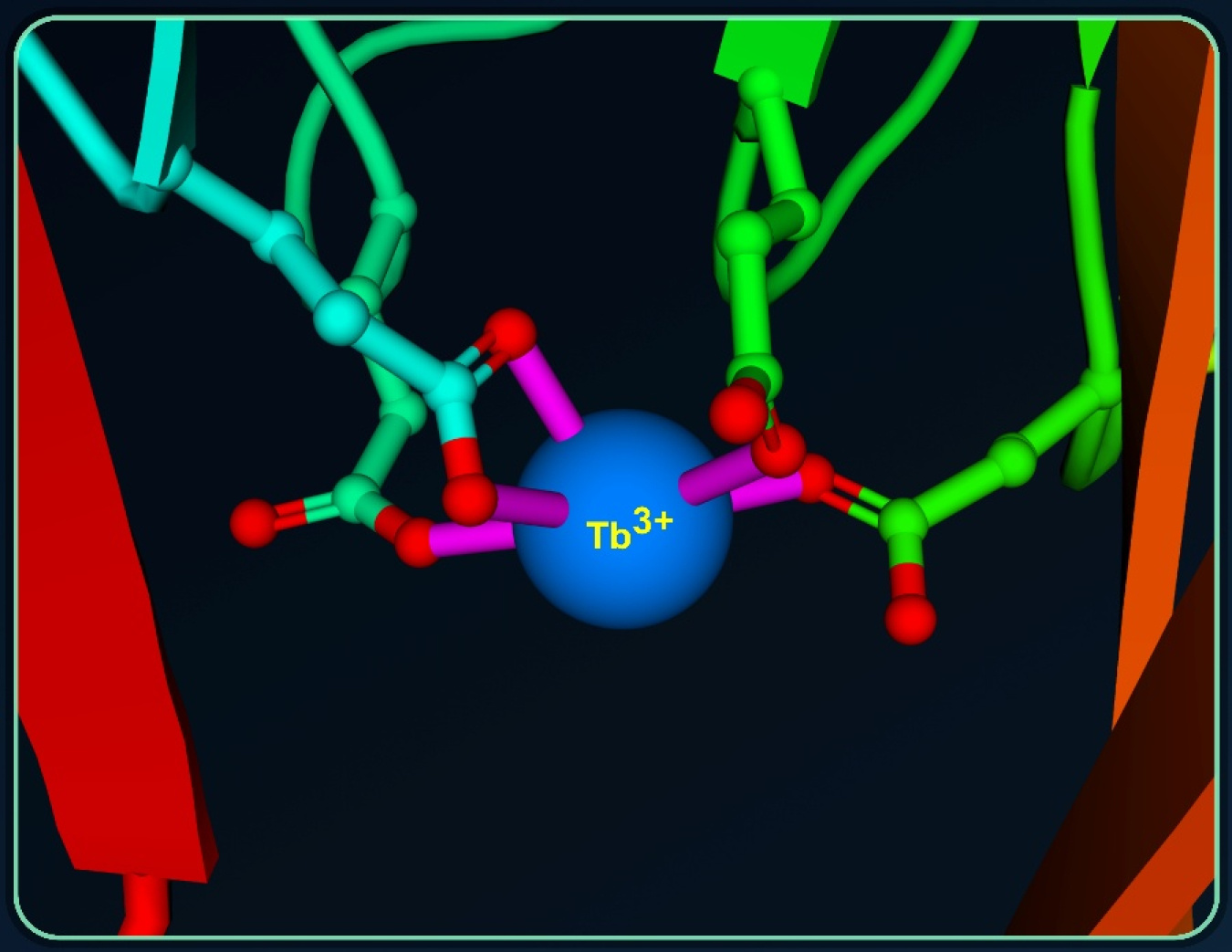 Close-up structure of the terbium-binding site in an AI-discovered protein. This structure connects AI-guided biomolecule discovery with rare-earth terbium capture, supporting a cleaner domestic supply of critical minerals.
National Challenge: Securing America’s Critical Minerals Supply
Leading Lab: Brookhaven National LaboratoryExtracting a critical mineral from ore or waste can take more than 500 chemical steps, using toxic and expensive reagents at high temperatures. Brookhaven National Laboratory is replacing that chemistry with biology, using AI-engineered biomolecules and cells that bind specific elements at ambient conditions.
By leveraging AI and closed-loop autonomous laboratories, this approach could compress 500 steps to fewer than five at equal or higher purity. AI already has helped to discover two biomolecules that capture a critical rare earth element, terbium. The payoff is a domestic critical minerals supply that is faster, cheaper, and far less chemically intensive to produce.
 The Linac Coherent Light Source (LCLS) X-ray laser delivers 93 kHz —almost 100,000 pulses per second. Experiments at higher pulse rates capture ultrafast processes with greater precision and collect data more efficiently. (Jacqueline Ramseyer Orrell/SLAC)
National Challenge: Enhancing Particle Accelerators for Discovery
Leading Lab: SLAC National Accelerator LaboratoryParticle accelerators are large, complex systems that power scientific discovery, and AI has the potential to improve their performance, reliability, and scientific throughput. To address this national challenge, SLAC National Accelerator Laboratory is integrating agentic AI workflows into accelerator control systems, enabling progress in autonomous accelerator tuning and complex diagnostic analysis.
Alongside this, SLAC is using AI/ML system modeling, continual learning, and digital twin capabilities, leveraging real-time integration between high-performance computing and the Linac Coherent Light Source (LCLS) to enable faster prediction of beam behavior and, in turn, aid rapid beam customization. These AI-enabled capabilities have improved prediction speeds for digital twins by more than one million times, enabled orders-of-magnitude faster beam customization, and improved key experiment characteristics, such as beam emittance and acceleration efficiency.
These advances will enable higher-quality beams produced on-demand for scientific and commercial applications, spanning computer chip manufacturing to medicine, while accelerating discovery.
Get Genesis Mission updates from the Under Secretary for Science.
Explore the Genesis Mission
Get in Touch
Under Secretary for Science Darío Gil serves as DOE’s director for the Genesis Mission. Subscribe to the office’s newsletter or follow Dr. Gil on social media for Genesis Mission updates.