



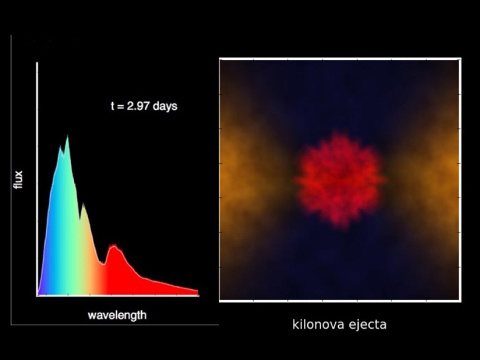
GW170817 was the first gravitational wave detection involving objects with masses typical of neutron stars. Gamma-rays from it were observed by the
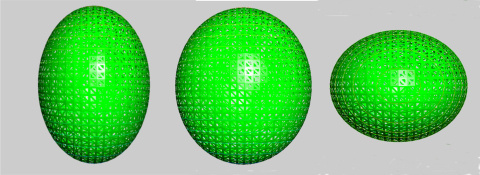
The research team devised a new way to study the shape of atomic nuclei using a particle accelerator and pure electromagnetic interactions. At

Up until now, the big story in characterizing the quark-gluon plasma is that it’s a hot fluid that expands explosively and flows easily. But
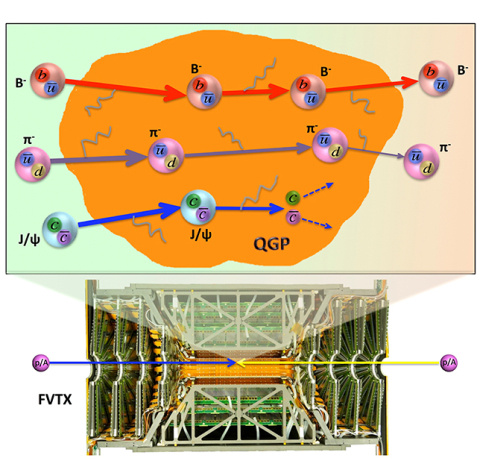
Quarks are the fundamental building blocks of matter and have family members with different masses. The up and down quarks, which make up neutrons
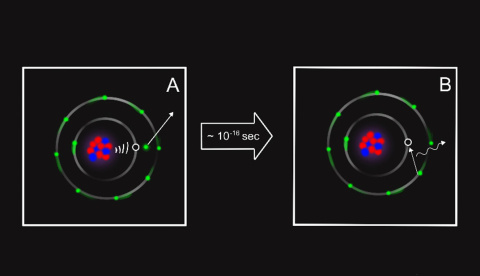
The probability of electron emission relative to that of gamma-ray emission is called the internal conversion coefficient (ICC). The new ICC
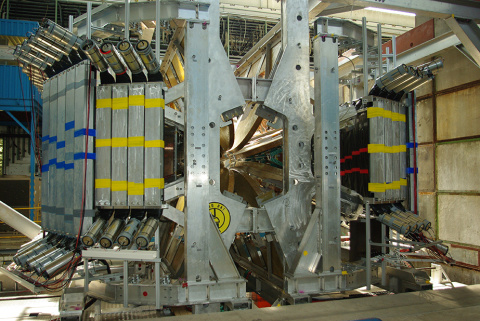
The OLYMPUS experiment was conceived at the Massachusetts Institute of Technology (MIT) in 2007 and carried out by an international collaboration
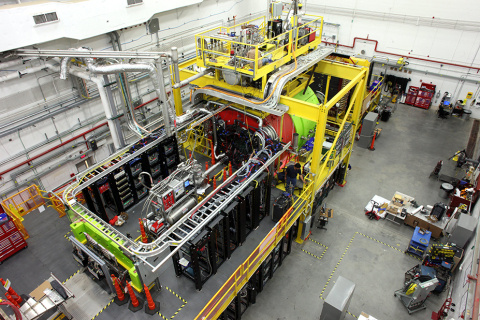
The first experimental result has been published from the newly upgraded Continuous Electron Beam Accelerator Facility (CEBAF). The 12-GeV CEBAF
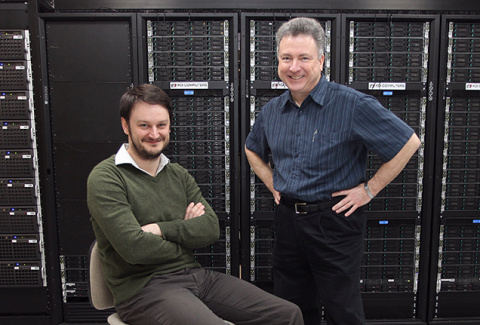
Much like two friendly neighbors getting together to chat over a cup of coffee, the minuscule particles in our subatomic world also come together
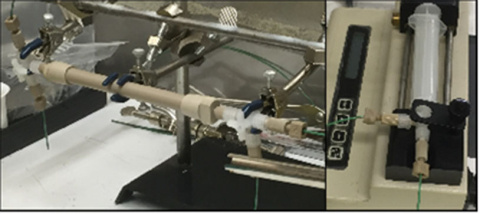
Positron emission tomography (PET) typically relies on relatively short-lived positron emitters, i.e., radioisotopes that decay with the emission
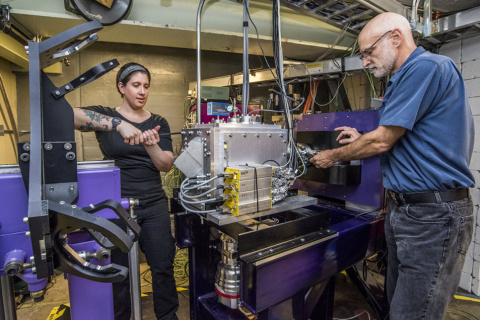
FIONA was installed in November 2016 at Berkeley Lab’s 88-inch Cyclotron. FIONA is an enhancement to a long-running machine called the