



RSS
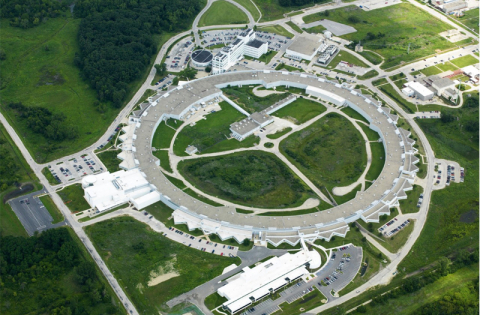
Students Will Perform Research at National Laboratories
Understanding photon collisions could aid search for physics beyond the Standard Model.
Researchers have discovered that by creating a specific set of conditions, they could quantify electron-electron interactions more precisely.
Distinguished University and Cabot Professor Laura Lewis, ChE/MIE, is leading a $2.1M Department of Energy grant.
This renewal grant supports the University’s electromagnetic nuclear physics program at the Thomas Jefferson National Accelerator facility.
Researchers have uncovered a key step in the ionization of liquid water using the lab’s high-speed “electron camera,” MeV-UED.
A team led by DOE's Oak Ridge National Lab has found a rare quantum material in which electrons move in coordinated ways, essentially “dancing.”
By studying neutrino properties with these detectors, scientists will learn more about the role these tiny particles play in the universe.
How do we make battery recycling cost effective? Scientists at the ReCell Center have taken another step towards that goal.
The pandemic changed how we operate our Office of Science user facilities. Now, we want to keep the best practices and innovations going forward.