



RSS
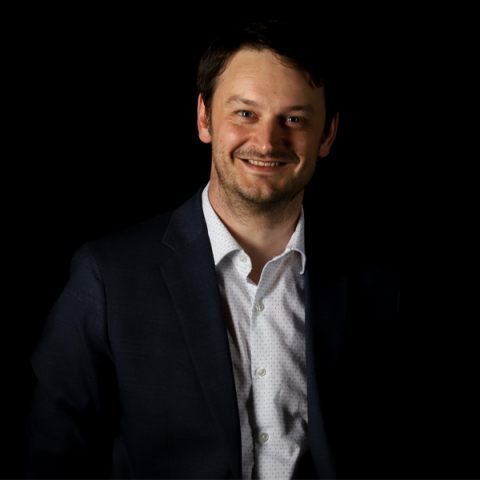
Jozef Dudek has pioneered theoretical techniques to study the subatomic particles – hadrons – which can decay into short-lived states.
Argonne National Lab and University of Chicago scientists are among the first to study asteroid fragments from Hayabusa2 spacecraft.
The Department of Energy awarded $9.35 million to 21 institutions across the country to conduct research on high-energy-density laboratory plasmas.
Scientists have published a new study that furthers our understanding of how plants make membranes in chloroplasts, the photosynthesis powerhouse.
Researchers at Princeton University have recorded the breaking of a single chemical bond between a carbon atom & an iron atom on different molecules.
High-power lasers will work in concert with the lab’s X-ray laser to dramatically improve our understanding of matter in extreme conditions.
Progress in applied research at ANL raises hopes that solid-state batteries will replace conventional lithium-ion batteries sooner rather than later.
A Q&A with Berkeley Lab scientists on how hydrogen can help achieve net-zero emissions.
A team developed and demonstrated a QLAN, enabling real-time adjustments to shared information, using entangled photons passing through optical fiber.
RIT astrophysical sciences and technology Ph.D. student Peter Craig received an Office of Science Graduate Student Research program award.