



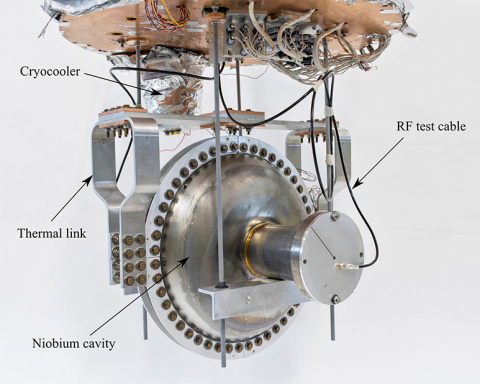
All SRF particle accelerators to-date use liquid helium to maintain the extremely cold temperatures necessary for sustaining superconductivity.

Scientists improve our understanding of the relationship between fundamental forces by re-creating the earliest moments of the universe.
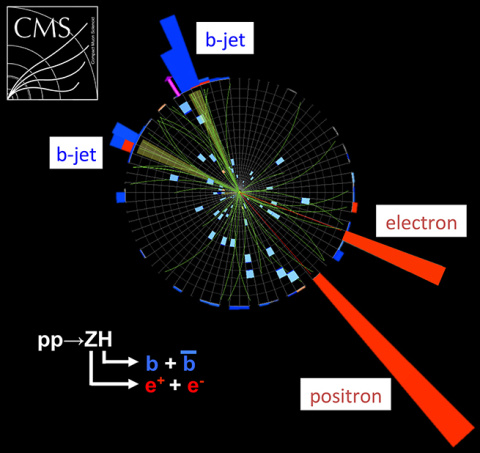
CMS observes Higgs boson decays into bottom quarks, furthering our knowledge of how the particles that make up matter behave.
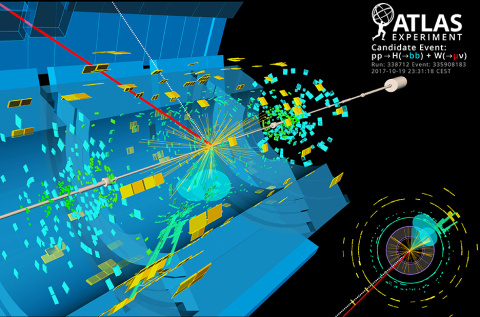
New direct evidence for Higgs interactions with top and bottom quarks confirms its role in generating mass for constituents of matter.
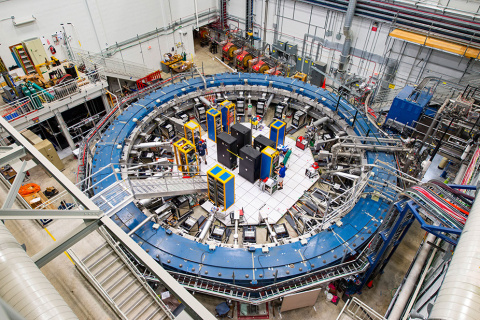
Comparing new prediction to measurements of muons’ precession could potentially help scientists discover new subatomic particles.
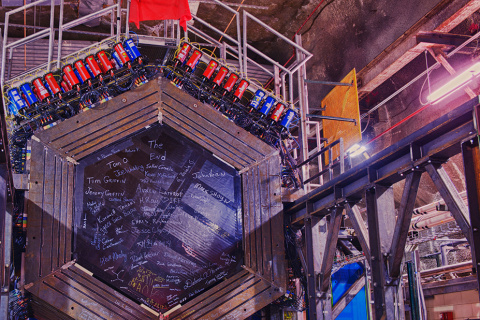
Scientists are developing better models that describe both neutrino and antineutrino data, which can offer insights into the nature of the universe.
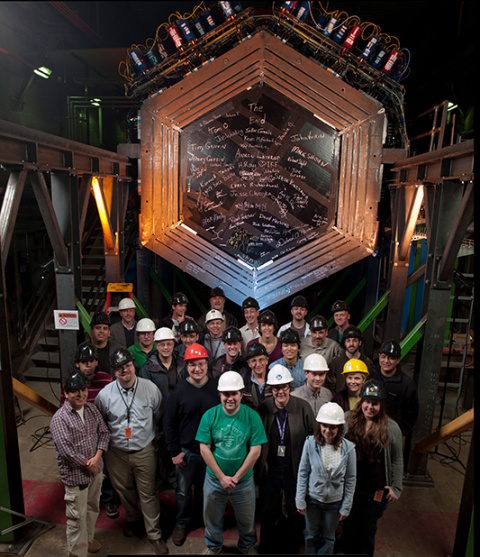
Neutral pion production is a major character in a story of mistaken identity worthy of an Agatha Christie novel.
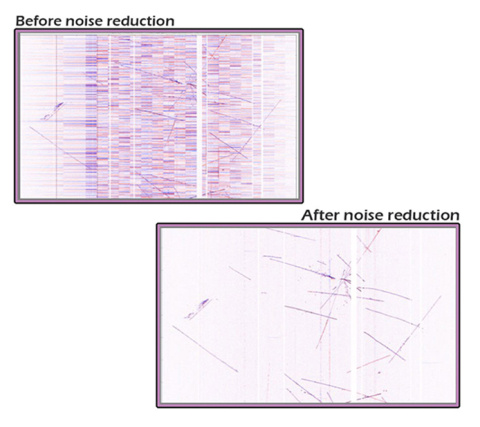
The primary component of the MicroBooNE detector is the TPC—a large, rectangular structure that includes a set of wire planes and readout
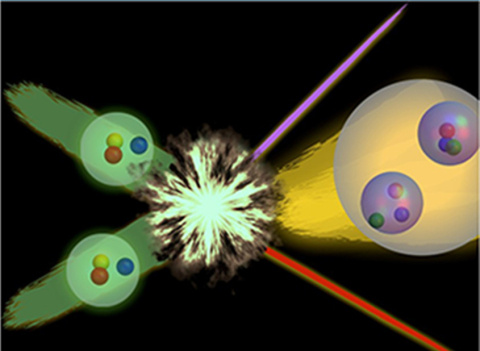
The Nuclear Physics with Lattice Quantum Chromodynamics Collaboration (NPLQCD), under the umbrella of the U.S. Quantum Chromodynamics Collaboration
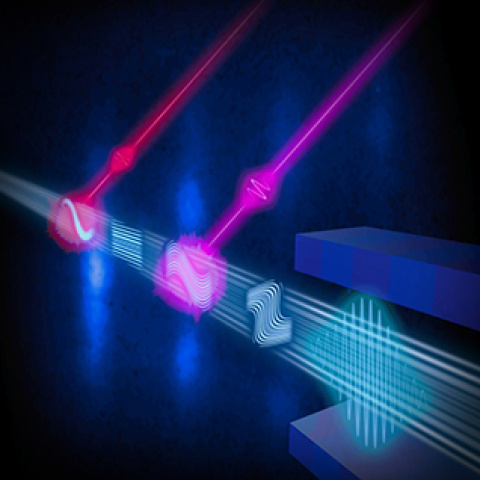
Modern x-ray free-electron lasers use high-energy electrons to produce intense x-ray pulses to study the structure and behavior of matter. However,