



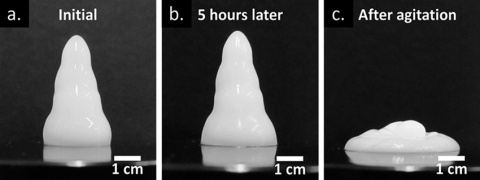
When metal oxide nanoparticles are manufactured by reaction of gases at high temperature, they can form aggregates with complex geometric shapes.
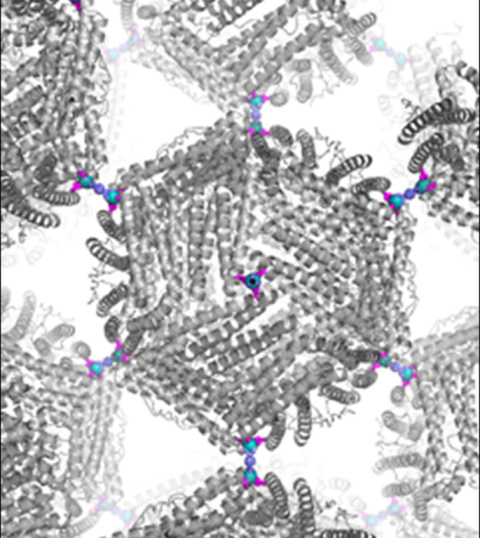
Formation of a 3-dimensional (3D) porous, crystalline framework material—formed by spherical proteins that assemble via directed interactions

After a material is excited, the first electronic motions are fundamental processes that enable transport of energy and information. Snapshots of

A series of tabletop laser systems are being developed to bridge the materials characterization gap between conventional laser-based systems and
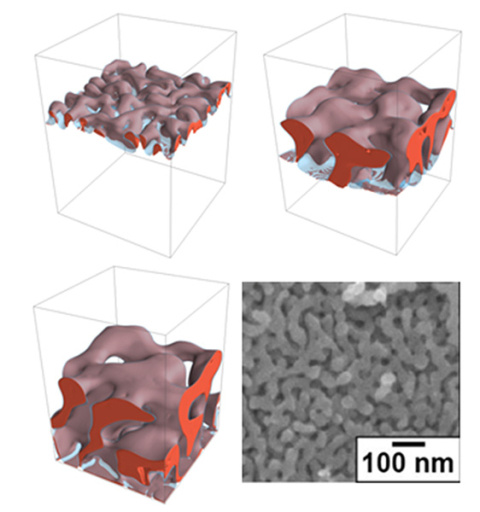
Some liquid metals have been observed to transform uniform solid alloys into complex structures–-a process that is not well understood. In
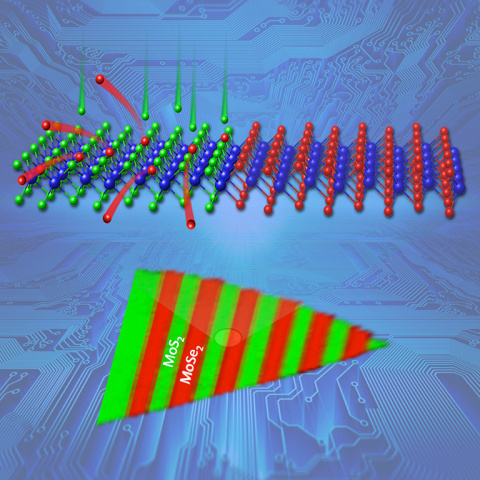
Junctions of two-dimensional (2D) semiconductors could enable next-generation photovoltaics, lighting, and electronics. For example, current
A new ultra-thin semiconducting material (tungsten disulfide or WS2) consists of three atomic layers in an “atomic sandwich”
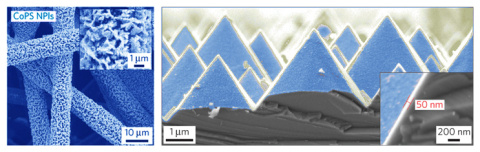
Scientists discovered that a close relative of a well-known iron-based mineral called fool’s gold (iron pyrite, FeS2) is an
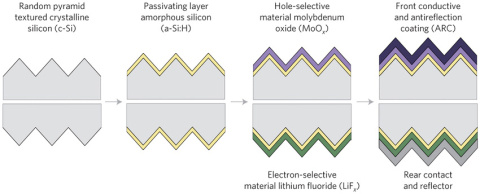
In this simplified architecture, sunlight passes through the top layer (metal oxide) and creates electron-hole pairs in the silicon. The holes are
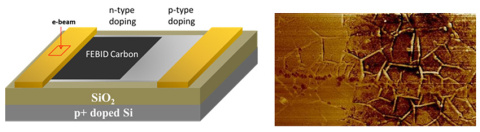
Scientist have developed a novel “direct-write” additive lithographic technique that can be used to electronically pattern graphene