



Oak Ridge team members designed a new attachment for robotic equipment that’s helping accelerate cleanup at Oak Ridge National Laboratory while handing taxpayers half a million dollars in savings. May 19, 2026
Office of Environmental Management
May 19, 2026 Estimated Read Time min
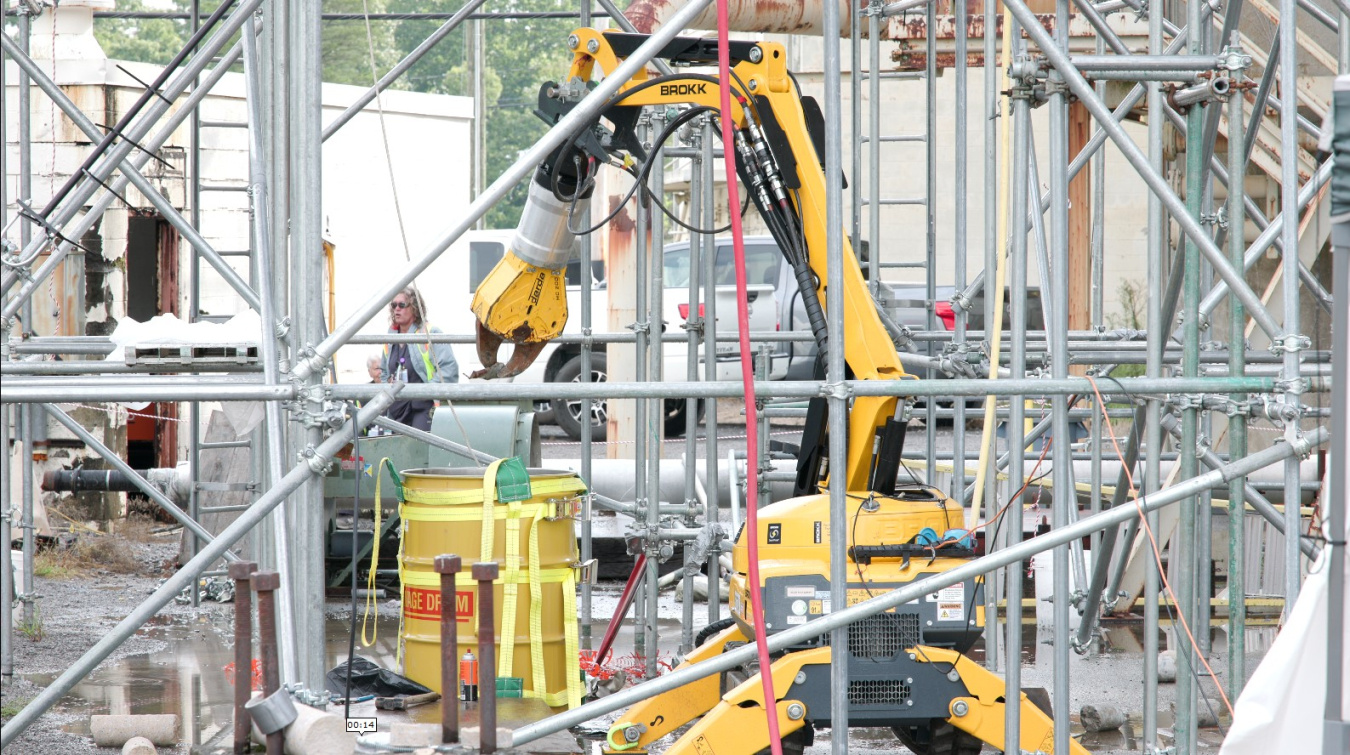
A robotic arm with a new attachment is central to a mock-up demonstration prior to field work at the former Radioisotope Development Laboratory’s final hot cell.
OAK RIDGE, Tenn. — Oak Ridge team members designed a new attachment for robotic equipment that’s helping accelerate cleanup at Oak Ridge National Laboratory (ORNL) while handing taxpayers half a million dollars in savings.
The Oak Ridge Office of Environmental Management (OREM) and cleanup contractor United Cleanup Oak Ridge (UCOR) are deactivating the final hot cell of the former Radioisotope Development Laboratory, preparing one of the most contaminated structures at ORNL for demolition.
Work to clear debris from the structure requires use of remote robotic equipment due to contamination. Previous equipment could only pick up one item at a time. However, the new attachment UCOR operators designed allows a robotic arm to scoop up waste in bulk, streamlining cleanup.
“This simple innovation has helped to accelerate cleanup inside the cell with more efficient debris removal while safeguarding our employees from exposure,” said UCOR Senior Vice President of End State Delivery Clint Wolfley.
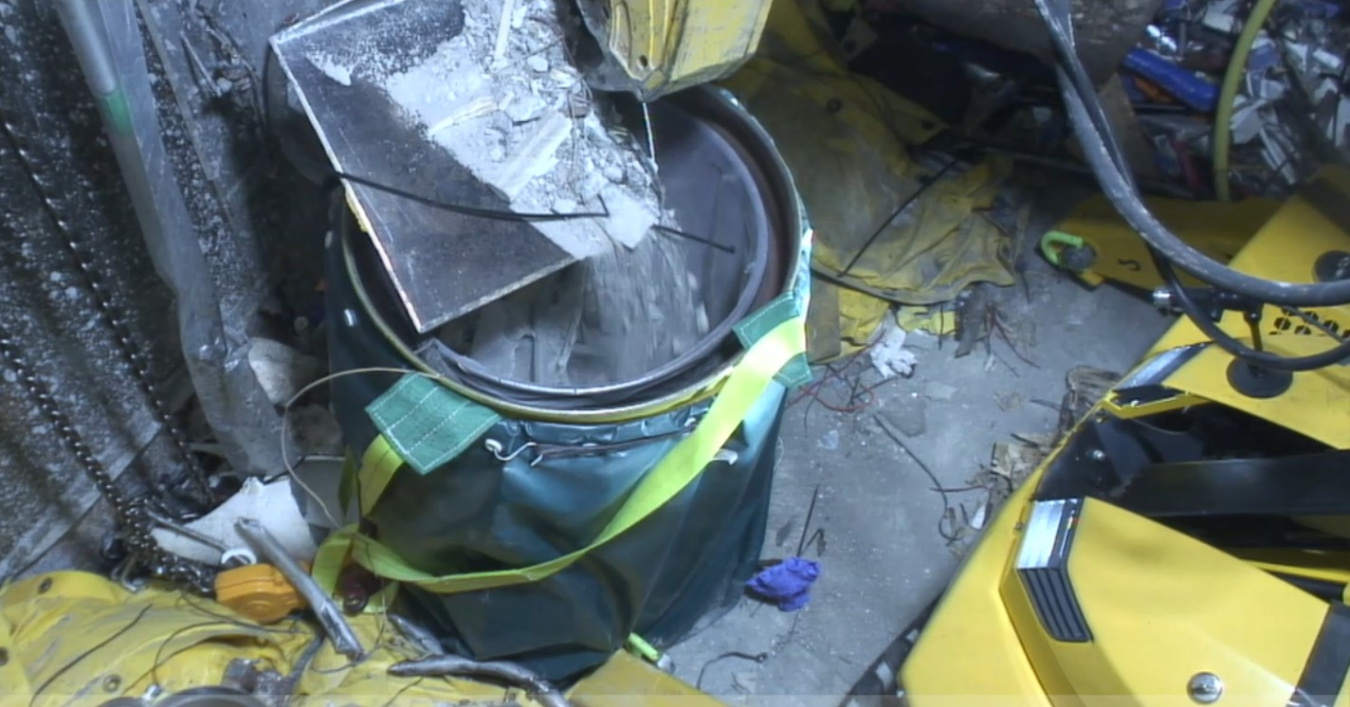
A new attachment designed by United Cleanup Oak Ridge operators allows a robotic arm to scoop up debris in bulk, streamlining cleanup.
With remote-style deactivation slated for other highly contaminated hot cell facilities at ORNL, the attachment can benefit other projects.
“This operator-driven solution highlights the value of leveraging the expertise of the crews performing the work and empowering them to pursue improvements and better approaches to tasks,” said ORNL Portfolio Federal Project Director Steve Clemons. “In this instance, their ingenuity will result in savings for future projects, too.”
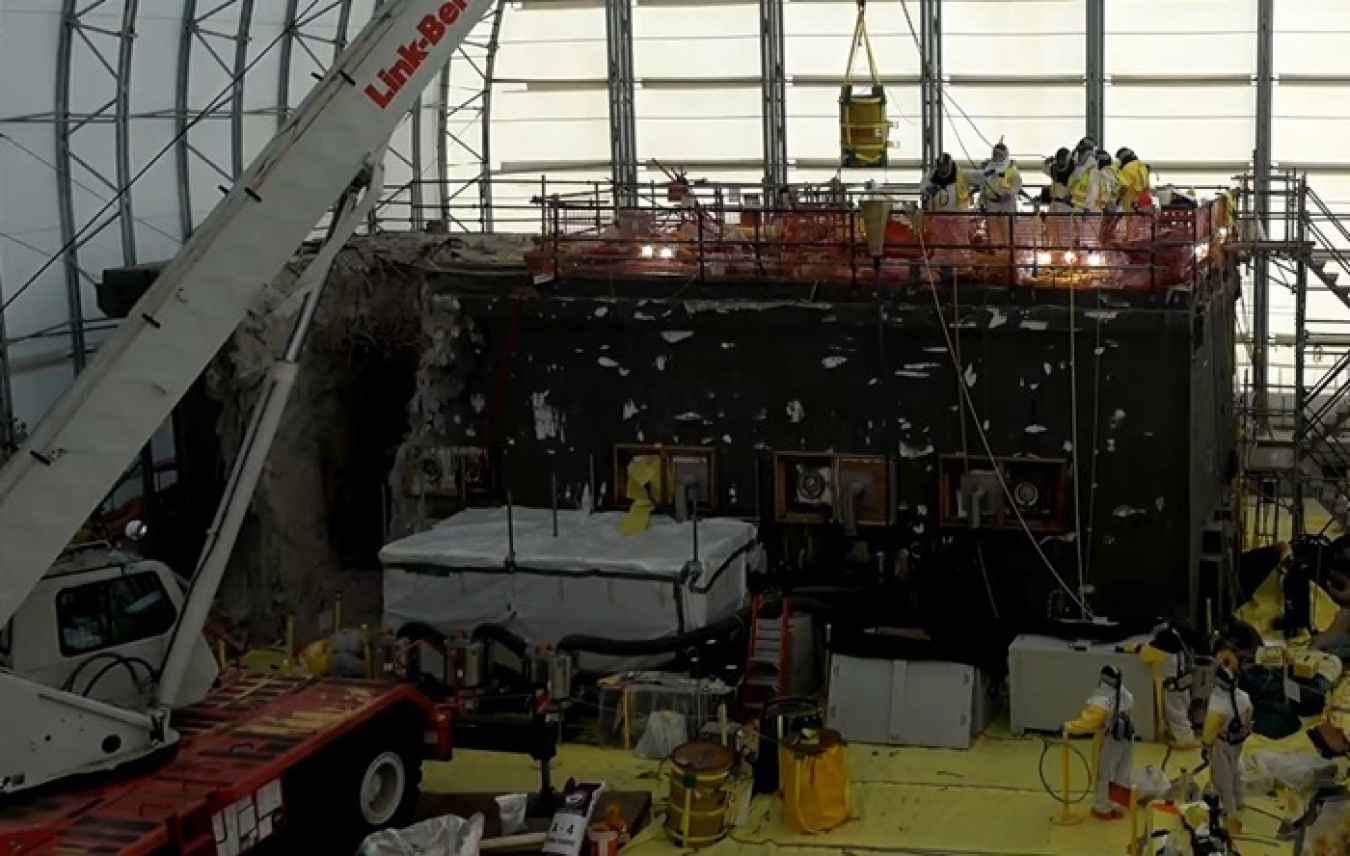
Workers remove one of 40 drums from the former Radioisotope Development Laboratory’s final hot cell, preparing it for demolition.
The remote-controlled demolition robot — deployed last fall — protects employees by allowing them to perform material removal and heavy demolition in hazardous environments from a distance.
Crews demolished the five other hot cells and the outer structure of the former laboratory, known as Building 3026, in previous years.
The cells were heavily shielded concrete rooms that provided researchers protection from radioactive material as they conducted research. The laboratory was built in 1945 to support isotope separation and packaging and was later used to examine irradiated reactor fuel experiments and components.
The final hot cell is divided into two subcells. Crews began demolishing one last year, and now they’re preparing the other for demolition. Removing this hot cell eliminates a significant hazard in the heart of ORNL, opening space for research and innovation missions.
-Contributor: Ryan Getsi
To receive the latest news and updates about the Office of Environmental Management, submit your e-mail address.