



ALEXANDRIA, Va. – Top EM officials highlighted a variety of accomplishments across the DOE cleanup program at the recent National Cleanup Workshop, and outlined efforts underway to support EM’s field sites in continued progress.
September 30, 2016 Estimated Read Time min
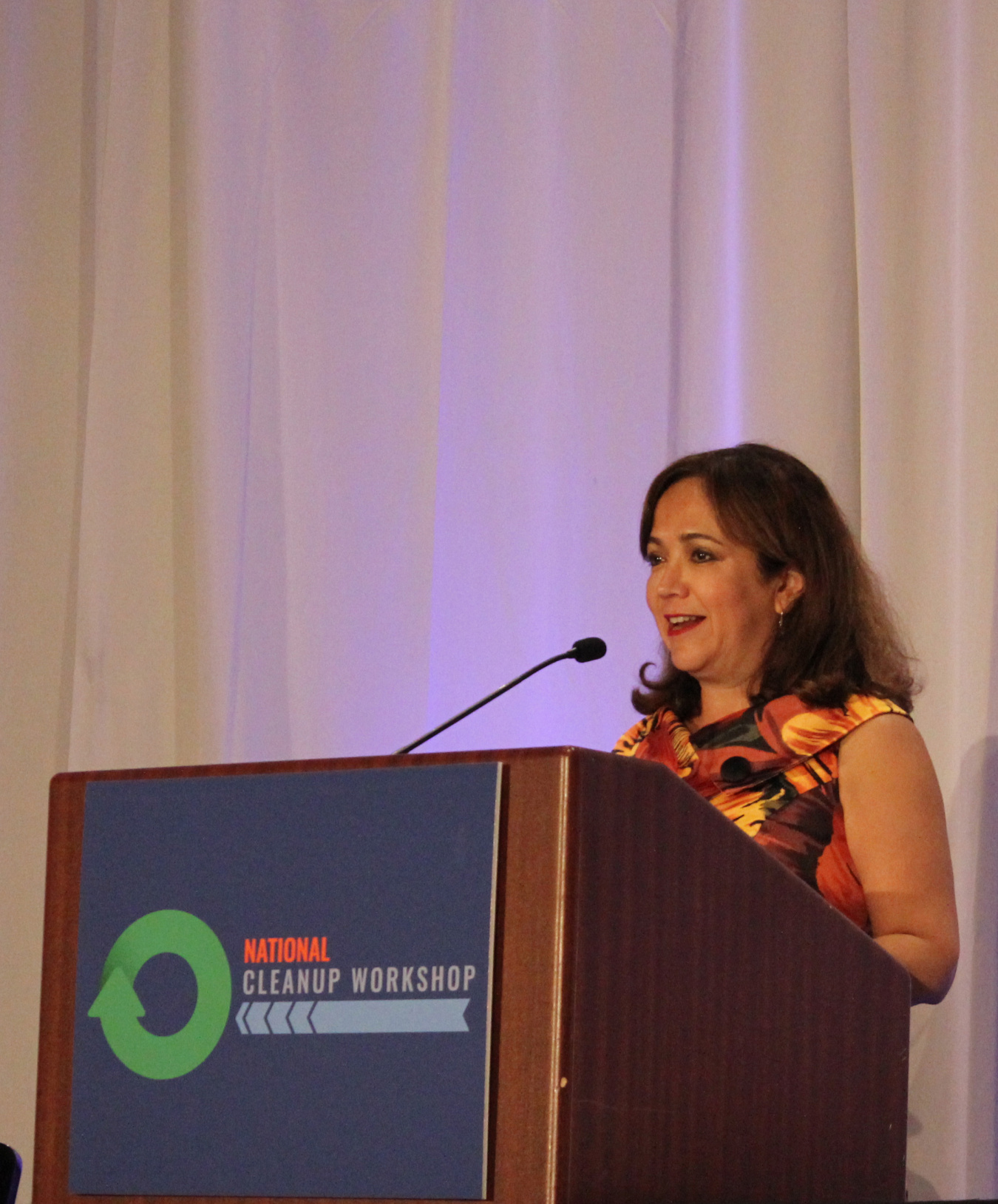
EM Assistant Secretary Monica Regalbuto focused on EM's priorities during her address at the National Cleanup Workshop.
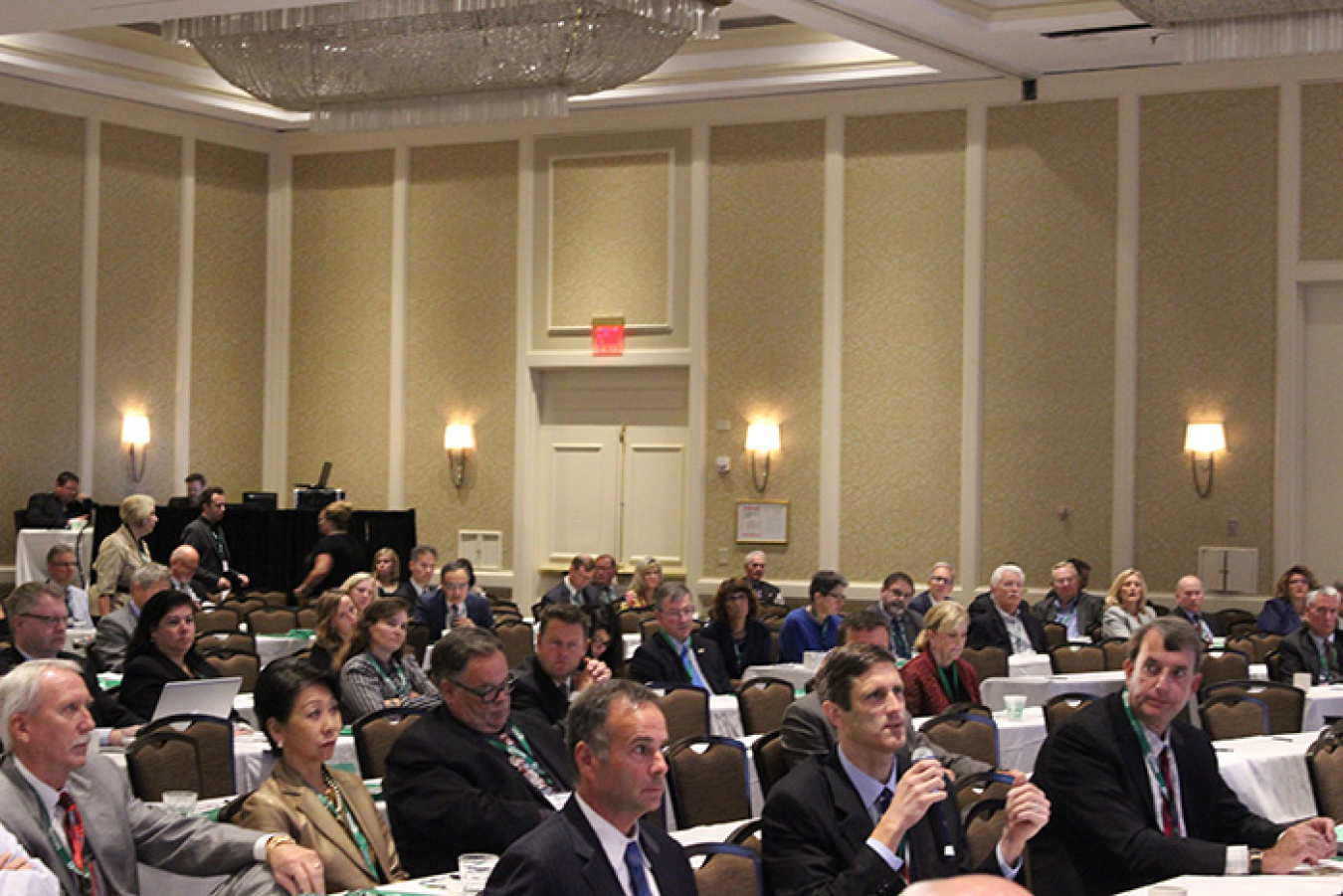
About 600 people attended the National Cleanup Workshop.
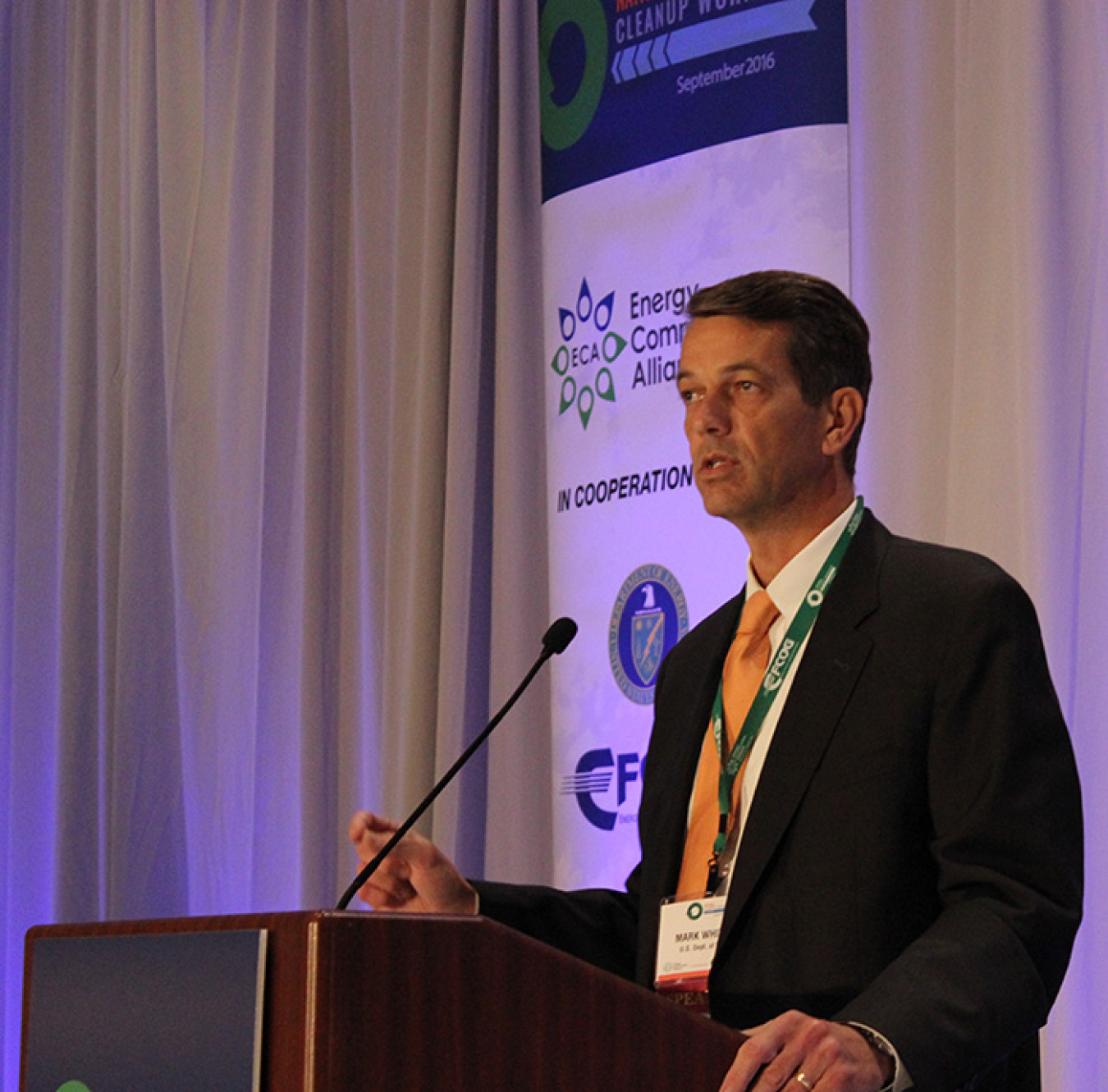
EM Principal Deputy Assistant Secretary Mark Whitney spoke about EM's management initiatives and preparing for the cleanup's future.
ALEXANDRIA, Va. – Top EM officials highlighted a variety of accomplishments across the DOE cleanup program at the recent National Cleanup Workshop, and outlined efforts underway to support EM’s field sites in continued progress.
“Significant progress is being made because of the men and women hard at work, in the field, every single day at each of our sites,” EM Assistant Secretary Monica Regalbuto said. “During my tenure as head of the EM program, my focus has been on providing our workers in the field with the leadership and support required for success.”
Regalbuto and EM Principal Deputy Assistant Secretary Mark Whitney spoke to approximately 600 attendees at the National Cleanup Workshop, held Sept. 14-15 in Alexandria, Va. The workshop, hosted by the Energy Communities Alliance with DOE and the Energy Facility Contractors Group serving as cooperating organizations, brought together senior DOE executives and site officials, industry executives, and other stakeholders to discuss DOE’s progress on the cleanup of the environmental legacy of the nation’s Manhattan Project and Cold War nuclear weapons program.
Regalbuto cited a number of EM accomplishments achieved over the past year, such as:
- Progress in deactivating and decommissioning major facilities at Hanford, Oak Ridge, Portsmouth and the West Valley Demonstration Project;
- Completing construction of the Salt Waste Processing Facility at the Savannah River Site and closing the eighth high-level waste tank there;
- Continued progress in preparing to resume waste emplacement activities at the Waste Isolation Pilot Plant once it is safe to do so; and
- Moving forward with construction of sections of the Hanford Waste Treatment and Immobilization Plant to be used for the Direct Feed Low Activity Waste (DFLAW) approach, intended to allow waste treatment to begin as soon as 2022.
Regalbuto also highlighted a variety of workers across the EM program who provided ideas and input to make their work safer or more efficient. As one example, she discussed how EM’s facility representatives at DOE’s Idaho Site proposed using better portable computing devices — an idea ultimately implemented at Idaho and other EM sites.
“Often all that is required is a willingness to listen to our men and women in the field and empower them to make a difference — regardless of the individual role they play in the EM mission,” Regalbuto said. “In a large organization like ours, we are continuously looking for ways to be more efficient and more successful to allow us to get the mission done at the lowest cost to the taxpayer.”
Whitney outlined several EM headquarters initiatives to support EM field sites in their work. One effort is a continuing dialogue with the U.S. Environmental Protection Agency and state regulators to help improve communications and better understand priorities.
“Because one site’s decisions necessarily impact other sites in many, many cases, it is incumbent upon us to ensure that all parties understand complex-wide challenges,” Whitney said. “We are working to have a frank, open and transparent conversation about where we are, what’s left to do and what our priorities are, and that’s something that’s constructive and I look forward to building on.”
EM headquarters is also identifying additional resources for cleanup work by asking the field sites to reduce operational costs by 5 percent by the end of this fiscal year, Whitney said.
“I know we are making progress and we have, through the effort, been able to reduce costs and we’ll continue to build on that,” Whitney said.
Whitney noted that EM’s fiscal 2017 budget request of approximately $6.1 billion is EM’s largest in the past five years.
“I think that’s a reflection of a lot of things, including the confidence the administration has in the EM program and the work that’s getting done, and the importance it places on this mission.”
Regalbuto and Whitney discussed EM’s efforts to develop new cleanup technologies to aid workers in carrying out their activities more safely and efficiently, such as new “roadmaps” to help tackle mercury and technetium contamination, advanced robotics and expanded collaborations with universities and other federal agencies.
“EM is working to better leverage technology development to reduce time and life-cycle costs associated with its cleanup across the DOE complex,” Regalbuto said.
“It’s the men and women at our sites each day that make progress possible, turning cleanup plans into reality and getting the job done,” Regalbuto said. “When field work is properly supported, the results have a real impact.”