



Virtual tour allows users to see the site and select points of interest on a map
April 28, 2026 Estimated Read Time min
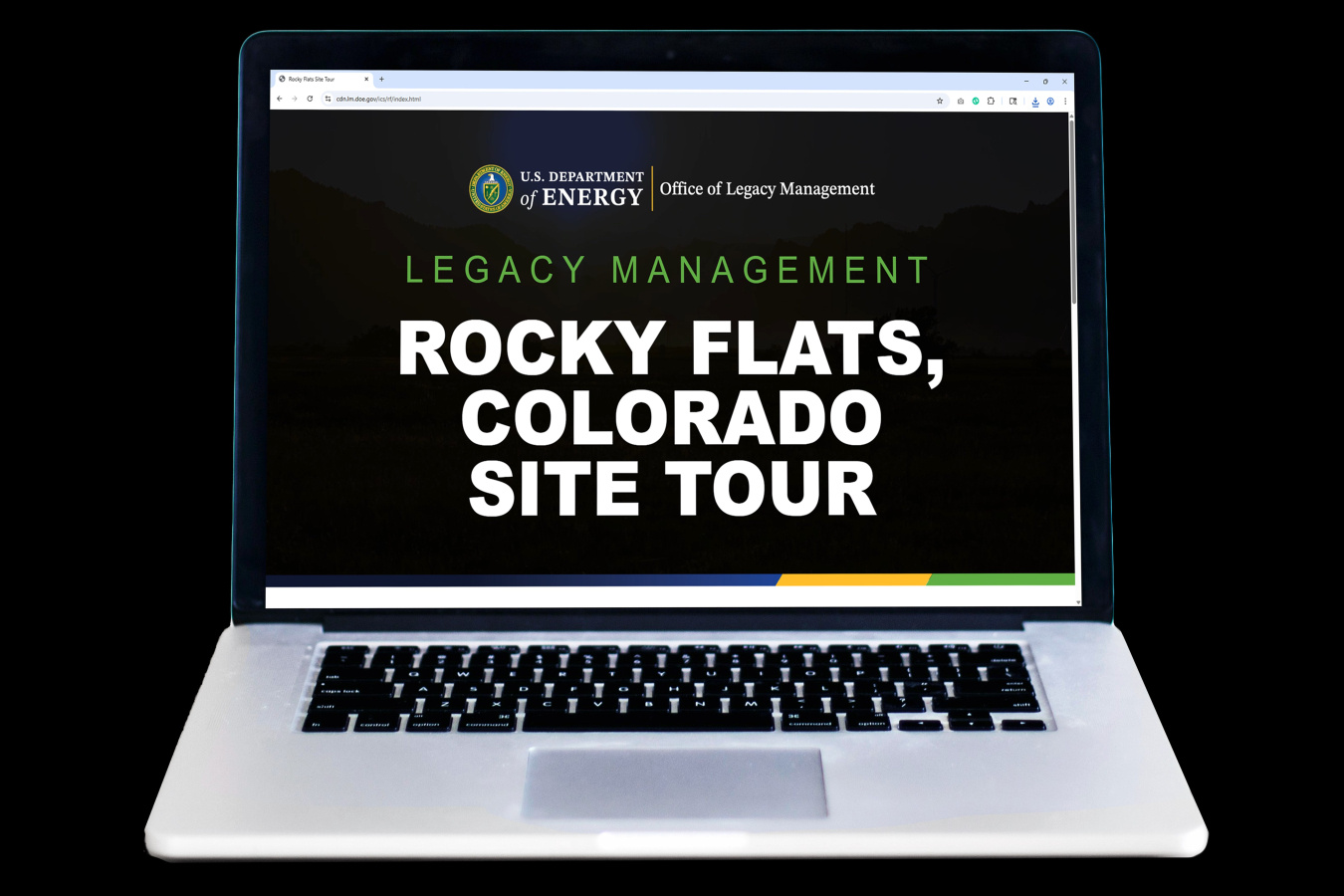
The story of the Rocky Flats Site is a complicated one. To help tell the story, LM and its Support Partners have developed an enhanced website that is rich in detail. The website focuses on a site tour and includes multimedia and interactive elements – video, historical photos, maps, and current information about long-term stewardship.
After World War II, the U.S. Atomic Energy Commission established facilities around the country to assist in the large-scale production of nuclear weapons. In 1951, Rocky Flats, located 16 miles northwest of Denver, was identified as one of these locations. From 1952 to 1994, Rocky Flats produced nuclear and nonnuclear weapons components for the nation’s arsenal.
Rocky Flats served as a critical part of the U.S. nuclear weapons complex during the Cold War. But in 1989, nuclear operations were suspended when the Federal Bureau of Investigation and the U.S. Environmental Protection Agency raided Rocky Flats to investigate reports of environmental violations. With the end of the Cold War, the site’s weapons-related mission ceased in 1994.
The U.S. Department of Energy’s (DOE) new mission was to permanently close and clean the site for future use. DOE and its contractor completed a $7 billion cleanup in December 2005. More than 800 structures were demolished and removed. Radioactive waste and other materials were also removed from the site.
The Office of Legacy Management (LM) assumed responsibility for the remediated site in October 2005. The former industrial area containing residual contamination remains under DOE control and is closed to the public. The surrounding former security buffer zone is now open to the public as part of the Rocky Flats National Wildlife Refuge and is managed by the U.S. Fish and Wildlife Service.
“The launch of the Rocky Flats virtual tour is a great opportunity for the public to learn more about the history of the site and see the current status of the remediated Central Operable Unit, which is closed to the public,” said LM Deputy Site Manager Joyce Chavez. “The tour explains the transition from an industrial city that supported our nation’s defense to cleanup to conservation back to native prairie.”
LM is committed to transparency and the enhanced website is a way to present information about long-term stewardship in an engaging and accessible manner.