



View the most commonly asked questions.
Office of Indian Energy Policy and Programs
May 14, 2026 Estimated Read Time min
The Office of Indian Energy Policy and Programs (IE) has engaged with Tribal leaders and staff on the hot topic of data centers over the past few months. Read on for the most commonly asked questions.
Consider these key elements when determining if you have a good site for a data center. Most of these are not necessarily strict requirements for every site. However, the more elements your site has, the more attractive it likely would be for a data center developer.
- Land area appropriate for the proposed project size: Data centers can be built in very small areas, while large hyperscale facilities may need a few hundred acres or more. Co-located electricity generation projects can increase the land area needed, sometimes significantly for some technologies.
- Access to water: Water use varies widely with the data center size and cooling technology used, but almost all data centers will require some water access for cooling.
- Nearby fiber trunk lines: Buildout of fiber lines is possible but can increase project costs and complexity, so nearby access is helpful. What is “nearby” enough depends on project size and what types of permits or land access would be needed between the project and the fiber trunk line. A mile or so is a good rule of thumb.
- Openness to power generation: Many data center developers have promised to build out additional generation to account for the impact they have on a local grid. An openness to developing power generation projects, or even better, having power projects already in the pipeline, could increase the value of a particular location.
- Grid interconnection availability: While data center developers are increasingly open to behind-the-meter power generation, most still want to be connected to the grid for reliability. Having nearby interconnection points and available transmission capacity is a selling point.
- Land use and permitting regulations: Consider any zoning, land-use, or permitting regulations that exist for the site. Data center developers typically want to move quickly in partnership with their host governments, so it is helpful to think about these in advance. For example, a Tribe with approved HEARTH Act regulations that would apply to a data center lease would be a selling point.
- Land area appropriate for the proposed project size: Data centers can be built in very small areas, while large hyperscale facilities may need a few hundred acres or more. Co-located electricity generation projects can increase the land area needed, sometimes significantly for some technologies.
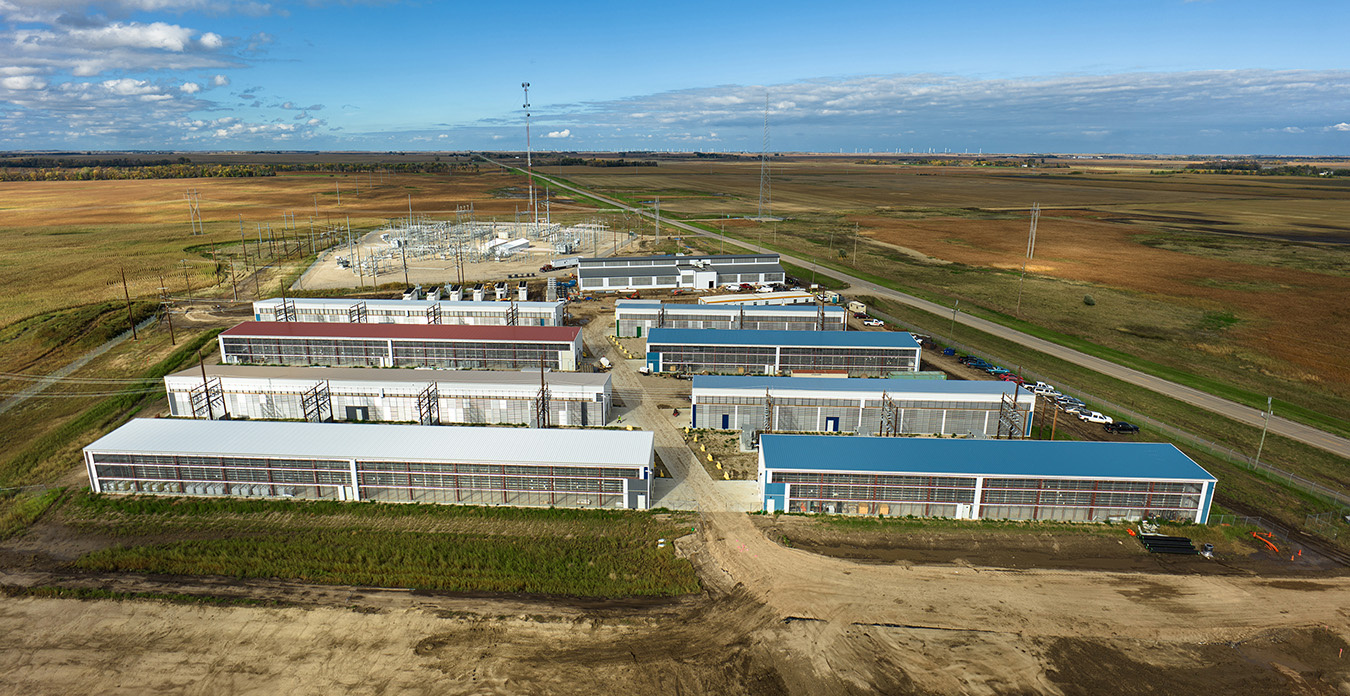 Aerial view of a data center in Stutsman County, North Dakota.
The land required for a data center varies greatly depending on its size and design. A small facility might occupy just a few acres, while a large hyperscale campus could span hundreds of acres. This includes space for the building itself, cooling infrastructure, power substations, and security. Using renewable energy to power a data center may increase the land area needed for development.
Yes, data centers can be built on trust land. Some data center developers prefer to own the land where a data center sits, but many data centers are constructed on leased land. If you are interested in siting a data center on trust land, consider the lease length you are willing to offer and seek partners who are comfortable with leased land. It may also be helpful to communicate approval requirements associated with the trust land (for example, your Tribe’s HEARTH Act regulations and environmental laws) early in discussions.
Data centers use water primarily for cooling their equipment. The amount varies widely based on the cooling technology employed and local climate but can be up to millions of gallons a day. However, advanced cooling technologies can significantly decrease water needs, sometimes by over 90%. If you are interested in data center development but located in an area where water use is a major concern, we recommend asking potential partners about their water use strategies up front. If the development will include power projects, it's also important to consider the water use associated with the generation technology used.
Yes, a Tribe or business can potentially sell power to a data center, typically in one of two ways. You could enter into a power purchase agreement (PPA) directly with the data center, in which you agree to supply electricity at a negotiated rate. Alternatively, you might sell power through a local utility, which then supplies the data center. Depending on the utility situation, this may not require you to develop the data center on your trust land or even in a nearby area. This can be an excellent opportunity for Tribes or businesses that have existing generation capacity or are looking to develop new energy projects. It can provide a stable revenue stream that is significantly higher than a land lease rate and contribute to local economic development.
There is no strict geographical limit to where data centers can be located. However, not every type of data center will work everywhere. Some types of data centers are best built close to where customers are, making them a better fit for urban and suburban areas, especially in key markets that are in particularly high demand, like Virginia, Texas, and the Pacific Northwest. Other types of data centers are more location-agnostic and can be built in rural or remote areas.
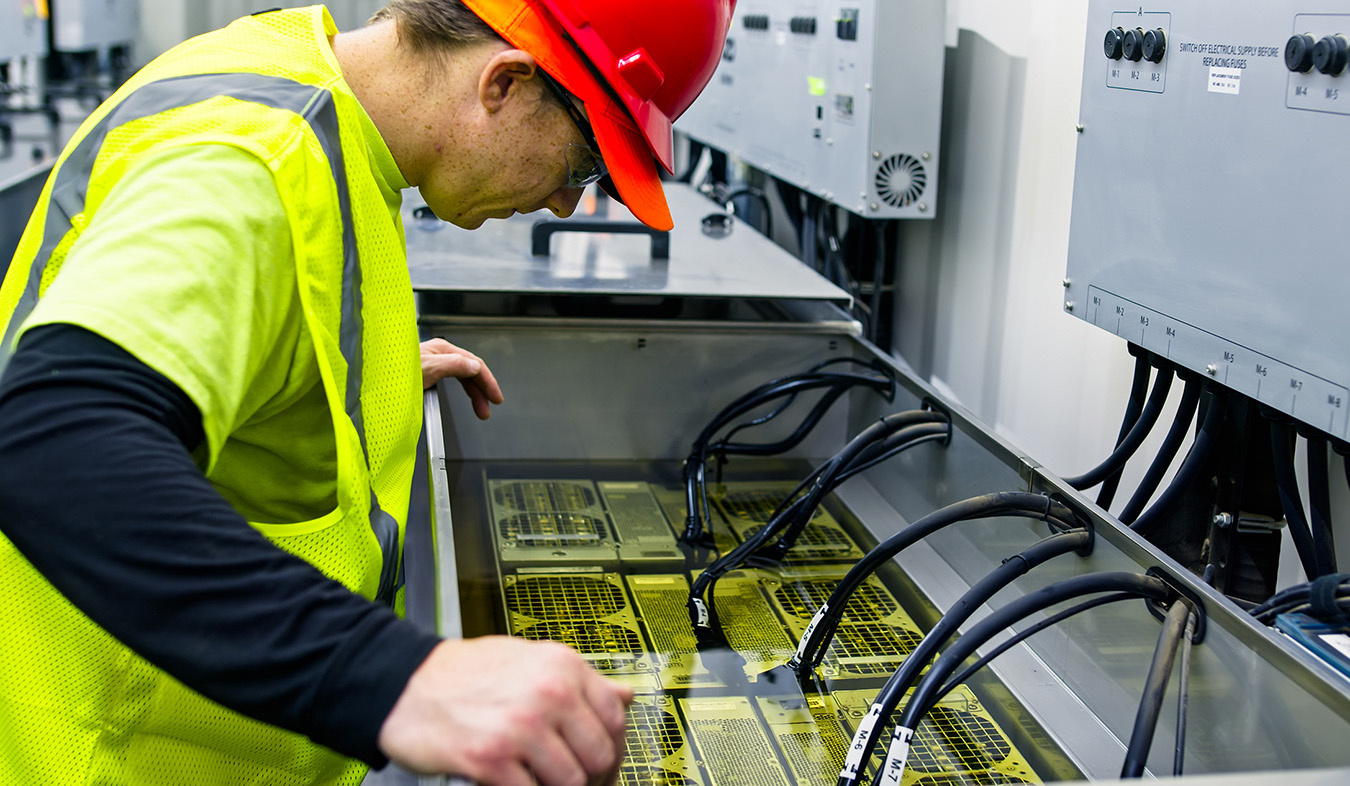 A technician works on an immersion cooling system in a data center.
Most data centers hire a small number of long-term permanent staff, on the scale of a few to a few dozen. Long-term data center jobs include roles in operations, maintenance, security, and information technology. Shorter term jobs are created in construction, engineering, and various support services. The total number varies significantly with the size and type of the data center, but since large data center campuses are often constructed over many phases which can last years, even the short-term job opportunities might be significant, on the order of thousands of jobs for 5 years or more.
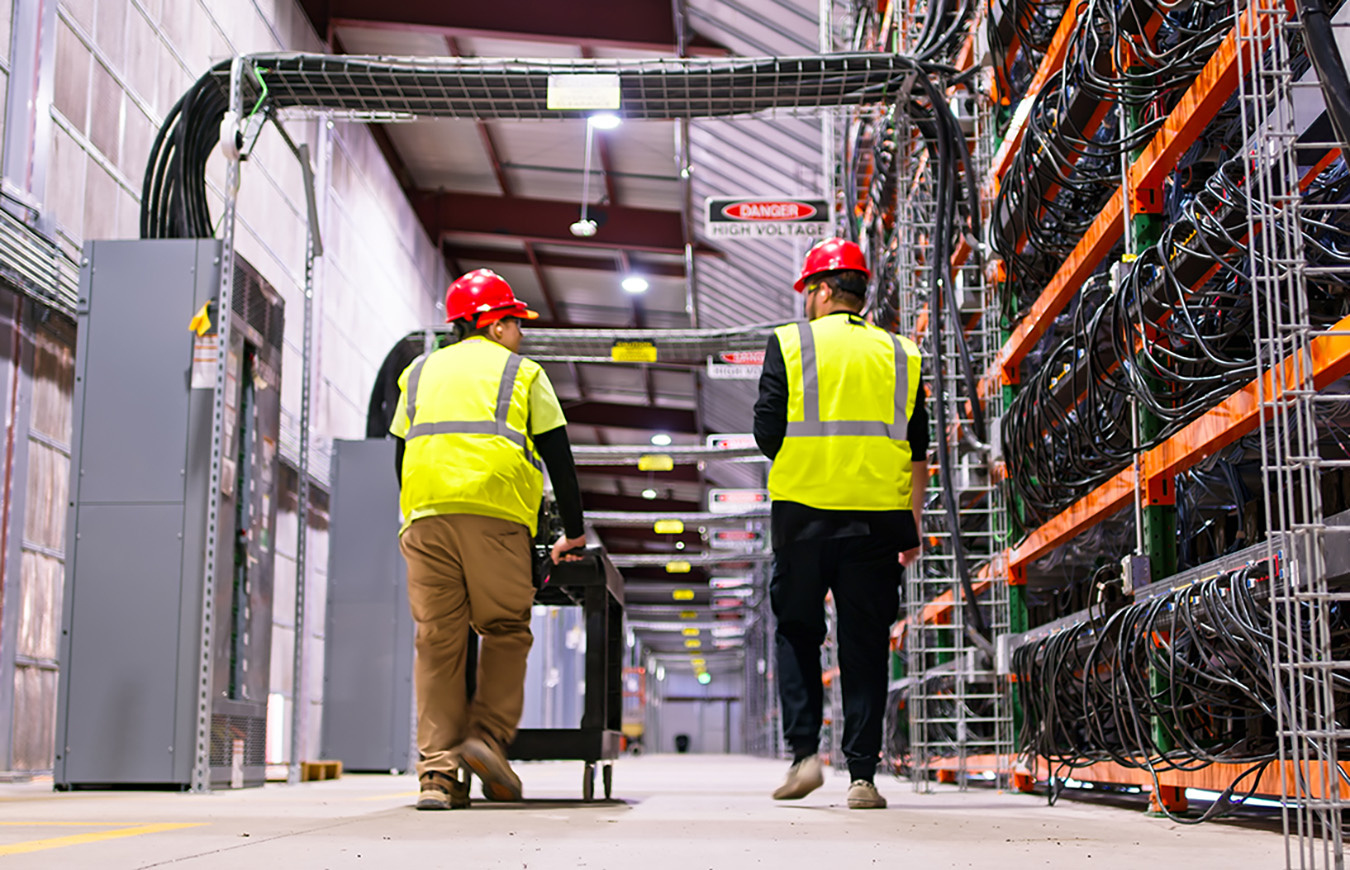 Two technicians walk past racks of equipment in a data center.
Not all data centers are the right fit for every location or community, and Tribes can and should decide for themselves whether data center projects align with their goals. If these projects are of interest, however, responsibly developed data centers and related power generation can bring significant local revenue through land leases, power purchase agreements, water usage rights, and operations contracts. Partnering with a data center developer, especially if you have a site with strong potential for the developer's needs, can also come with additional benefits to the Tribe, including workforce development and investment in local infrastructure. Many Tribes have significant experience in the gaming industry, where running large, technologically advanced operations that need physical and cyber security and reliable power are transferable skills to a data center partnership. The data center economy is expected to reach over $1 trillion in investment in the next 5 years, making it a ripe opportunity for local economic development.
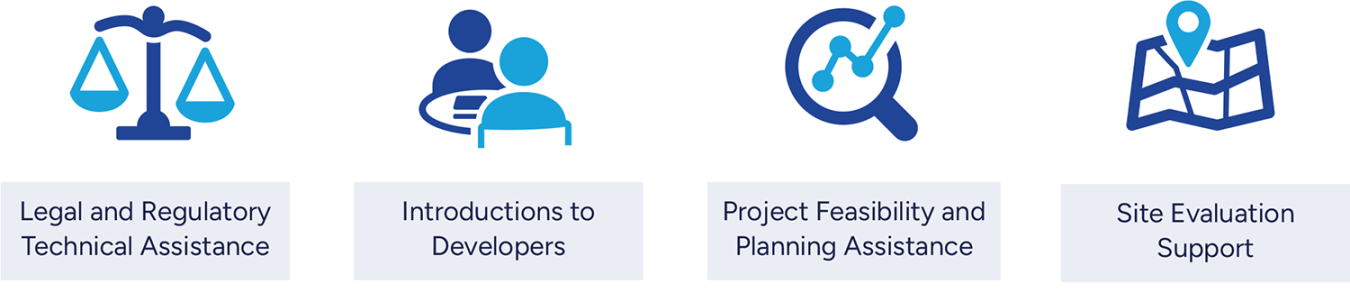
The Office of Indian Energy Can Support Many Different Stages of the Planning Process
- Curious whether you have a good site for a data center?
- Approached by a developer?
- Interested in finding a developer to partner with?
- Considering legal, regulatory, and/or utility impacts of a data center?
- Looking for energy project funding?
Want to learn more about data centers? Check out our Data Centers page or reach out to the Office of Indian Energy to discuss these resources and more! Contact our office staff directly at IE-datacenters@hq.doe.gov.