



University of Southern California takes home grand prize in competition that challenges students to develop innovative solutions for coastal and maritime markets
Hydropower and Hydrokinetic Office
May 21, 2026 Estimated Read Time min
WASHINGTON—The U.S. Department of Energy’s (DOE) Hydropower and Hydrokinetic Office (H2O) today announced the winners of the 2026 Marine Energy Collegiate Competition (MECC). The University of Southern California (USC) was the overall Megawatt League winner, with the University of Washington taking second place, and California Polytechnic State University, San Luis Obispo coming in third place. Competitors in the Kilowatt League joined Megawatt League competitors to vie for awards across categories such as best poster, pitch, technical design, build and test, and community connections.
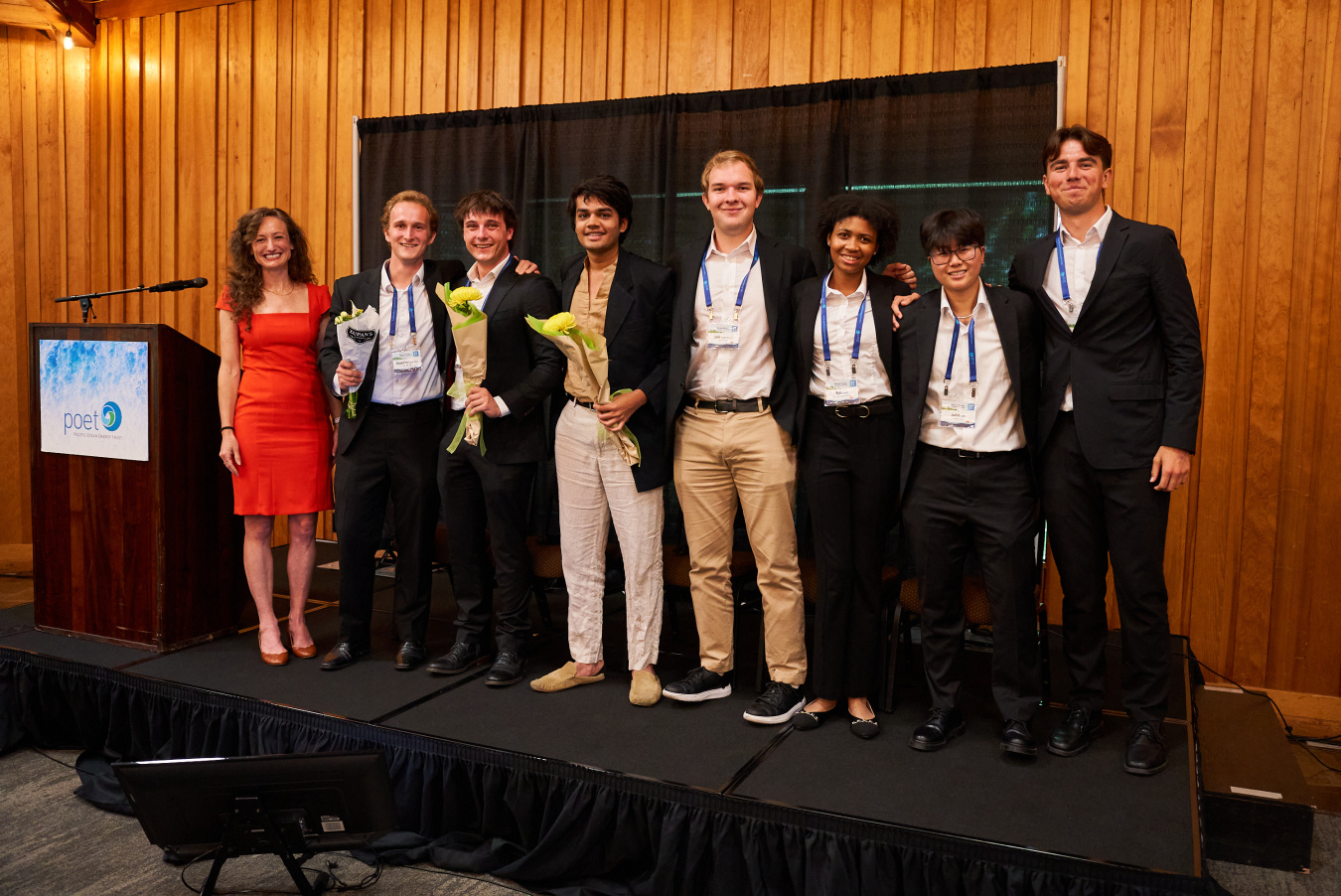
The annual MECC, now in its seventh year, challenges multidisciplinary collegiate teams to develop marine energy-focused solutions for ocean-based industries, research sectors, or national security missions. Students also gain hands-on experience in the emerging marine energy industry by designing their own marine energy devices. These technologies harness power from waves, tides, and ocean and river currents.
“Our Marine Energy Collegiate Competition empowers emerging American professionals to solve real challenges in the marine energy industry,” said Nichole Fitzgerald, Director of H2O. “It was impressive to see the creative and comprehensive ideas these teams came up with. We will need this type of ingenuity to advance marine energy technologies and we’re eager for these students to bring their skills to the workforce.”
The total available marine energy resource in the United States is equivalent to nearly 60% of U.S. power generation. Even if only a small portion of this technical resource potential is captured, marine energy technologies would make significant contributions to the nation’s energy needs. However, a strong workforce will be needed to ensure the country can leverage marine energy’s potential. MECC introduces students to the different careers—as engineers, environmental scientists, business development experts, project managers, and communications and engagement specialists—needed to support the industry.
The 2026 MECC introduced a slightly modified competition structure with two distinct participation leagues:
- Megawatt League, for teams seeking the full MECC experience with all challenges.
- Kilowatt League, for teams new to the competition or those opting for a more flexible participation experience.
As part of this year’s competition, teams completed scored challenges, which focused on market analysis, technical design, prototype testing, and community engagement.
The 25 competing teams presented the results of their work at the Pacific Ocean Energy Trust’s Ocean Renewable Energy Conference in Portland, Oregon, which was held from May 18–21, 2026. After reviewing the presentations, reports, and posters, the competition’s expert judges selected the first, second, and third place overall winners. They also selected the following individual category winners, some with help from the conference attendees:
- Best Poster Winner: University of Texas at Dallas
- Best Pitch Winner: USC
- Spirit of the MECC Award: Michigan Technological University
- Megawatt League Winners
- Business Plan Challenge winner: Oakland University
- Technical Design Challenge winner: Oregon State University
- Build and Test Challenge winner: Purdue University
- Community Connections Challenge winner: Georgia Southern University
- Kilowatt League Winners
- Technical Design Challenge winner: Hawai'i Pacific University
- Build and Test Challenge winner: University of Texas at Tyler
- Community Connections Challenge winner: Hawai'i Pacific University
The MECC is funded by the U.S. Department of Energy’s Hydropower and Hydrokinetic Office and administered by the National Laboratory of the Rockies.
Learn more about science, technology, engineering, and mathematics (STEM) careers and workforce development opportunities on the Hydropower STEM Portal and Marine Energy STEM Portal.
Stay in the know with H2O! Receive the latest information on funding opportunities, events, and other news by subscribing to the monthly Water Wire newsletter.