



EISA Section 142 Statutory Requirements for Increasing Alternative Fuel Use
Section 142 of the Energy Independence and Security Act (EISA) of 2007 (42 U.S.C. § 6374e(a)(2)), emphasis added, says:
"[N]ot later than October 1, 2015, and for each year thereafter, each Federal agency shall achieve at least a 20 percent reduction in annual petroleum consumption and a 10 percent increase in annual alternative fuel consumption, as calculated from the baseline established by the Secretary for fiscal year [FY] 2005."
Applicability
The applicability of Section 142 of EISA is the same as the Energy Policy Act (EPAct) of 1992. See the Applicability page to determine which agencies and vehicles are subject to the EPAct 1992 requirements and which vehicles may be exempted.
FEMP Resources and Best Practices
Calculating Alternative Fuel Use
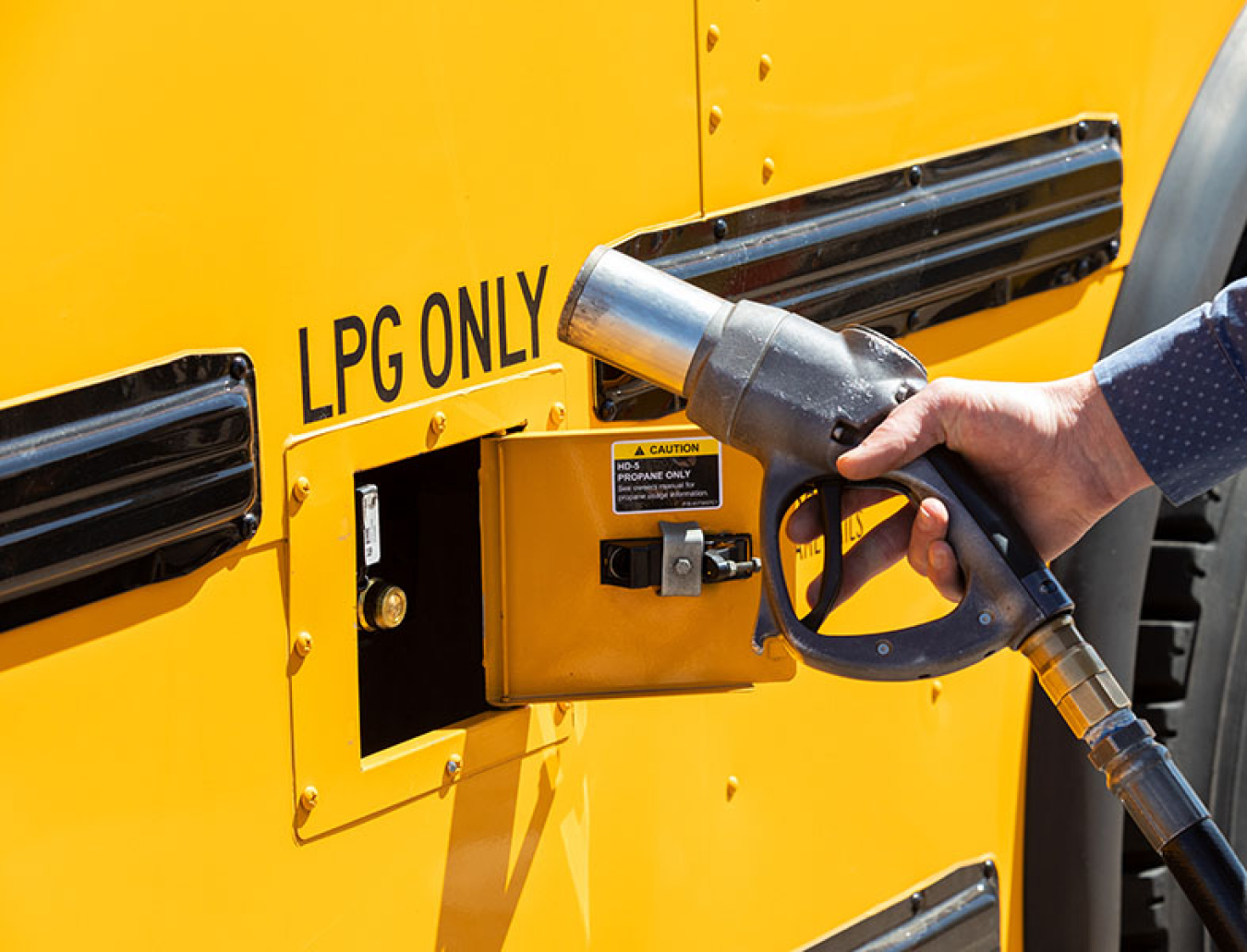
Alternative fuels are defined by Section 301 of the Energy Policy Act (EPAct) of 1992 (42 U.S.C. 13211(2)); the Secretary of Energy may expand this definition to include other fuels by rule. As of the date of this guidance, the following fuels are defined or designated as alternative fuels:
- Methanol, denatured ethanol, and other alcohols
- Mixtures of 85% or more of methanol (M85), denatured ethanol (E85), and other alcohols with gasoline or other fuels
- Natural gas and liquid fuels domestically produced from natural gas (e.g., compressed natural gas [CNG] and liquefied natural gas [LNG])
- Liquefied petroleum gas (i.e., LPG or propane)
- Coal-derived liquid fuels
- Electricity (including electricity from solar energy)
- Biodiesel (B100)
- Fuels (other than alcohol) derived from biological materials
- Hydrogen
- P-Series fuels.
P-Series fuels are clear liquid fuels with octane ratings between 89 and 93, designed for use in flexible fuel vehicles and containing 35% natural gas liquids, 45% ethanol, and 25% biomass-derived fuel. See 64 FR 26822 (May 17, 1999).
Fuel that is counted in calculating alternative fuel use includes:
- All alternative fuels used in all vehicles in the United States, including vehicles considered exempt under the alternative fuel use requirements
- Biodiesel component of biodiesel blends greater than 20% used in all vehicles in the United States, including vehicles considered exempt
- All electricity used in EVs and LSEVs in the United States.
Fuel that is not counted in calculating subject petroleum fuel use includes:
- Petroleum (gasoline, diesel, and the diesel component of biodiesel blends) used in any vehicle.
- Alternative fuels used in vehicles outside the United States.
All electricity used to charge electric vehicles (EVs) (from the grid, including electricity generated at the Federal site) will be counted toward agencies’ alternative fuel use requirements. Currently, all electricity consumed in battery electric vehicles (BEVs) and plug-in hybrid electric vehicles (PHEVs) counts toward an agency’s alternative fuel consumption. Agencies may also count all electricity consumed in an agency’s LSEVs toward meeting its alternative fuel use increase requirements.
It is important to note that electricity generated in a hybrid electric vehicle (HEV) or PHEV by the internal combustion engine or regenerative braking system, which recharges the vehicle’s battery, is not counted toward agency alternative fuel use requirements, although it does support petroleum reduction goals by improving vehicle efficiency.
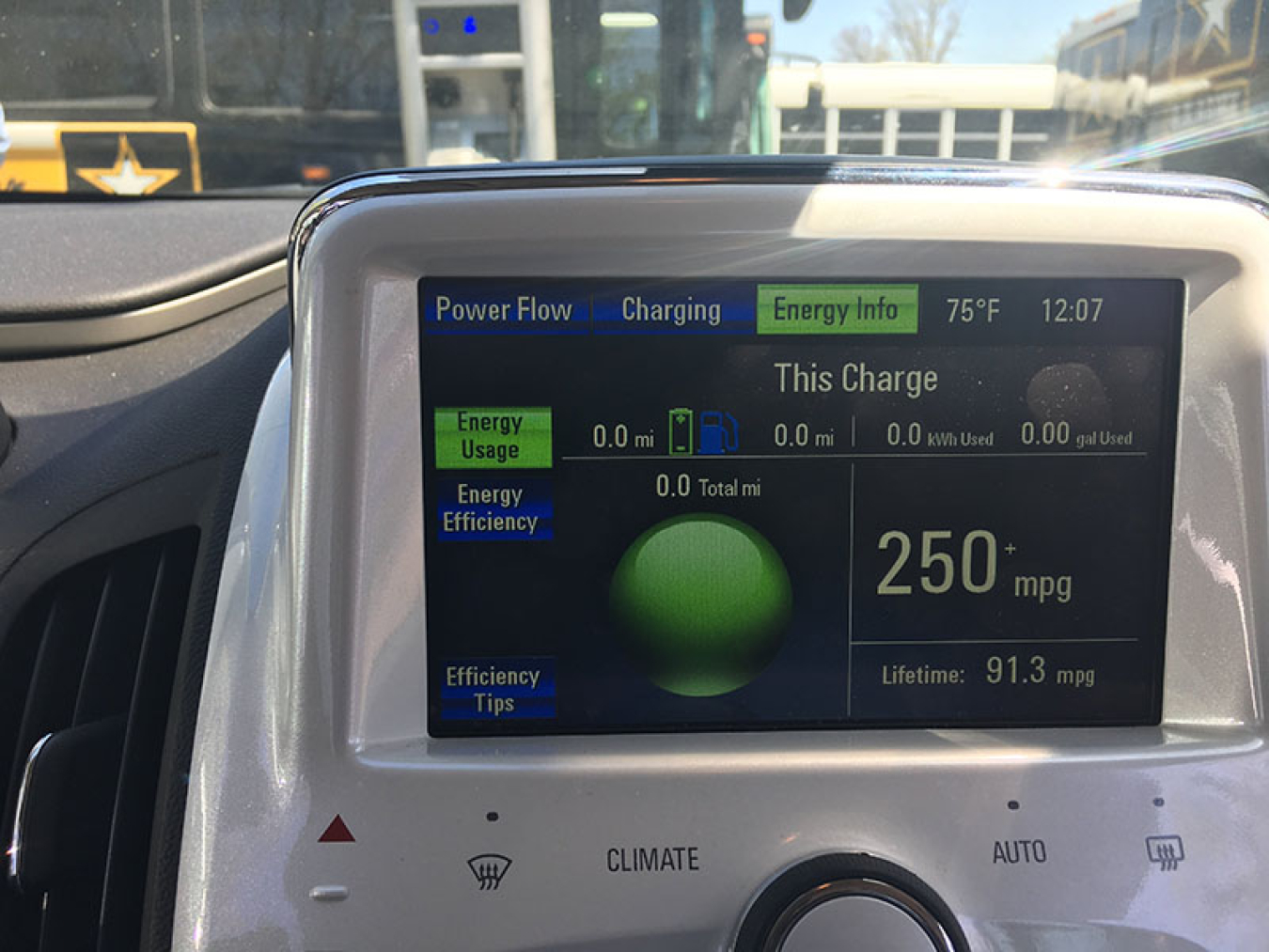
To receive alternative fuel use credit for the electricity used to charge BEVs, LSEVs, and PHEVs, agencies will have to report EV electricity consumption in Federal Automotive Statistical Tool (FAST). Reporting electricity use by EVs may be a challenge for fleet managers. While vehicle telematics are considered the best practice for vehicle-level fuel reporting, there are several other options to track EV electricity consumption. Refer to FEMP’s Best Practices for Measuring and Reporting Electricity Use in Federal Fleet Electric Vehicles for more information.
Under the Section 301 EPAct 1992 definition of alternative fuels, biodiesel blends are not considered an alternative fuel. However, for biodiesel blends equal to or greater than 20%, agencies may count the pure biodiesel component of the blend toward agency alternative fuel use requirements.
Start with the volume of biodiesel blends used in subject vehicles. Multiply this volume by the percentage of the biodiesel blend that is biodiesel. For example, B20 is a blend of 20% biodiesel and 80% diesel. If a vehicle uses 100 gallons of B20, 20 gallons count as pure biodiesel consumption toward agency alternative fuel use requirements.
Alternative fuel use is measured in gasoline gallon equivalents (GGEs), which translate the energy content of fuel into units representing the energy content of one gallon of gasoline. The table below presents the fuel conversion ratio table to convert alternative fuel "natural" units to GGEs.
Alternative Fuel Use Conversion Ratios Fuel Type Natural Units Conversion to GGE B20 gallons 1.121 GGE/gallon of B20 B100 gallons 1.015 GGE/gallon of B100 CNG gallons at 2,400 psi 0.18 GGE/gallon of CNG at 2,400 psi gallons at 3,000 psi 0.225 GGE/gallon of CNG at 3,000 psi gallons at 3,600 psi 0.27 GGE/gallon of CNG at 3,600 psi hundred cubic feet 0.83 GGE/ft3 of CNG E85 gallons 0.72 GGE/gallon of E85 Electricity kWh 0.03 GGE/kWh of electricity Hydrogen kg 1.0 GGE/kg of hydrogen LNG gallons @ 14.7 psi and -234°F 0.66 GGE/gallon of LNG LPG gallons 0.74 GGE/gallon of LPG R100 gallons 1.015 GGE/gallon of R100
Determining the FY 2005 Alternative Fuel Use Baseline
For most agencies, the FY 2005 alternative fuel baseline is simply the sum of total alternative fuel and the biodiesel component of biodiesel blends (20% and greater) used in all domestic vehicles in an agency’s fleet as reported in FAST for FY 2005. Federal agencies with extremely low alternative fuel use in FY 2005 (less than 5% of the agency’s total fuel consumption) must use a minimum alternative fuel baseline.
The minimum baseline is the lesser of (1) 5% of total subject fuel (petroleum and alternative fuel) consumption or (2) the greater of 500,000 GGE or the amount of alternative fuel consumed in FY 2005.
The FY 2005 alternative fuel baseline for agencies with FY 2005 alternative fuel usage greater than the minimum baseline will be the FY 2005 level (see the table and figure below).
Methodology for Establishing the FY 2005 Alternative Fuel Baseline The alternative fuel baseline will be the actual FY 2005 alternative fuel consumption if it exceeds the minimum alternative fuel baseline. If not, the minimum alternative fuel baseline will be the baseline. The minimum alternative fuel baseline is the lesser of:
• 5% of total subject fuel use (subject petroleum and alternative fuel usage)
• 500,000 GGE or the FY 2005 alternative fuel usage (whichever is greater)
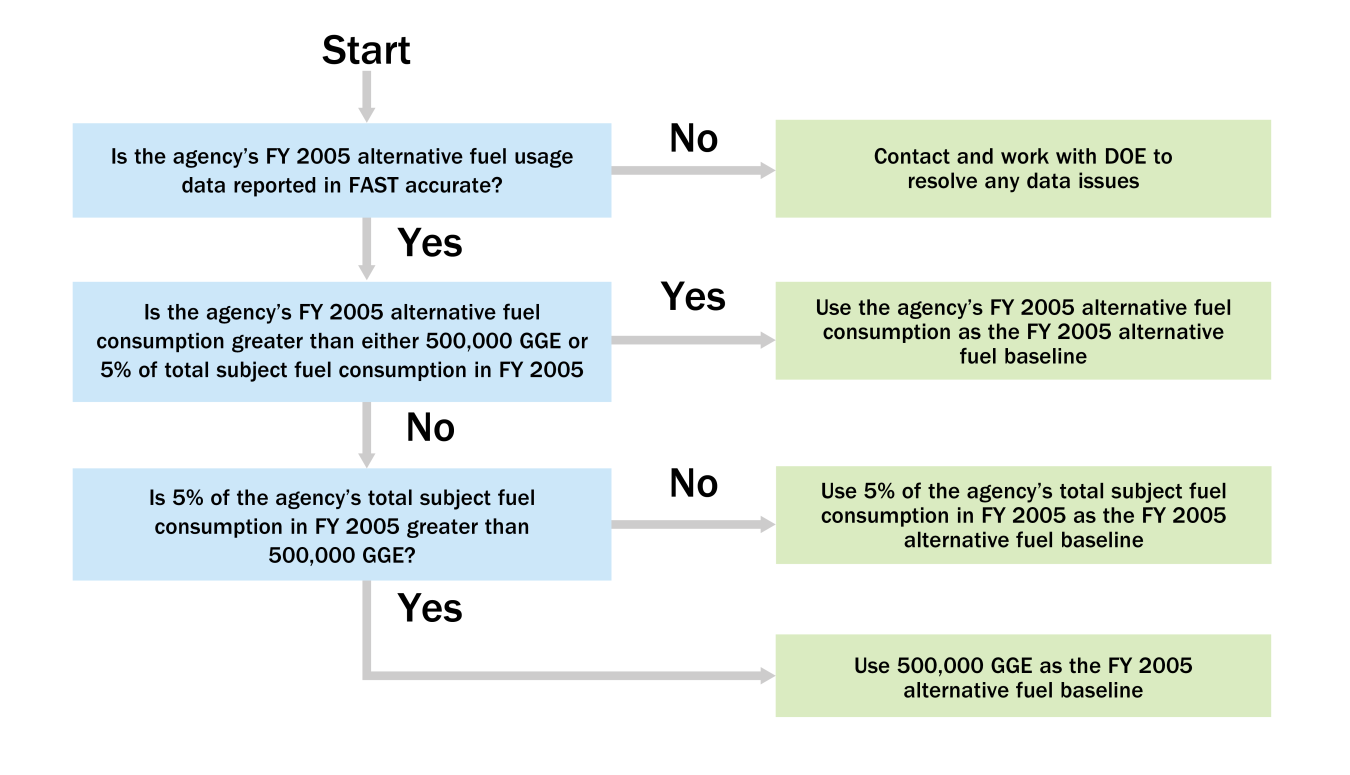
The table below presents some example alternative fuel baseline calculations to assist agencies in determining their FY 2005 alternative fuel baseline.
Example Alternative Fuel Baseline Calculations (GGEs) Total Subject Fuel Use 5% of Total Subject Fuel Use Minimum GGE Level (Lesser of 5% or 500,000 GGE) Actual FY 2005 Alternative Fuel Consumption Resulting FY 2005 Alternative Fuel Baseline Method of Resulting Baseline 18,000,000 900,000 500,000 800,000 800,000 FY 2005 alternative fuel consumption 16,250,000 812,500 500,000 400,000 500,000 Minimum GGE level 18,000,000 900,000 500,000 4,500,000 4,500,000 FY 2005 alternative fuel consumption 5,000,000 250,000 250,000 100,000 250,000 5% of total subject fuel consumption 5,000,000 250,000 250,000 400,000 400,000 FY 2005 alternative fuel consumption Note that some agencies have requested and been granted changes to their baselines by the Federal Energy Management Program (FEMP). These baseline revisions were granted based on documentation submitted by agencies supporting inaccuracies with FY 2005 subject petroleum consumption figures in FAST. Each agency should review its FY 2005 alternative fuel consumption figures currently in FAST for accuracy and, if this number is found to be incorrect, work with FEMP to determine its appropriate baseline.
Determining Section 142 Alternative Fuel Use Compliance
To determine the alternative fuel consumption each year, agencies must sum together all types of alternative fuel consumed by their subject fleet, including biodiesel used in blends of B20 or higher. The agency will then compare this to the alternative fuel consumption requirement for that year to determine compliance.
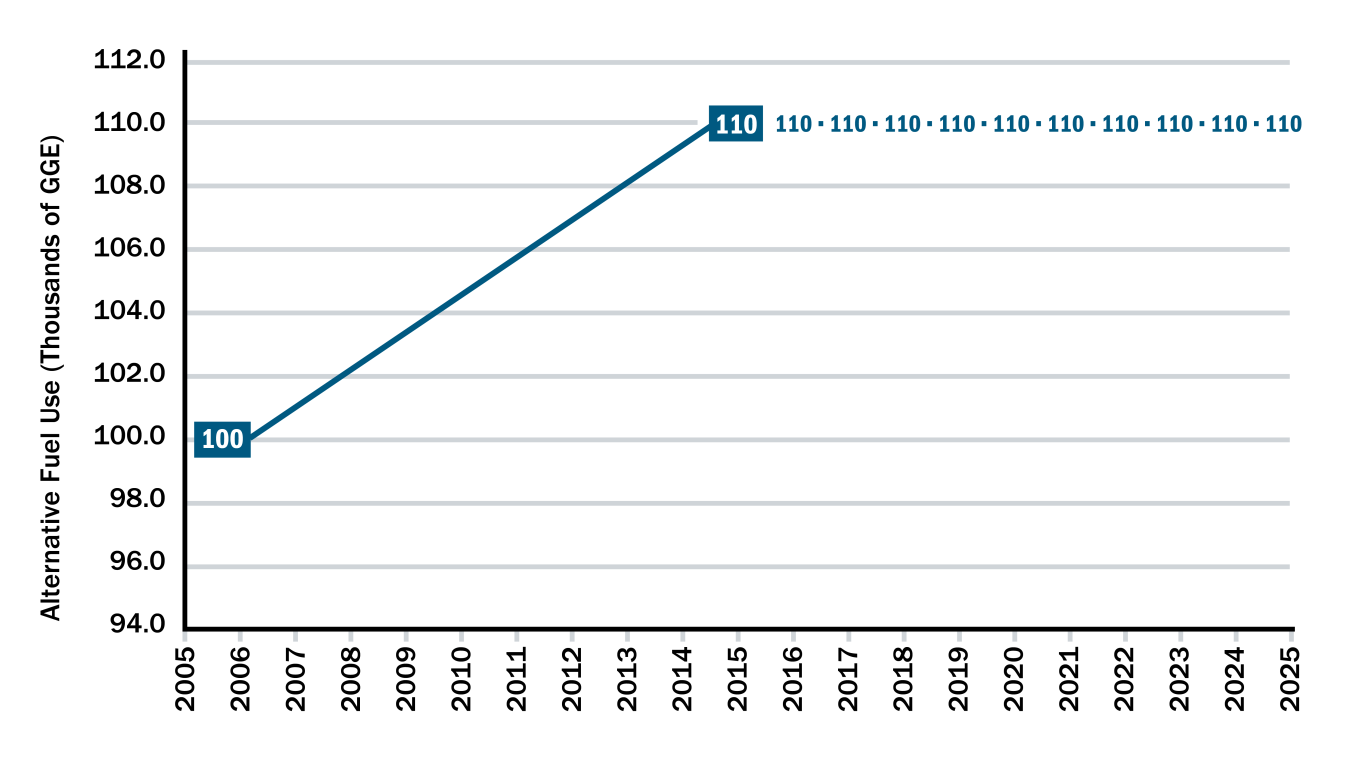
Each Federal agency (subject to the alternative fuel use increase requirements) complies if it increases its annual alternative fuel use by at least 10% compared to a FY 2005 baseline by FY 2015 and to maintain that increased level for each year thereafter.
Example: Agency with FY 2005 Baseline of 100,000 GGE
The table and figure below show an example of an agency's target alternative fuel use increase requirements relative to its FY 2005 baseline.
| Calculation of Example Alternative Fuel Use Increase Requirements Based on a FY 2005 Alternative Fuel Baseline of 100,000 GGE | ||||
|---|---|---|---|---|
| Fiscal Year | FY 2005 Alternative Fuel Baseline (GGE) | Annual Alternative Fuel Use Increase Requirement (Percentage of FY 2005 Baseline) | Required Increase in Alternative Fuel Use from FY 2005 Baseline (GGE) | Minimum Alternative Fuel Use (GGE) |
| 2005 (Baseline) | 100,000 | Not Applicable (Baseline) | ‒ | ‒ |
| 2015 | 100,000 | 10% | 10,000 | 110,000 |
| 2016 and onwards | 100,000 | 10% | 10,000 | 110,000 |
Reporting
To track compliance with the EISA Section 142 alternative fuel use increase requirements, Federal agencies are required to collect and report accurate annual vehicle fuel use data in FAST. These data will be used in FAST to automatically calculate annual compliance with the EISA Section 142 alternative fuel use increase requirements. Fleets must input annual vehicle data into FAST each year; the reporting period begins on roughly October 1 and closes in mid-December 15.
Agencies are required to collect and manage annual asset-level data (ALD) (per vehicle rather than aggregated fleet data) in a formal agency fleet management system, and submit relevant data managed in that system to FAST. Agencies must upload vehicle ALD from their fleet management system to FAST using a standardized file structure, which includes vehicle inventory, acquisition, cost, mileage and fuel use information for each vehicle. Agencies should ensure the required asset-level information in their fleet management system is finalized and reported to FAST well in advance of the mid-December deadline. Timely reporting will allow agency headquarters personnel ample opportunity to review the data for completeness and accuracy prior to final submission.