



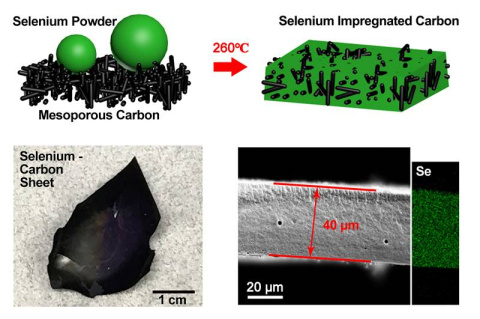
New self-supporting composite metal material doubles the volumetric energy and achieves fast charging rates in batteries.
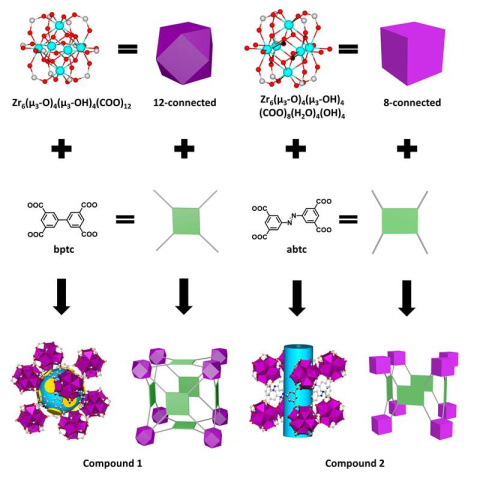
Metal-organic frameworks designed with a topology-guided approach show higher efficiency than commercial benchmarks.
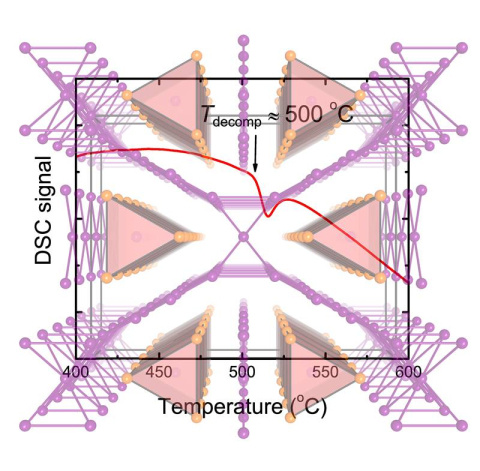
Scientists discover an unexpected source of new materials, with potential for energy applications.
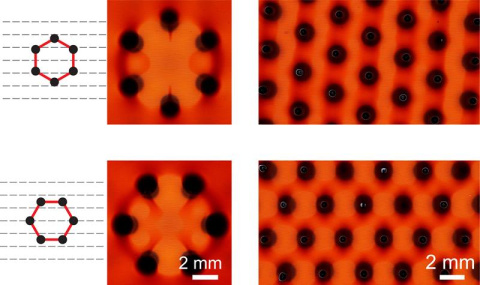
A flowing magnetically responsive liquid seamlessly regulates the shape and properties of solids, letting them perform an array of jobs.

Detailed view of atoms opens doors for new designs to convert atomic displacements to electrical energy.

Production of actinium-227 ramps up for use in a drug to fight prostate cancer that has spread to bone.
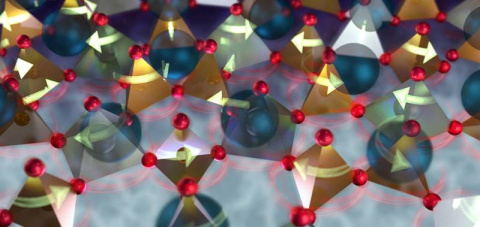
Neutron scattering reveals supersonic particles that carry heat and may improve electronics and sensors.
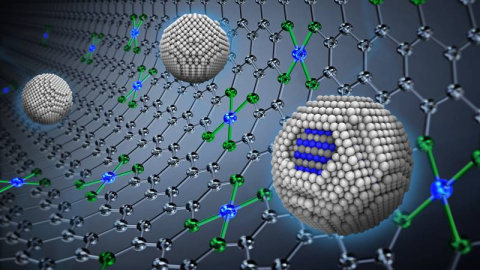
A new catalyst design meets cost, activity, and durability goals by leveraging ultralow loadings of platinum with platinum-free supports.
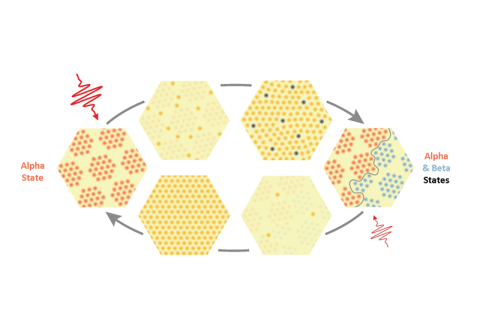
New method provides ultrafast switching of electronic structure and illuminates fundamentals of charge ordering.
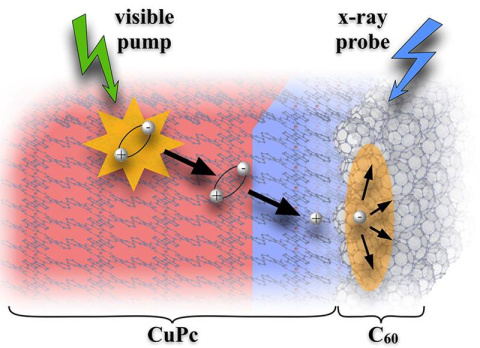
Insight about energy flow in copper-based material could aid in creating efficient molecular electronics.