



Several team members tapped into training they received at the Idaho National Laboratory Site to help a co-worker in distress. March 31, 2026
Office of Environmental Management
March 31, 2026 Estimated Read Time min
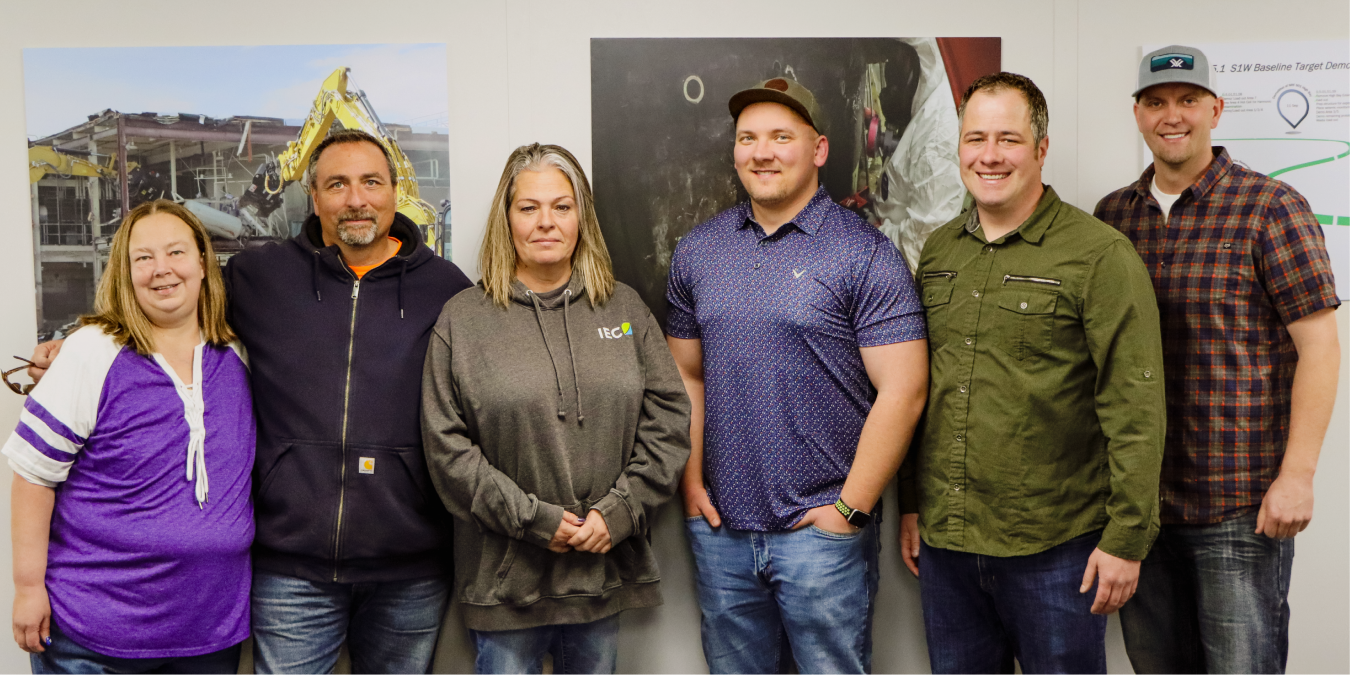
Idaho Environmental Coalition employees, from left, April Conley, Eric Garcia, Krista Williams, Caden Andersen, Andy Groesbeck, and Connor Littlewood. Williams had exhibited signs of a medical emergency, and the other team members pictured helped her before medical professionals arrived on the scene.
IDAHO FALLS, Idaho — Several team members tapped into training they received at the Idaho National Laboratory Site to help a co-worker in distress.
The five team members, all Industrial Health and Safety employees with Idaho Cleanup Project (ICP) contractor Idaho Environmental Coalition, were on a bus returning to Idaho Falls from their worksite at the Naval Reactors Facility when co-worker Krista Williams began exhibiting signs of a medical emergency. They intervened immediately, drawing from training to perform CPR and life-preserving efforts until medical professionals arrived.
“We often discuss the importance of safety culture within the DOE, and these individuals exemplify what it means to prioritize safety above all else,” ICP Acting Manager Nick Balsmeier said. “It is moments like these that remind us why we emphasize safety so much and why it is a core value in everything we do.”
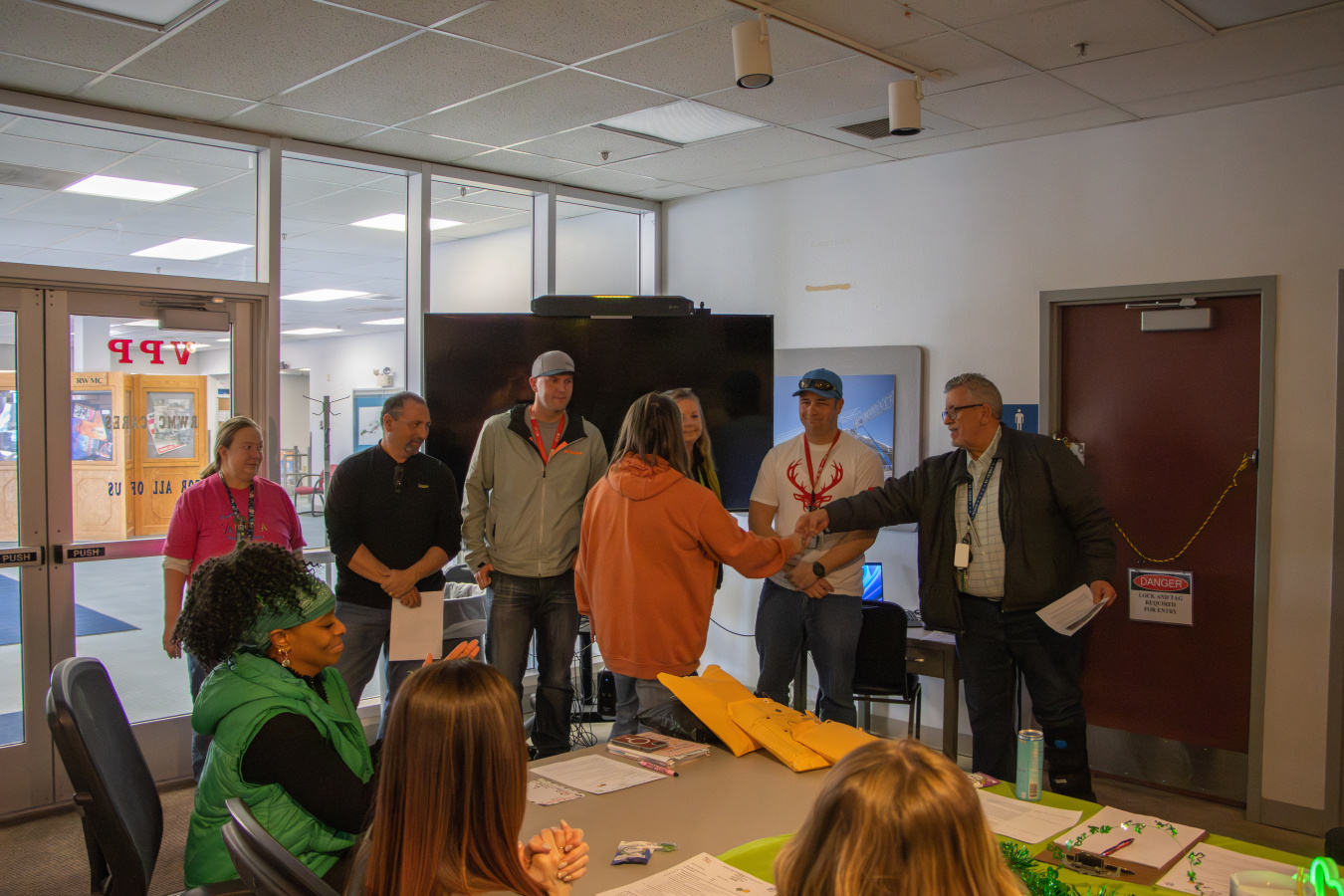
Idaho Environmental Coalition President and Program Manager Dan Coyne, far right, honors employees who helped a co-worker in distress.
Andy Groesbeck, who was sitting next to Williams, acted first, calling on the bus driver to pull over and instructing others to call 911. April Conley, Caden Andersen, Connor Littlewood and Eric Garcia helped assess Williams’ vital signs and moved her to the bus aisle.
“Past experience and training just kicked in,” said Garcia, a former emergency medical technician and firefighter. “We communicated well and drew on our knowledge to ensure our co-worker was cared for until help arrived.”
Some of the team members are part of ICP’s Medical Response Team (MRT), which trained them to use emergency equipment, including an automated external defibrillator, and follow a chain of command to ensure each person has a clear role in providing quality care.
Andersen reflected on how well the ICP training program prepared him to confidently respond to a real-world emergency.
“Our training is really robust,” Andersen said. “I learned things through our training here that were applicable to this event that I had not learned through past work experience in the medical field.”
Conley encouraged all employees to complete MRT training.
“At home or work, you never know when that training could make the difference for someone,” Conley said.
Williams said the outcome felt like nothing short of a miracle, made possible by training and a workplace culture where people care for each other.
-Contributors: Ryan Christensen, Carter Harrison
To receive the latest news and updates about the Office of Environmental Management, submit your e-mail address.