



A demonstration of an innovative technology has proved successful in safely treating and permanently disposing of a complex legacy waste stored at Oak Ridge National Laboratory for the past 50 years, reducing significant risk. March 31, 2026
Office of Environmental Management
March 31, 2026 Estimated Read Time min
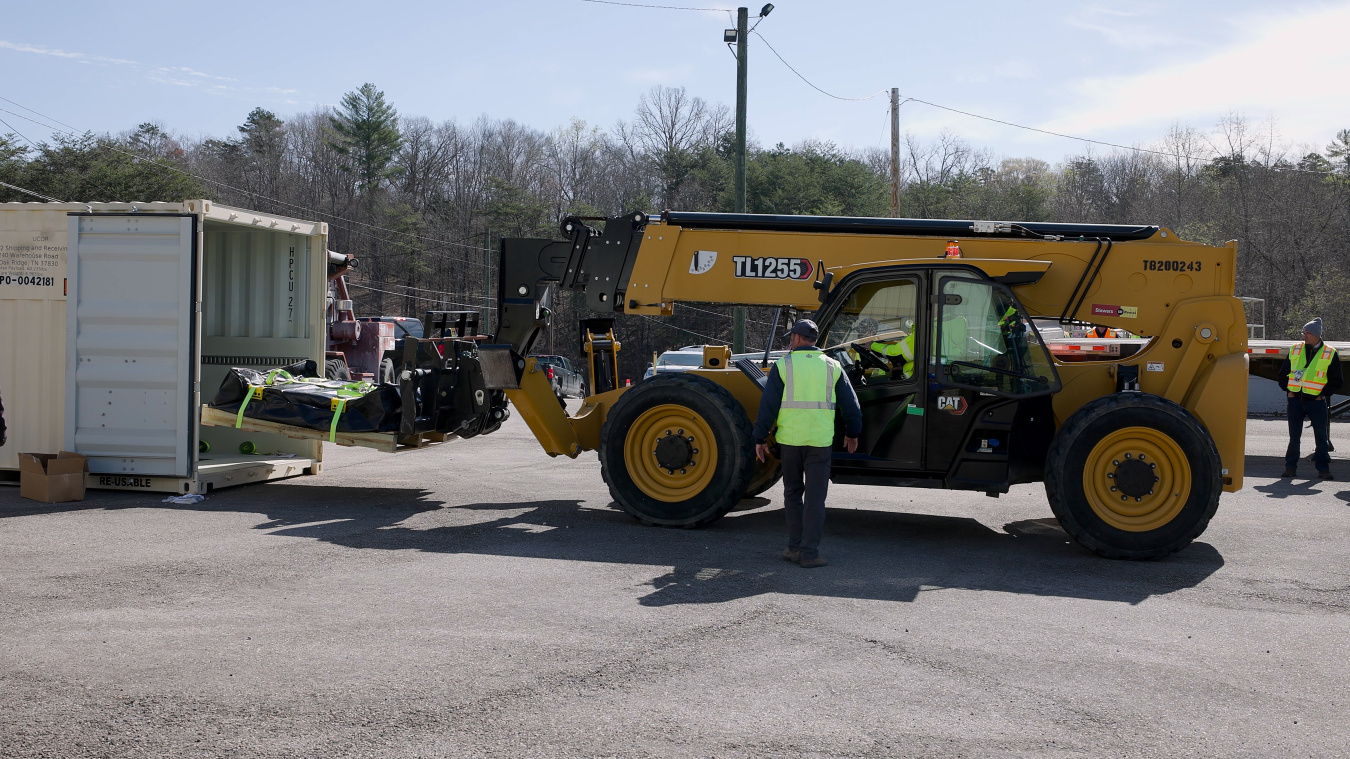
Oak Ridge Office of Environmental Management crews lift and load two packaged sodium shields into a container for shipment and treatment offsite.
Demonstration represents crucial step in addressing challenging legacy waste streams from America's nuclear research history
OAK RIDGE, Tenn. — A demonstration of an innovative technology has proved successful in safely treating and permanently disposing of a complex legacy waste stored at Oak Ridge National Laboratory (ORNL) for the past 50 years, reducing significant risk.
“This effort demonstrates how innovation and strong partnerships can solve some of the most complex cleanup challenges,” said Steve Clemons, ORNL portfolio federal project director for the Oak Ridge Office of Environmental Management (OREM). “It also establishes a potential blueprint for handling similar complex waste streams across the U.S. Department of Energy (DOE) complex.”
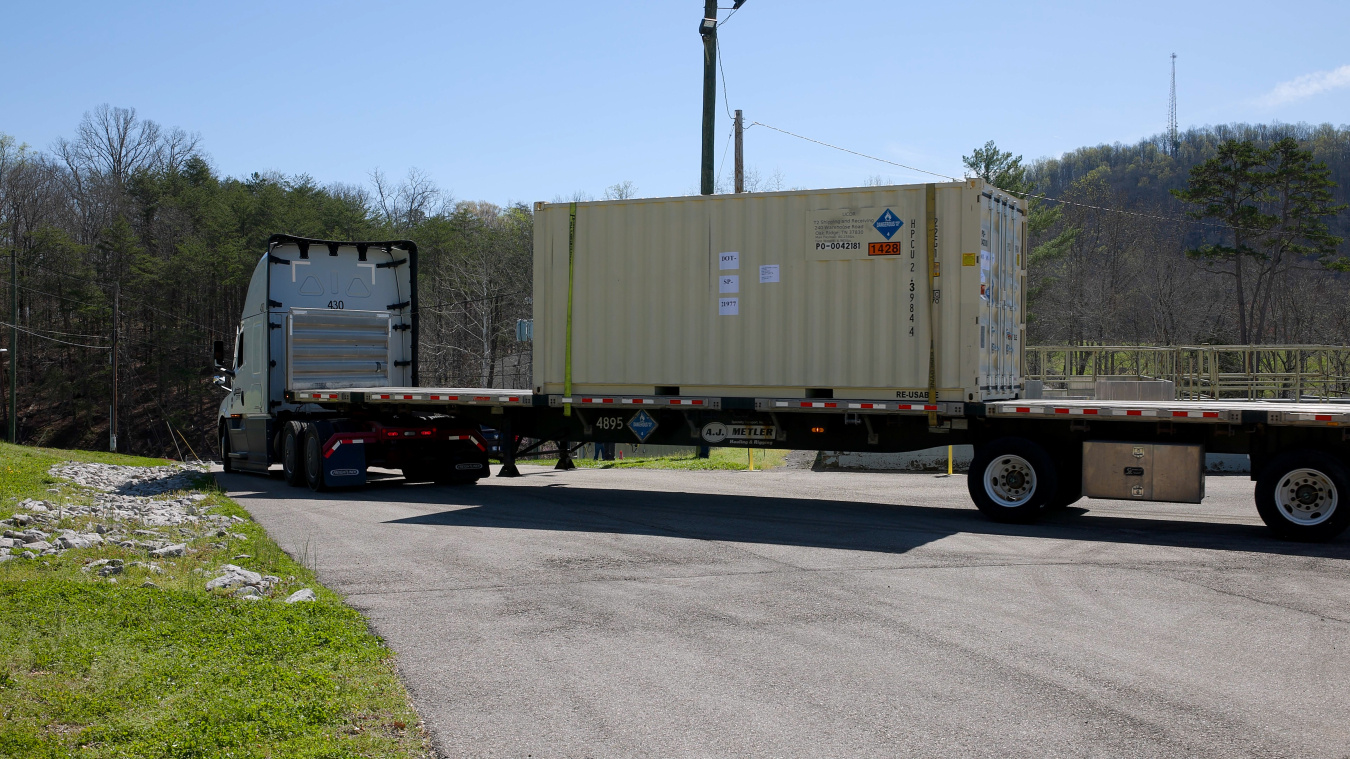
The final shipment of sodium shields recently departed Oak Ridge en route to Veolia Nuclear Solutions’ treatment facility at Waste Control Specialists in Andrews, Texas.
OREM and cleanup contractor United Cleanup Oak Ridge (UCOR) employed Veolia Nuclear Solutions’ patented GeoMelt technology at the Waste Control Specialists facility in Andrews, Texas. The vitrification process successfully converted the waste, highly reactive metals called sodium shields, into stable, durable glass for safe, permanent disposal.
Sodium metal presents unique hazards because it is unstable and can be highly reactive when mixed with water. The GeoMelt process is unique because it does not use any liquid to support treatment and avoids generating other challenging waste streams. After treatment, the vitrified waste form no longer exhibits reactive or ignitable characteristics.
OREM crews had shipped the sodium shields in seven large aluminum and steel containers weighing a combined 12,350 pounds for use in the demonstration. They sent a limited number to validate that the technology could safely and compliantly address this waste stream.
The sodium shields were used in the 1960s and 1970s to pioneer radiation shielding research. The largest of them is about 5 feet high and weighs over 30,000 pounds.
Collaboration and coordinated planning were critical to the project’s success. DOE’s Office of Technology Development funded the effort, while UCOR’s waste management and operations team developed a comprehensive packaging strategy to safely transport the shields to Veolia’s treatment facility.
“Successfully completing this demonstration shows what can be achieved when experienced waste management teams are devoted to solving complex waste challenges safely and efficiently,” said John Witzeman, UCOR’s waste disposition specialist. “Our team worked across several disciplines to develop and execute a specialized waste treatment approach.”
-Contributor: Ryan Getsi
To receive the latest news and updates about the Office of Environmental Management, submit your e-mail address.