



Energy and water systems are intricately linked. For example, energy is necessary to power water treatment systems and to move water to meet use demands (e.g., irrigation of crop fields). Water is needed to generate electricity—it is used in the operation of hydropower and thermoelectric facilities (like nuclear power plants) to power homes and businesses across the country. However, risks to water supply sustainability are expected to increase in the future. The Western United States is particularly vulnerable due to increases in energy and water demands and natural hydrologic conditions.
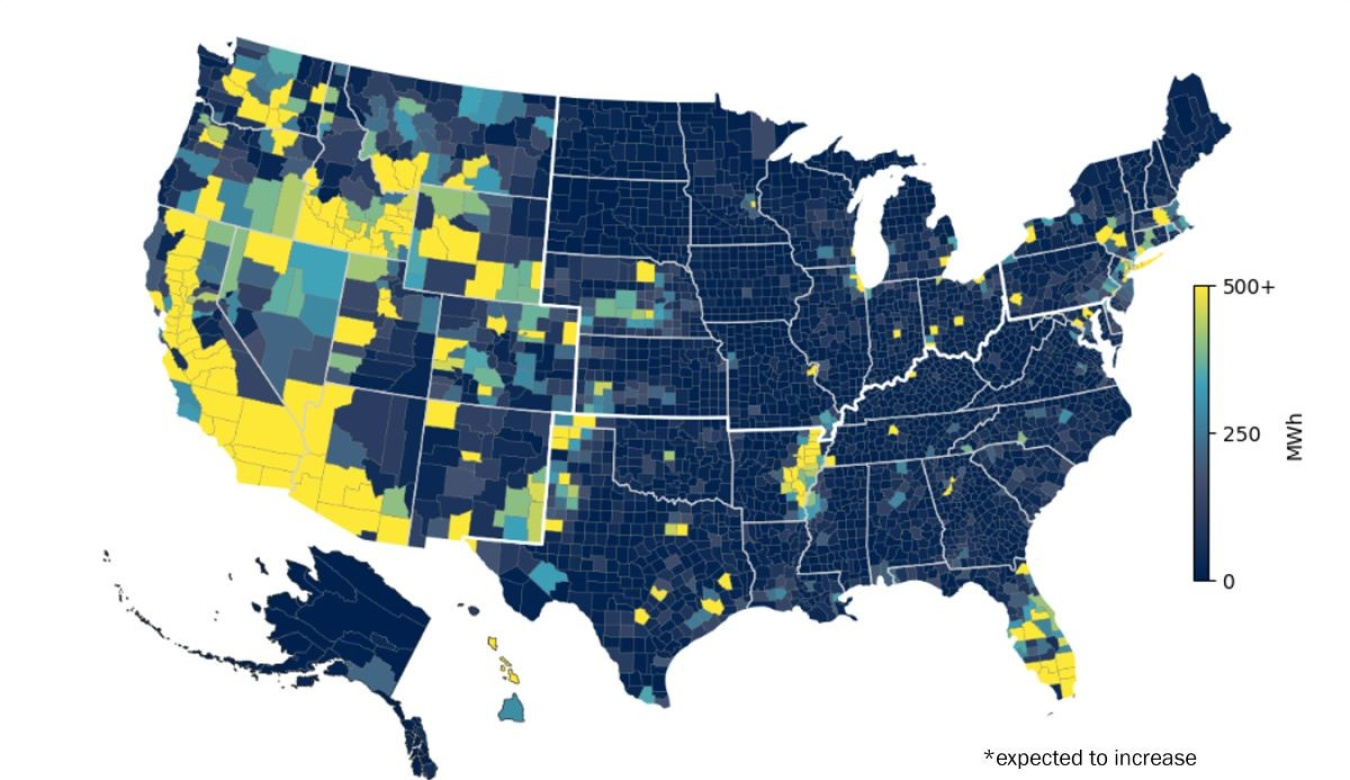
The map above illustrates the daily energy demand from agriculture, drinking water supply, and wastewater treatment for municipalities across the United States. The areas in yellow require 500 megawatt hours of power per day to meet these needs, which is equivalent to how much power an average home uses in 42 years.
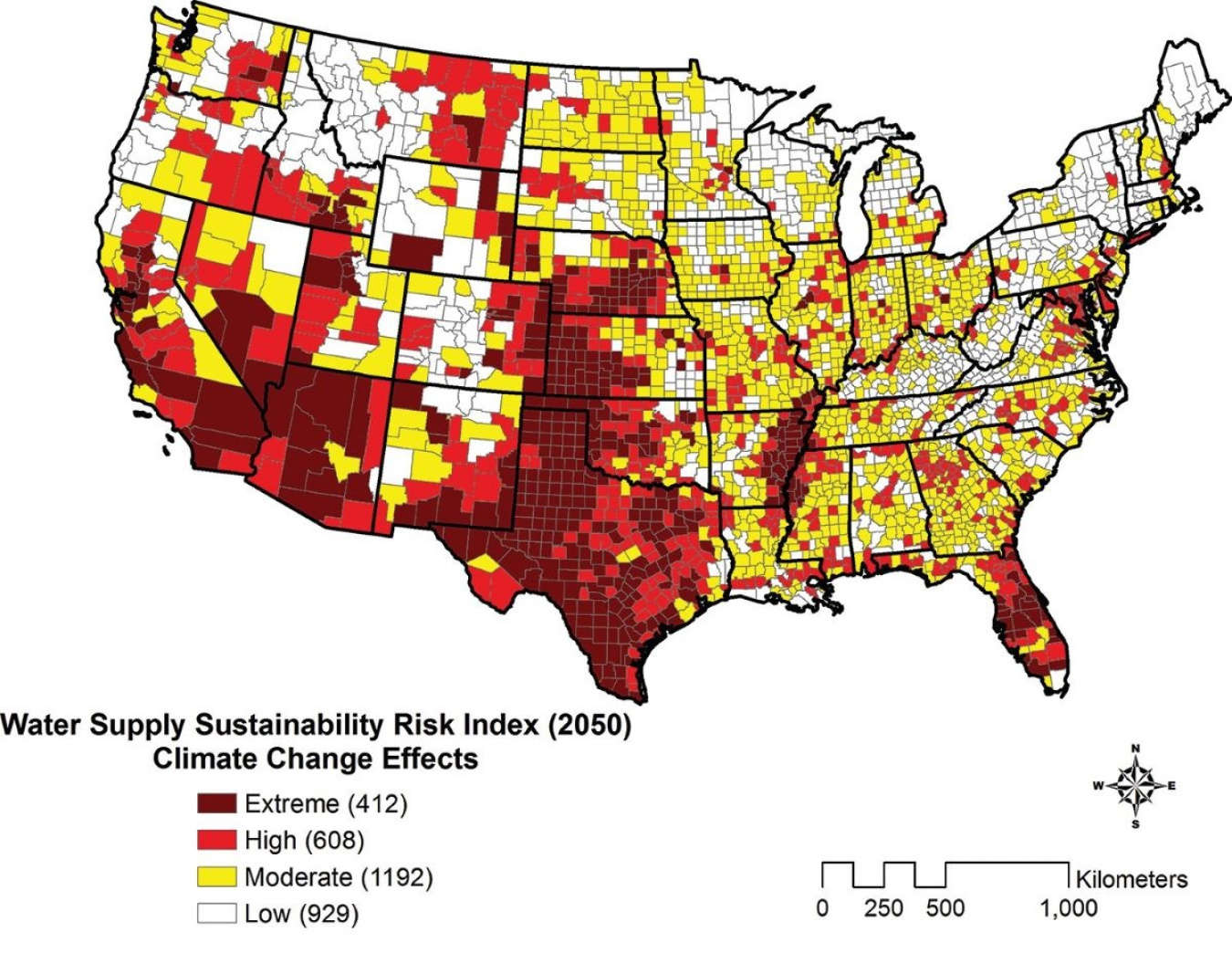
As shown in the map above, many of the municipalities that have high energy demand for essential services, such as agriculture, wastewater treatment, and drinking water reserves, are also at risk of losing significant portions of their water supply by 2050 due to drought.
This example of the growing mismatch between water demand and supply is among the reasons why the U.S. Department of Energy’s Hydropower and Hydrokinetic Office (H2O) is working to better understand how H2O can support local economies across the United States to meet their interconnected energy and water needs while building resilience to associated stressors. The office’s activities focused on energy-water resilience aim to support innovative technology solutions to advance integrated energy and water projects in alignment with needs on a regional scale.