



The Office of Geothermal’s Innovative Methods to Control Hydraulic Properties of Enhanced Geothermal Systems (EGS), or Hydraulic Properties, initiative supports the research, development, demonstration, and deployment of technologies and techniques to control the fluid flow within the fracture network in EGS reservoirs in order to optimize them for heat extraction. EGS systems use human-made reservoirs to access subsurface heat where natural subsurface conditions lack sufficient fluid flow—or permeability—or water to allow heat to be drawn to the surface for energy.
Projects under this initiative are developing targeted and reversible in-reservoir fracture permeability modification systems or methods and yield long-term reservoir productivity improvements. The ability to customize reservoirs via these methods will increase reservoir efficiency and longevity, ultimately helping to drive down EGS costs, reduce the risk of development, and accelerate the path towards widespread commercialization.
Hydraulic Properties Selectees
-
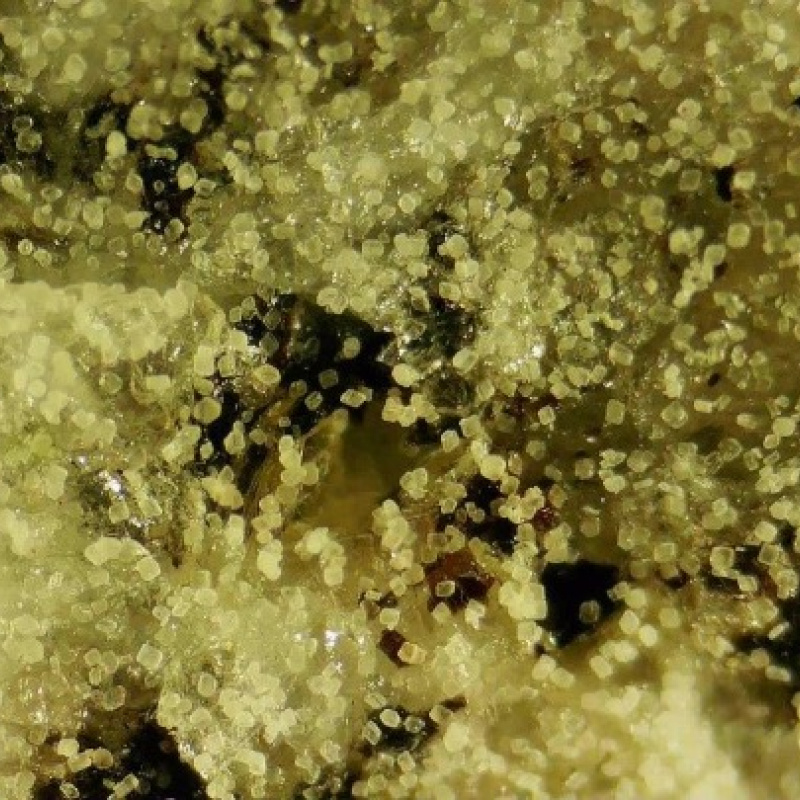 Montana State University’s research on Thermally Induced Calcite Precipitation (TICP) in enhanced geothermal systems project investigates ways to control the location and magnitude of associated permeability reduction within EGS fracture networks.July 29, 2026
Project Title: Temperature-responsive Swelling Particles for Elimination of Cooled Short Circuits in a Discrete Fracture
Location: Ithaca, New York
DOE Award: $2.3 million
Cost share: $860,000
Project Summary: This project will employ “lab-on-a-particle” ideas to build a temperature-responsive swelling particle. These engineered particles will make use of a Volume Phase Transition in which the particles swell when the local environment falls below a critical temperature. The resulting effect on an inlet-outlet short circuit will be: (1) reduction in permeability, preferentially in colder high flow paths; (2) redirection of fluids to hot flow paths; and (3) a subsequent improvement to the heat transfer surface area.Project Title: Reversible Reservoir Permeability Modification Via In-situ Formation of Silicate Gel Plugs from Micro/Nano-Encapsulated Reactant Fluids
Location: Berkeley, California
DOE Award: $1.7 million
Cost share: $575,000
Project Summary: The project’s proposed technology uses hydrated silicate gel formed by reaction of microencapsulated chemicals for reversible alteration of EGS reservoir permeability. Flow-diverting plugs can be created away from wells by delivering one or both of the reactants within encapsulated micro (or nano) particles. The timing of the capsule’s shell degradation is used to control the release of the contents. The finite particle size limits entry into narrow fractures and pores, targeting fast flow paths naturally preferred by the fluid flow. The proposed research will establish this technology by (1) identifying optimal combinations of gel-forming chemicals; (2) producing and characterizing the behavior of encapsulated microparticles; and (3) verifying and demonstrating the technology in the laboratory via scaled experiments.Project Title: Innovative Particle Gels for Controlling Preferential Fluid Flow Within Geothermal Reservoirs to Enhance Heat Recovery
Location: Rolla, Missouri
DOE Award: $2.3 million
Cost share: $575,000
Project Summary: The project will develop a cost-effective swellable particle gel-based technology that can be used to control the preferential fluid flow through fracture networks away from the wellbore and within the reservoirs to increase the performance of EGSs. It will adapt and improve existing patented environmentally-friendly preformed particle gels (PPG) and transformative recrosslinkable preformed particle gels (RPPG) products used for conformance control in oilfields for use in EGS reservoirs with temperatures of interest from 150 to 275 °C. This project will determine where and how the technology can be best applied in EGS reservoirs through a series of research work covering current PPG/RPPG products evaluation, novel product development, PPG swelling and deswelling kinetics in confined pores/fractures, transport and plugging efficiency evaluation in fractures, field-scale lab evaluation, and numerical simulation.Project Title: Thermally Induced Calcite Precipitation (TICP) as a Method to Control Hydraulic Properties in Enhanced Geothermal Systems
Location: Bozeman, Montana
DOE Award: $1.5 million
Cost share: $380,000
Project Summary: Under high temperatures, the mineral precipitation process promotes the production of carbonate minerals, which can result in the reduction of permeability. The goal of this project is to investigate thermally induced calcium carbonate precipitation and facilitate technologies that can control the location and magnitude of associated permeability reduction within EGS fracture networks. The proposed effort combines experimental work in the laboratory with computational reservoir scale modeling. Learn more about this project.Project Title: Development of Ionic Based Fluid to Improve Fluid Hydraulics in Enhanced Geothermal Systems
Location: Stillwater, Oklahoma
DOE Award: $1.0 million
Cost share: $260,000
Project Summary: This project will develop a novel fluid system to improve fluid hydraulics in EGS. To reach this objective, the proposed fluid has to eliminate short circuits, i.e., fast paths, and redistribute fluid flow such that smaller fractures with low conductivity will receive more fluid. This team will be solving this problem by improving the hydraulic properties of injected fluids using ionic liquids (IL). These ILs will increase in viscosity due to the lower temperatures in highly conductive fast paths, leading to greater friction losses and forcing injected fluids into lower conductivity, higher temperature, and flow paths.Project Title: Temperature-sensitive Hydraulic Conductivity Controller Proppants for Enhanced Geothermal Systems
Location: University Park, Pennsylvania
DOE Award: $1.0 million
Cost share: $260,000
Project Summary: The main objective of this project is designing, lab-scale manufacturing and testing a new type of proppant benefiting from two-way shape memory polymers (2W-SMPs) to continuously and automatically tune the hydraulic conductivity of subsurface fractures based on the local surrounding temperature at each point. These proppants will be designed to expand upon cooling and contract upon heating, hence the so-called two-way shape memory effect. By expanding under cooler conditions, these proppants will preferentially reduce the hydraulic conductivity in colder high-flow paths and contract in hotter low-flow paths.Project Title: Porous Polymer to Modify Fracture Permeability
Location: Albuquerque, New Mexico
DOE Award: $2.0 million
Cost share: $490,000
Project Summary: This project will develop innovative materials to inject into fractures to form a porous polymer at locations away from the wellbore to modify its permeability and consequently control the resulting flow through the fracture and the heat exchange with the formation. Reactants are delivered via microcapsules designed to rupture at target temperature and location. The injectates will be designed to displace water within the fracture and form a porous material, which bonds to the rock surface. These polymers will be designed to be durable at EGS temperatures and the degree of permeability modification will be adjustable to meet the exact permeability reduction desired. The porous nature of the polymer allows for this control of permeability and will not completely seal any fracture, allowing for reversibility. Bonding with rock prevents displacement under normal fluid injection operations.
Hydraulic Properties Successes
Breakthroughs in Controlling Fluid Flow
Each project in this initiative has made significant progress toward the goal of controlling fluid flow in the subsurface. For instance, Cornell University’s project has identified an ideal material for temperature-sensitive swelling particles that would enable the redirection of fluids in an EGS from colder to hotter flow paths. Oklahoma State University’s research team is developing an ionic liquid that has demonstrated a 35% reduction in frictional pressure when compared with water, as well as a reduction in frictional pressure with increasing temperature at both micro- and reservoir scales. Montana State University’s laboratory work, which has the potential to mitigate inefficiencies in EGS reservoir performance, has determined through simulations that reservoir permeability changes of several orders of magnitude are possible at temperatures of 180 °C. Across numerous technologies and processes, the portfolio of Hydraulic Properties projects are making breakthroughs in controlling fluid flow, which will ultimately serve to maintain and enhance effective heat extraction from EGS reservoirs.
Pursuing Outreach Across All Projects
All projects in this initiative worked with under-resourced communities during the first phase, supporting training, recruitment, and mentoring that will help bolster the U.S. energy workforce. The Navajo Technical University project, for example, provided internship opportunities on the project. The University of New Mexico project provided internships, created K-12 geothermal curriculum modules, and supported the University of Utah’s Refugees Exploring the Foundations of Undergraduate Education in Science (REFUGES) program, which connects 7th–12th grade students from underrepresented communities with resources like one-on-one tutoring and mentoring. The Lawrence Berkeley National Laboratory (LBNL) presented in science and engineering classes at educational institutions and led tours of LBNL for Contra Costa College students.
Office of Geothermal emails bring geothermal funding opportunities, events, publications, and activities directly to your inbox.