



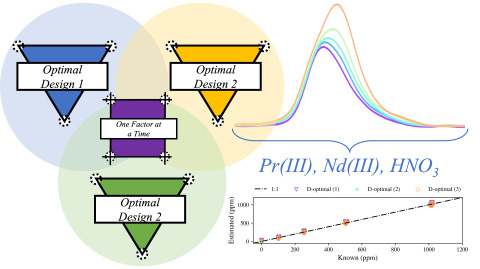
New statistical methods improve spectrophotometric analysis for nuclear and industrial applications.
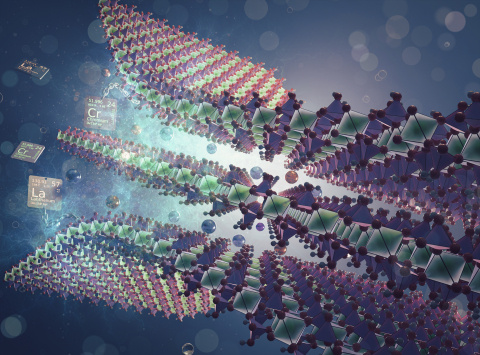
Researchers investigated the uptake and retention of targeted radionuclides for cancer therapy
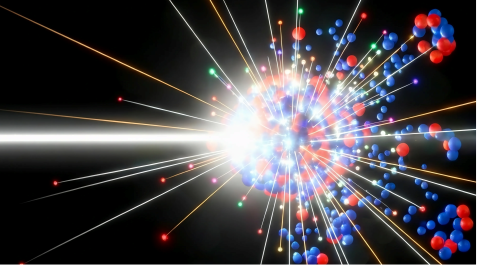
Scientists have analyzed secondary neutrons at BLIP to enhance production efficiency for critical isotopes.
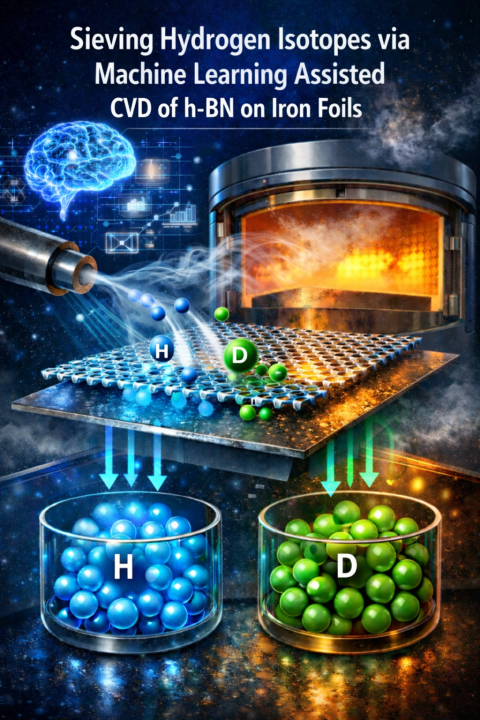
Scientists demonstrated that ultra-thin membranes made of 2D materials can act as filters to separate isotopes of hydrogen.
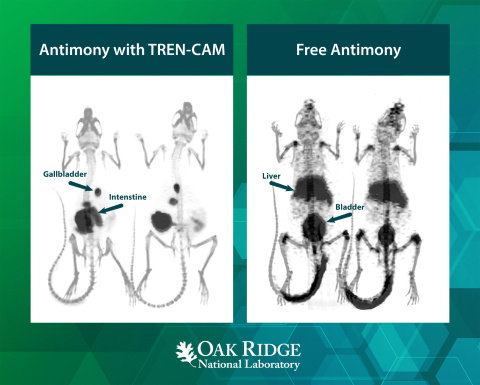
Researchers gain a new understanding of the binding chemistry of radioactive antimony, opening doors for targeted therapy.
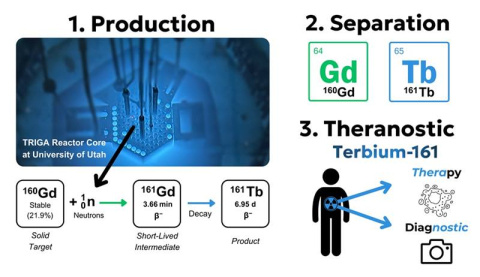
A University of Utah research team demonstrates that a low power university research reactor can produce terbium-161 at high purity from gadolinium-160.
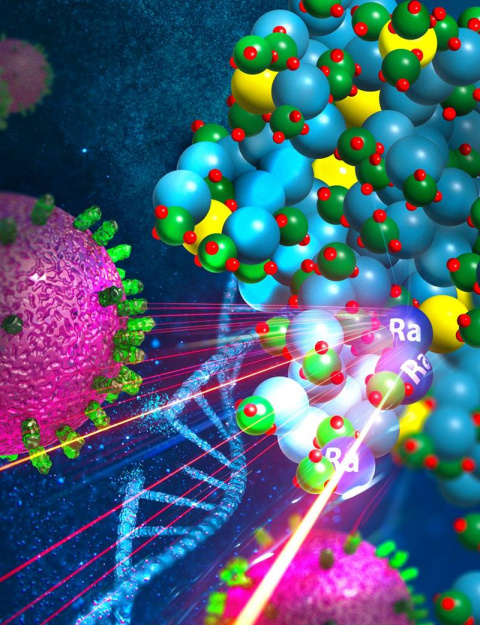
Scientists have developed tiny nanocrystal particles made up of isotopes of the elements lanthanum, vanadium, and oxygen for use in treating cancer.
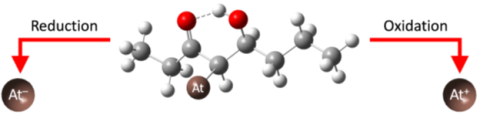
Researchers gain new insights into a strong bond between the isotope astatine-211 and common chemicals, creating new possibilities for cancer treatment.
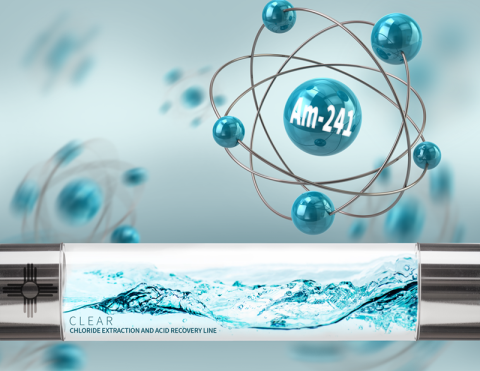
Researchers explore the effects of radiation and harsh chemicals to optimize americium-241 production.
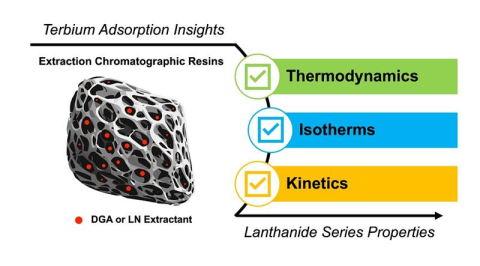
Scientists investigate the adsorption, thermodynamics, and kinetic properties of terbium on two popular resins for lanthanide separations: DGA and LN.