



NNSA congratulates SHINE on this crucial next step in its nuclear technology evolution! NNSA is proud to have fostered the company's innovative process for manufacturing medical isotopes while keeping America safe from materials that could be used for nuclear weapons.
National Nuclear Security Administration
April 9, 2026 Estimated Read Time min
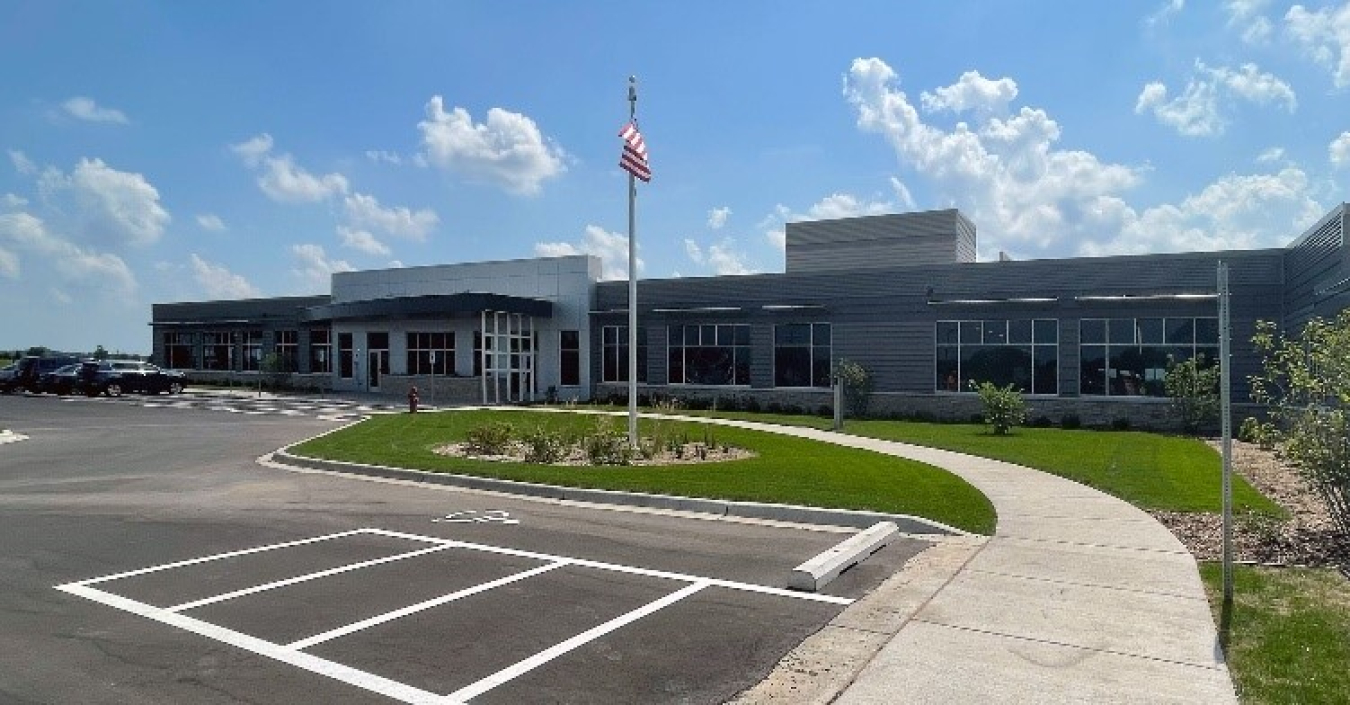
For 16 years, NNSA has partnered with and supported SHINE Chrysalis, LLC (SHINE) to develop a supply of reliable and secure medical isotopes. It has been part of an NNSA initiative to end reliance on imports and help U.S. industry establish domestic production of the medical isotope molybdenum-99 (Mo-99) without the use of proliferation-sensitive highly enriched uranium.
Today, the U.S. Department of Energy’s (DOE) Office of Energy Dominance Financing (EDF) issued a conditional commitment for a loan of up to $263 million to SHINE to support the construction of SHINE’s facility that will create a supply of reliable and secure medical isotopes made with fission and fusion technology.
The EDF conditional loan will enable SHINE to complete its Chrysalis facility in Janesville, Wisconsin. This project will support approximately 200 construction jobs and approximately 150 full-time operations jobs, contributing to a strong next-generation American nuclear workforce. The project supports President Trump’s Executive Order, Reinvigorating the Nuclear Industrial Base, by commercializing first-of-a-kind nuclear fusion technology that includes an innovative recycling process.
“SHINE is the key to ending reliance on imports of foreign-produced Mo-99 and ensuring U.S. patients have reliable access to American-made medical isotopes. NNSA’s leadership made this concept a reality, providing funding and technical support from our national laboratories that enabled this innovative U.S. company to go from an idea on paper to a commercial facility that is 75% complete,” said Dr. Matthew Napoli, NNSA’s Deputy Administrator for Defense Nuclear Nonproliferation (DNN). “The EDF conditional loan will get this project across the finish line, and SHINE’s market entry will be a major win for American nuclear medicine, fusion technology, and nuclear nonproliferation leadership.”
Mo-99 is used to produce technetium-99m (Tc-99m), which is a radiopharmaceutical used in over 40,000 medical procedures in the United States each day. It has diverse medical applications, but it is especially important for the diagnosis of heart disease and cancer. Despite accounting for nearly half of global Mo-99 demand, the United States lacks the capability to produce Mo-99 domestically, relying entirely on imports from production facilities overseas.
In response to shortages of this vital medical isotope, Congress passed the American Medical Isotope Production Act of 2012, charging DOE with helping to establish domestic production using cooperative agreement funding and national laboratory expertise. NNSA awarded cooperative agreements to eight companies and funded the national laboratories to help develop 14 different technologies.
NNSA’s Mo-99 Program funding has been a major factor in taking SHINE’s novel accelerator technology from concept to reality. The Chrysalis facility, which will have the capacity to meet up to three-quarters of U.S. demand, is currently 75% complete. The facility will produce Mo-99 using innovative fusion technology. Once online, SHINE’s production will help ensure a domestic supply of this critical medical isotope and launch the United States to the forefront of global radiopharmaceutical production with a cutting edge, first-of-a-kind nuclear technology.
Critically, SHINE’s technology produces Mo-99 without the use of proliferation-sensitive highly enriched uranium (HEU). Once operational, the Chrysalis facility will lock in NNSA’s historic progress in transitioning the global medical isotope industry away from the use of HEU.
If the EDF loan funding is approved, SHINE expects to complete the facility and begin Mo-99 production in two years. Further, a finalized EDF loan would trigger the end of NNSA funding.
“Chrysalis shows that fusion can improve the lives of millions of people each year," said Greg Piefer, founder and CEO of SHINE. “We are grateful for NNSA’s long-standing support for advancing domestic production of Mo-99, the most widely used medical isotope in the world. Over many years, this project has moved from concept through regulatory approval, construction and now toward commercial reality. Its success is a reflection of both the national importance of securing a domestic supply of Mo-99 and SHINE’s demonstrated ability to execute complex first-of-a-kind nuclear projects. Once operational, Chrysalis is expected to be the largest isotope production source in the world, and will help ensure patient access to nuclear medicine.”
Currently, the United States relies completely on Mo-99 imported from the Netherlands, Belgium, South Africa, and Australia. Importing a radioisotope that decays 1% every hour creates an unacceptable risk of disruptions in supply of nuclear medicine for American patients. The Chrysalis facility will re-shore Mo-99 production and spell an end to inadequate and unstable supply.
*While this conditional commitment from EDF indicates the Department’s intent to provide a loan to finance the project, DOE and the company must satisfy certain technical, legal, environmental, and financial conditions before the Department enters into definitive financing documents and funds the loan.