



What’s Inside
The Drill Down
September 30, 2026
Estimated reading time: 10 minutes
Director's Letter
Hello, everyone! I am delighted to return to my role as Office of Geothermal Director, after temporarily serving as the Acting Energy Attaché at the U.S. Embassy in Tokyo. As I settle into autumn and look ahead to the final months of the year, I find myself reflecting on the momentum that continues to build in geothermal energy and across the Hydrocarbons and Geothermal Energy Office (HGEO).
The geothermal community has been buzzing with groundbreaking exploration, new partnerships, and shared energy—much of it on full display at this year’s Geothermal Rising Conference. Our team had a wonderful time in Houston, TX, connecting with new colleagues and greeting familiar faces. The conversations reinforced the important work underway across the geothermal energy sector.
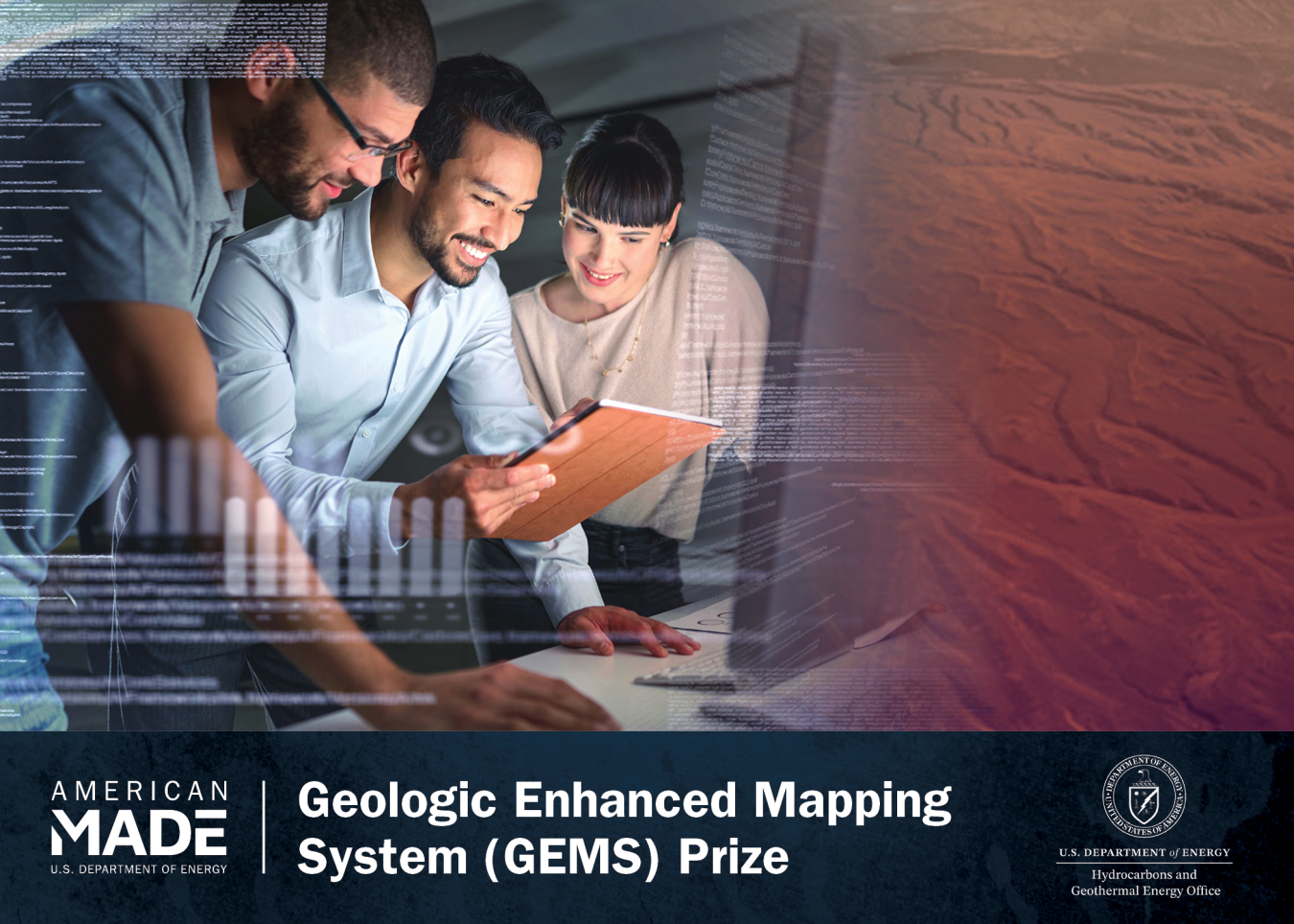
This month, I am excited to highlight the launch of our Geologic Enhanced Mapping System (GEMS) Prize, a $300,000 competition designed to help map hidden geothermal resources. GEMS invites both individual and team competitors to develop, train, and test algorithms that generate enhanced geologic datasets to support geothermal and critical mineral mapping. Also this month, the U.S. Department of Energy (DOE) selected 21 projects for the Next-Generation Geothermal Field Tests and Geothermal Resource Characterization and Confirmation funding opportunity. These projects will help expand geothermal energy by focusing on enhanced geothermal systems (EGS) field tests and drilling to explore for and characterize promising next-generation and hydrothermal resources. Our office looks forward to the ingenuity and innovation these projects will spark.
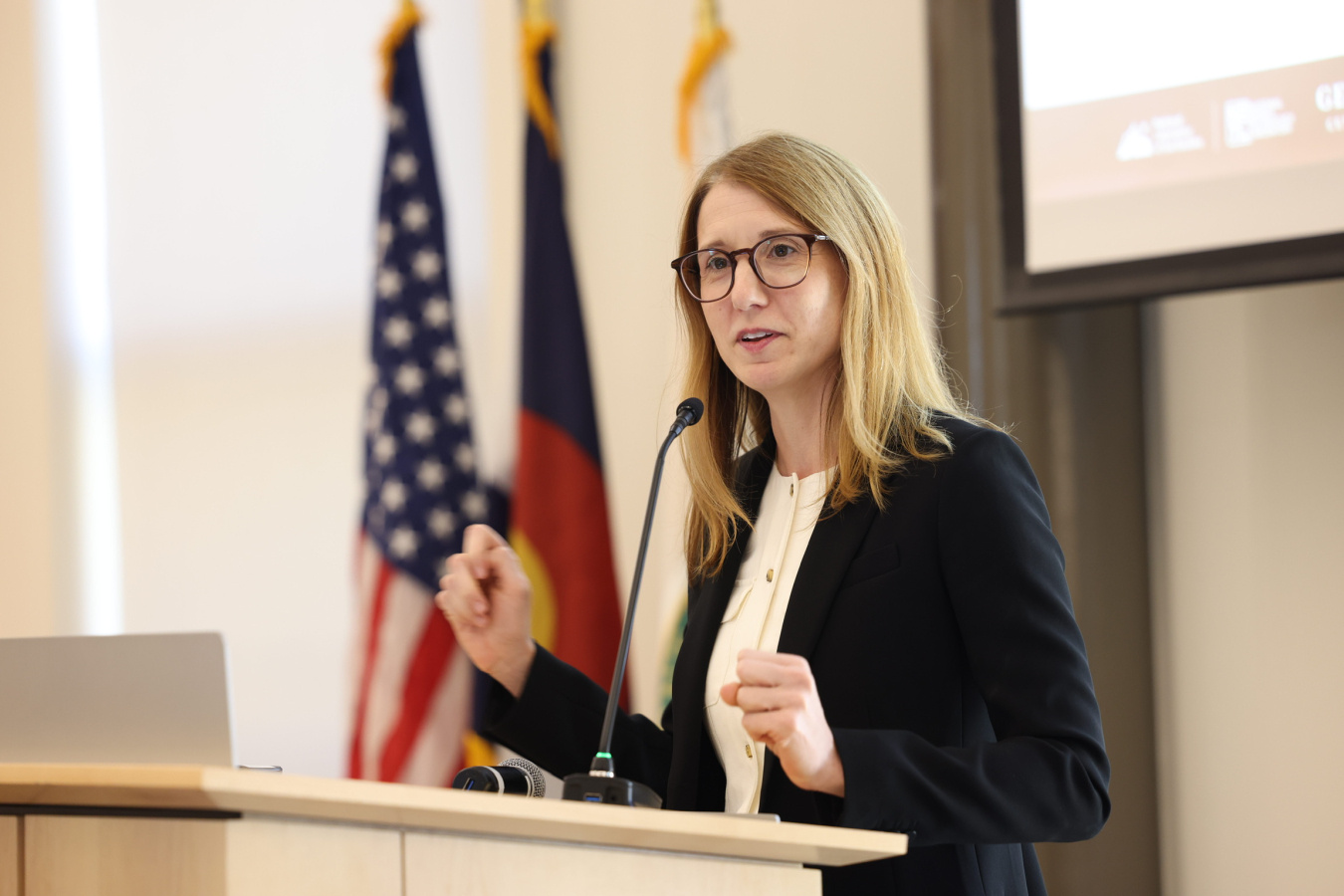
DOE also celebrated a key milestone this month with the launch of the new Geothermal Center of Excellence (CoE). The Center will unite expertise and world-class capabilities from across DOE’s National Laboratories to accelerate the discovery and development of gigawatt-scale geothermal energy and position geothermal as a competitive domestic source for reliable baseload power by enhancing laboratory and industry collaboration. The National Laboratory of the Rockies (NLR) will lead the consortium, with support from the National Energy Technology Laboratory.
And on a personal note, I want to thank Sean Porse for filling in as Acting Director, ensuring continuity and providing incredible leadership throughout my tenure abroad.
With these new resources, new opportunities, and new connections, our office remains steadfast in its mission: to unlock geothermal’s full potential as a reliable, domestic energy source. As we enter a new season, I look forward to the advancements and collaboration still ahead.
Warmest thoughts,

Lauren Boyd
Office of Geothermal Director
Trivia Question: In December 1991, what software/hardware system did SLAC National Accelerator Laboratory scientists install in California?
Office of Geothermal's Latest
$300,000 Prize to Help Map Hidden Geothermal Resources
The Office of Geothermal has launched the Geologic Enhanced Mapping System (GEMS) Prize to help identify hidden geothermal systems by using geophysical data to identify faults and structures that indicate geothermal resources. The competition comprises two rounds, with prizes ranging from $15,000 to $100,000. Both individual and group competitors can participate, and submissions are due on December 3, 2026.
21 Projects Selected for EGS Field Tests and Exploration Drilling
HGEO selected 21 projects under its Next-Generation Geothermal Field Tests and Geothermal Resource Characterization and Confirmation funding opportunity. These projects will help expand affordable and reliable geothermal energy across the U.S. by validating technical approaches, addressing key barriers, and generating new subsurface data.
New Geothermal Center of Excellence Announced
DOE launched its Geothermal Center of Excellence (CoE) at an in-person event hosted at NLR’s campus in Golden, Colorado. The Geothermal CoE will serve as the geothermal industry’s main entry point to the national laboratories.
RFI to Advance Private Investment in Innovative American Energy Technologies
HGEO, in collaboration with the Office of Technology Commercialization, announced a Request for Information (RFI) seeking stakeholder input on opportunities to better connect private capital and public-private partnership programs with coal, oil and gas, and geothermal energy technologies. Responses to the RFI are due 5:00 p.m. ET on October 5, 2026.
Eight Teams Receive $150,000 Each for Advancing Local Train-to-Hire Programs
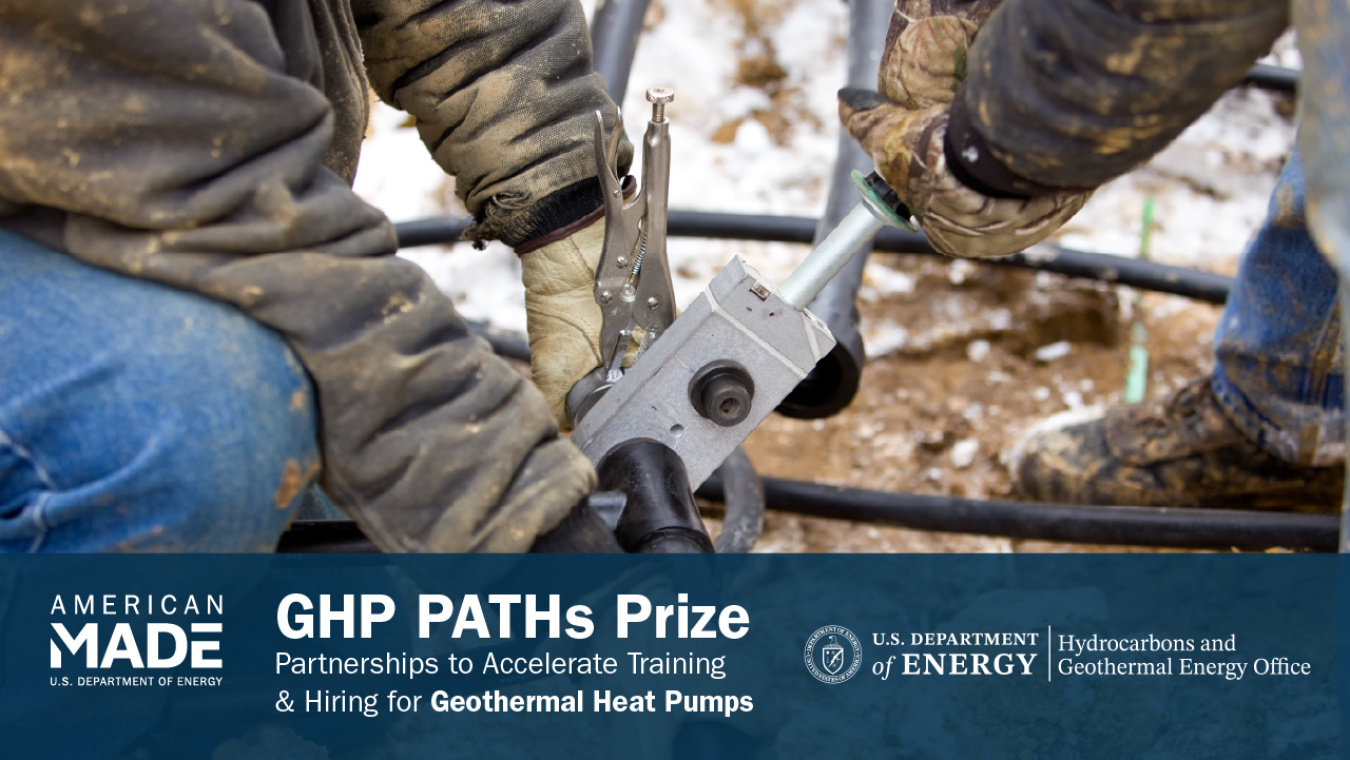
The Office of Geothermal has announced Phase 2 winners of the Partnerships to Accelerate Training and Hiring for Geothermal Heat Pumps (GHP PATHs) Prize. The selected eight teams will continue to Phase 3, Execute, where they will implement workforce development programs.
Lithium Extraction Project Aims for Domestic Production
The Targeted Extraction of Lithium with Electroactive Particles and Electrodialysis project, led by the University of Virginia, is working to advance direct lithium extraction technology to enable sustainable and efficient domestic production of battery-grade lithium hydroxide from geothermal brine.
FORGE Receives Innovation Award
The Utah Frontier Observatory for Research in Geothermal Energy (FORGE) took third place in the Utah Business Magazine's 2026 Innovation Awards in the Cleantech, Energy, Agtech & Sustainability category. The award honors the team for its dedication to de-risking and advancing EGS.
Mazama Energy Achieves Drilling Performance Milestone
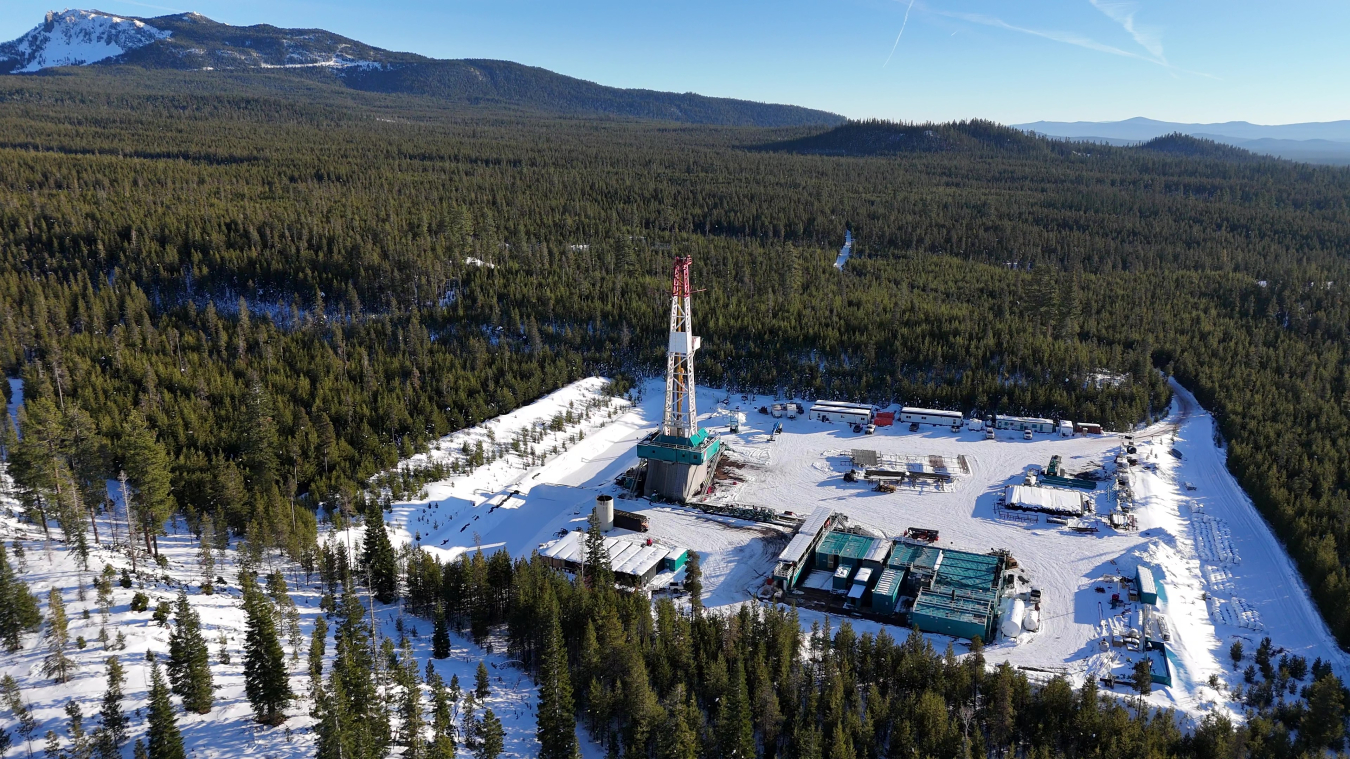
The first phase of Mazama Energy’s Athena Drilling Project in Newberry, OR, demonstrated 80% improvement in drilling time over its 2025 drilling result. This milestone helps support the company’s efforts towards their Office of Geothermal-funded superhot EGS demonstration.
Headlines Around DOE
DOE Visits Research Center Following Recent Awards
DOE representatives visited the University of Dakota’s Energy & Environmental Research Center last month following the announcement of the center receiving several federal project awards. The awards focus on energy innovation, technology commercialization, and domestic energy production.
Looking Ahead
2026 Geothermal Energy Machinery and Systems (GEMS) Workshop
November 18-19, 2026 | Golden, CO
The Geothermal Energy Machinery and System (GEMS) Workshop provides a collaborative opportunity for industry experts to discuss technology development needs for advanced geothermal surface plants.
SPE Forum: Unlocking the Earth - Future-Forward Strategies for Scalable Geothermal
December 8-11, 2026 | Galveston, TX
The Society of Petroleum Engineers’ (SPE) industry forum will focus on how geothermal energy can rapidly and safely scale to become a major part of the worldwide energy portfolio over the next decade.
In Case You Missed It
Office of Geothermal Attends 2026 Geothermal Rising Conference
The Office of Geothermal attended and exhibited at the 2026 Geothermal Rising Conference in Houston, TX. DOE Under Secretary of Energy Kyle Haustveit also spoke on a panel during the event.
HGEO Travels Across Utah to See American Energy in Action
HGEO's Acting Assistant Secretary Curt Coccodrilli and Acting Principal Deputy Assistant Secretary John Lassek led a delegation to Utah, highlighting HGEO's broad reach and its work to support American energy production.
Under Secretary Talks Next-Gen Energy
Utah’s Deseret News recently published an op-ed from DOE Under Secretary of Energy Kyle Haustveit. The piece discusses how EGS and other energy innovations can power a reliable, affordable, and secure next-generation U.S. energy future.
Geothermal in the News
- U.S. Department of Energy Opens Geothermal Center in Golden | Denver Gazette
- Trump Administration’s Geothermal Push Gets Big Test in Utah Desert | Energy Connects
- PNNL, Fervo and NVIDIA Build AI Digital Twin to Run Geothermal Reservoirs in Real Time | GCN
- DOE Undersecretary: Power Grid Must Keep Pace with Growing Demand | Northern Broadcasting System
- DOE Launches $300,000 GEMS Prize to Map Hidden Geothermal Systems Using Algorithm Development | Energies Media
Trivia Answer: The first web server in North America! Seeking to share particle physics information, the installation kick-started the development of the World Wide Web as we know it.
The Office of Geothermal e-newsletter brings the latest on funding opportunities, events, publications, & activities directly to your inbox.