



Bringing geothermal into the spotlight.
Geothermal Technologies Office
July 8, 2026 Estimated Read Time min
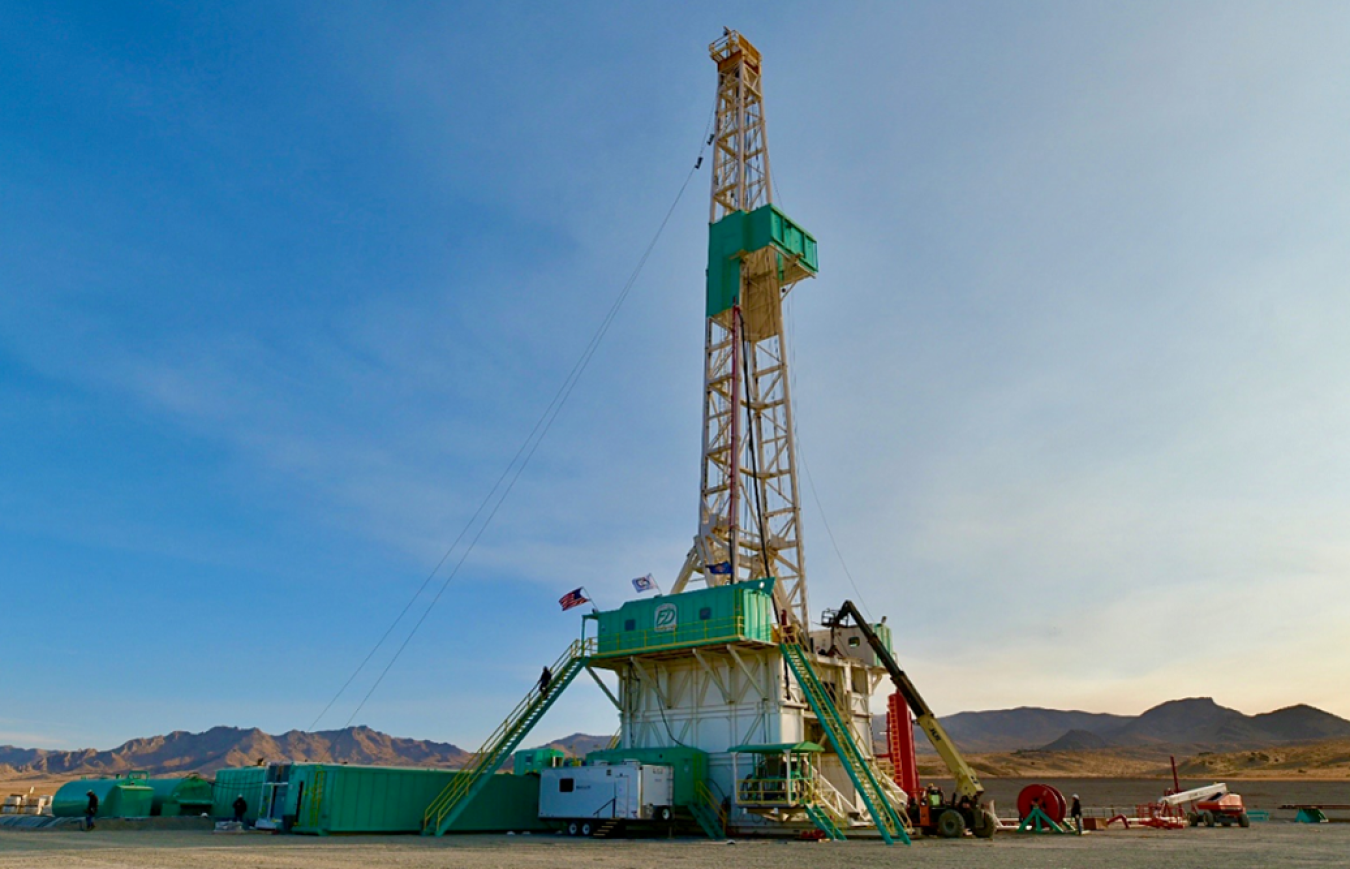
In 2014, the U.S. Department of Energy’s (DOE) Office of Geothermal released a funding opportunity to establish a dedicated field test site for enhanced geothermal systems (EGS). Dubbed the Frontier Observatory for Research in Geothermal Energy (FORGE), the intention for the site was to identify, test, and evaluate technologies and methods for EGS. Through a 3-phase process, the Office of Geothermal selected a site in Milford, Utah, led by the University of Utah.
Since Utah FORGE’s implementation in 2019, the site has become a flagship for EGS research. In 2021, FORGE drilled the first-ever highly deviated geothermal well (65° inclination), in about half the time planned. By 2023, FORGE had drilled a second deviated well and successfully created an EGS reservoir. The site pioneered the use of fiber optic cables in EGS, enabling high-quality monitoring and communication between wells during hydraulic fracturing, and has supported $90 million in research and technology testing. Work at FORGE has also identified ways to dramatically increase drilling speeds, with techniques that have been used successfully in other Office of Geothermal-funded projects.
Since its inception, FORGE has shared its technical data on DOE’s Geothermal Data Repository—more than 133 terabytes worth as of May 2026—fostering transparency and enabling other EGS researchers worldwide. These data sets don’t just serve FORGE and DOE; they benefit other researchers, academia, investors, insurers, and—of course—geothermal companies.
One such company is Fervo Energy, a leading geothermal developer that is moving the needle on EGS. Like FORGE, Fervo has made significant strides in leveraging oil and gas technologies to geothermal, including drilling the first-ever horizontal EGS wells, using distributed fiber optic cable for seismic monitoring, and using polycrystalline diamond compact drill bits to reduce drilling times.
The Office of Geothermal has funded Fervo for multiple projects, including research to prevent fluid migration within EGS reservoirs, support to Fervo’s founders during the earliest days of the company at DOE’s Cyclotron Road incubator, and research at FORGE on multistage hydraulic stimulation.
Fervo notes that they’ve benefitted from FORGE’s research and abundant data. The Office of Geothermal selected the company’s Cape Station project as part of the EGS Pilot Demonstrations initiative. The project—expected to produce 500 megawatts of power by 2028—is adjacent to Utah FORGE. In a 2023 statement, Fervo CEO and co-founder Tim Latimer noted the importance of FORGE research in selecting the site: “Thanks to cutting edge research and data collection from FORGE, Fervo can accelerate the production of [Beaver County, Utah]’s geothermal resources.”
Fervo is also following FORGE’s lead in making geothermal data publicly available, in turn helping to attract developers and investors to the EGS space. On May 13, 2026, Fervo broke new ground again, issuing the largest-ever U.S. renewable energy initial public offering. The company raised more than $1.9 billion—half a billion over its original target—and reached a market capitalization exceeding $10 billion. The performance of Fervo’s listing as well as increasing interest in work by FORGE, Fervo, and other EGS companies confirm the market is excited about the successes to date—and possibilities to come—for EGS and geothermal power.