



Decades of uranium enrichment operations at two former gaseous diffusion plants yielded thousands of cylinders of depleted uranium hexafluoride, or DUF6, that accumulated in storage yards. April 21, 2026
Office of Environmental Management
April 21, 2026 Estimated Read Time min
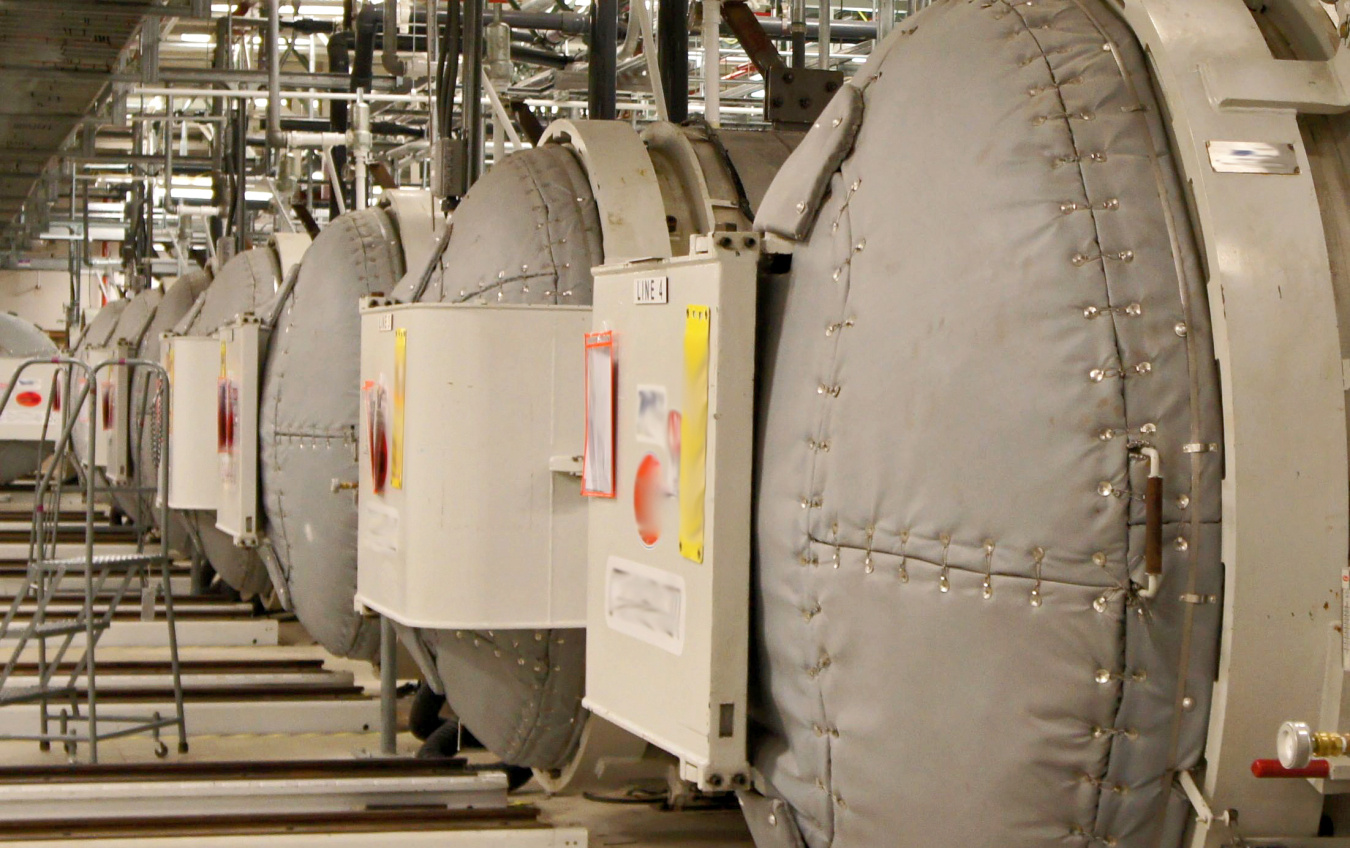
Autoclaves, part of the equipment used in the depleted uranium hexafluoride (DUF6) conversion process, stand in the Paducah Site’s DUF6 conversion facility.
LEXINGTON, Ky. — Decades of uranium enrichment operations at two former gaseous diffusion plants yielded thousands of cylinders of depleted uranium hexafluoride, or DUF6, that accumulated in storage yards. Now, with a nuclear renaissance underway, opportunities to reuse that material are on the horizon.
“We’ve been looking at this for more than decade because we know DUF6 is a valuable material and this focus on nuclear revitalization helps us get there,” Portsmouth Paducah Project Office (PPPO) Operations and Site Mission Support Acting Lead Chris Richards said. “Our ultimate goal is to decrease inventory, but we must be strategic in how we do that.”
Inventory reduction occurs when cylinders are processed through conversion facilities at the Portsmouth, Ohio, and Paducah, Kentucky, sites or reused by other U.S. Department of Energy (DOE) organizations, such as the National Nuclear Security Administration (NNSA), and private sector entities.
That’s where the cylinder management database proves to be critical. Records kept from decades of uranium enrichment operations provide valuable information about the more than 67,000 cylinders stored at the sites, such as their size and the assay of the material inside them. Assay is the concentration of a specific isotope within a material. In this case, it’s the percentage of uranium-235, the isotope needed for fission in nuclear reactors.
“There’s a delicate balance we go through,” Richards said. “We want to be good stewards of the taxpayer dollars and work in the best interests of the government and support the local communities. We need to ensure we have an inventory of cylinders to process through the conversion plants.”
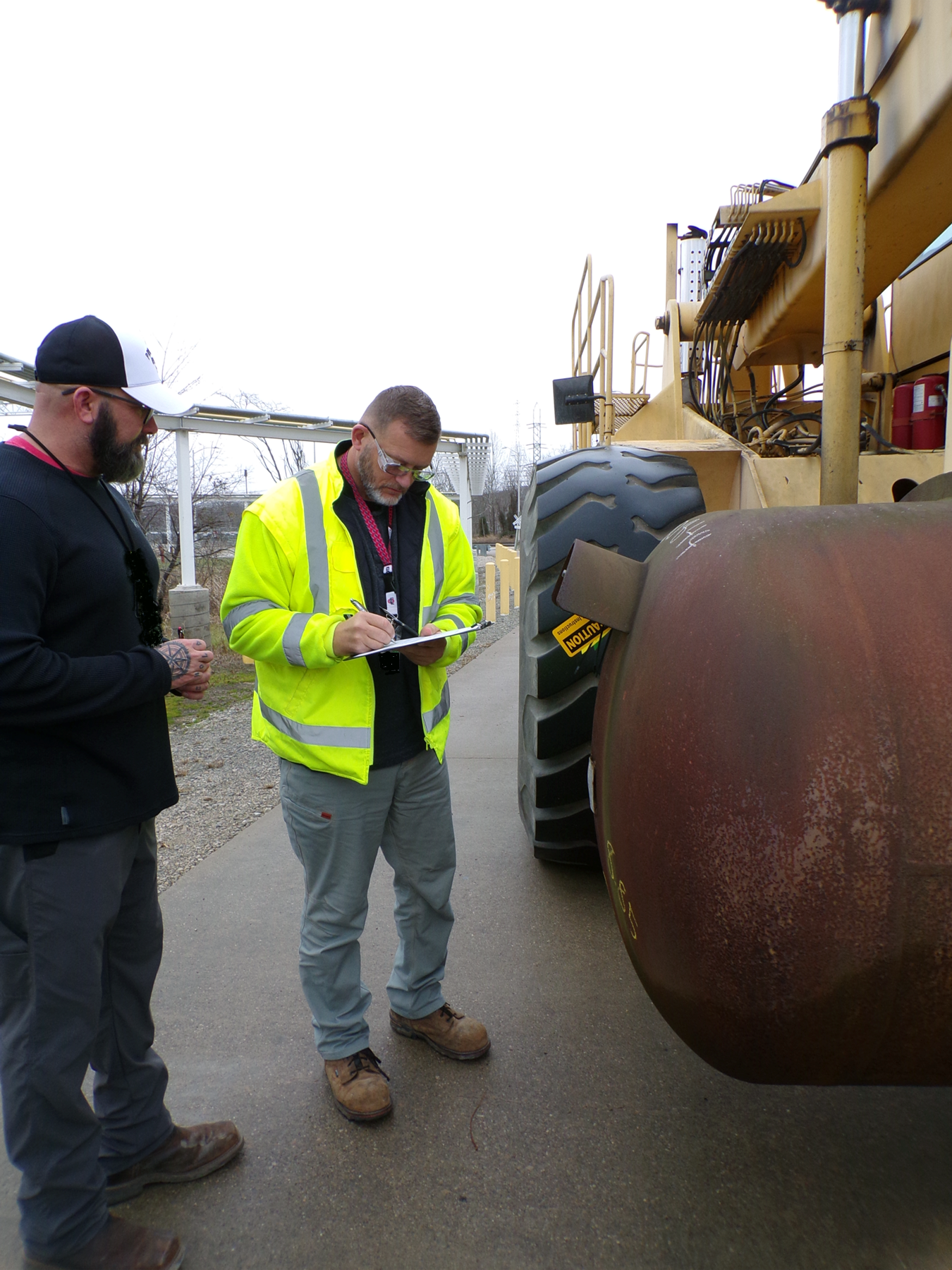
Depleted Uranium Hexafluoride (DUF6) Cylinder Yard Operator Scott Chandler, left, and Operations Shift Supervisor Dan Whitley complete paperwork to accept a cylinder entering the conversion process at the Portsmouth Site’s DUF6 facility.
A team from contractor Mission Conversion Services Alliance manages the database. Team members look for a specific type of cylinder, based on the material or quantity of material inside the cylinder, to be processed in the conversion plants. Next, they dig through the records to provide characterization of the cylinders.
General Matter and Global Laser Enrichment are interested in reusing a portion of the cylinders. PPPO teams worked with the companies to determine their needs.
“The database became a one-stop shop,” Richards said. “We filtered out criteria to identify what cylinders could be made available to General Matter and Global Laser Enrichment based on their requests.”
As part of a lease agreement, PPPO is providing General Matter with a minimum of 7,600 cylinders to supply fuel for future uranium re-enrichment operations. PPPO plans to provide approximately 25,000 cylinders to Global Laser Enrichment as feedstock for a laser enrichment facility to be built adjacent to the Paducah Site.
Richards said such partnerships are a perfect example of transitioning from nuclear remediation to nuclear revitalization, a key priority for DOE’s Office of Environmental Management.
When a DUF6 cylinder is processed, it generates two coproducts: uranium oxide, which is stored for eventual disposal or reuse, and hydrofluoric acid, which has many reuse opportunities, including the metal processing and glass industry.
-Contributor: Sarah Marko
To receive the latest news and updates about the Office of Environmental Management, submit your e-mail address.