



Nevada Site Specific Advisory Board members recently viewed progress firsthand in the U.S. Department of Energy’s Environmental Management Nevada Program mission at the Nevada National Security Site. May 12, 2026
Office of Environmental Management
May 12, 2026 Estimated Read Time min
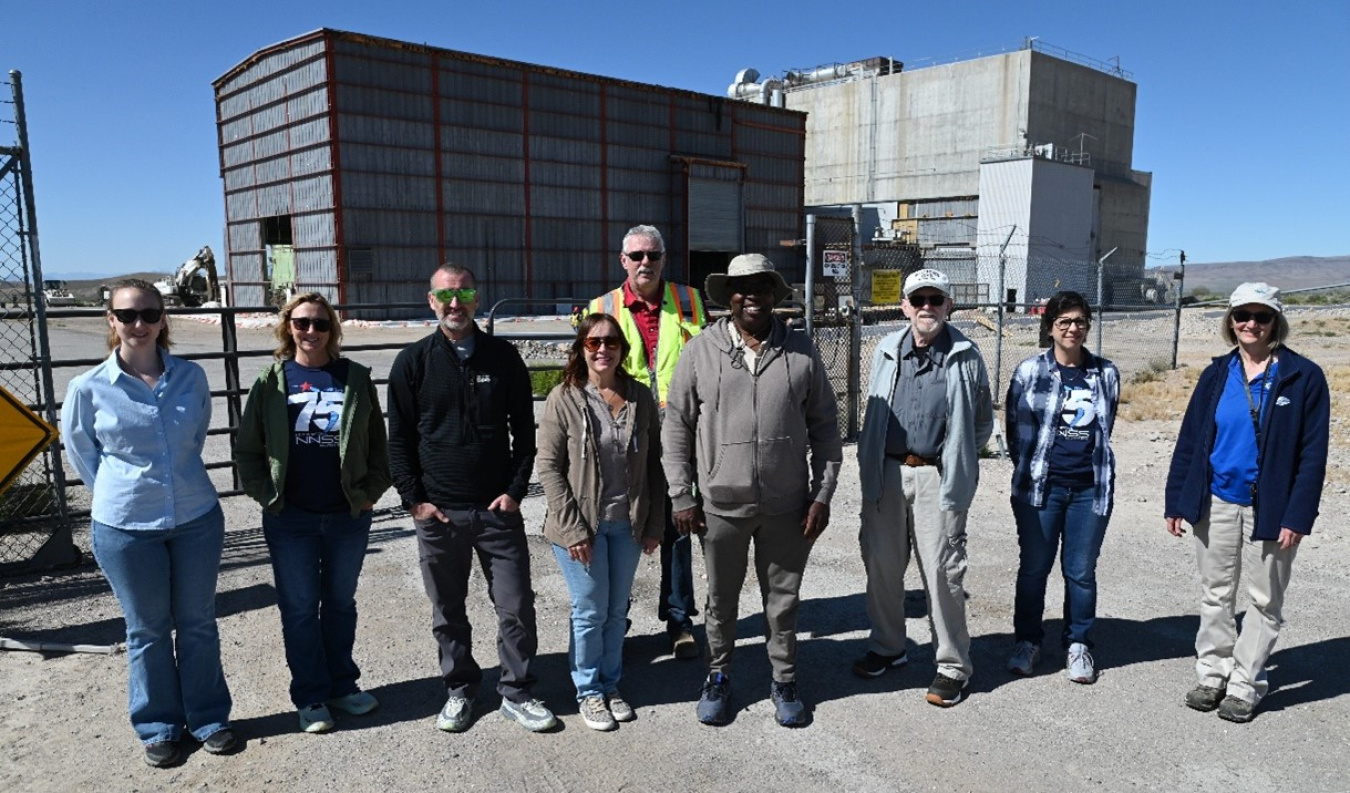
Nevada Site Specific Advisory Board members observed significant advancements in demolishing the Engine Maintenance, Assembly and Disassembly facility cold bay.
LAS VEGAS — Nevada Site Specific Advisory Board (NSSAB) members recently viewed progress firsthand in the U.S. Department of Energy’s (DOE) Environmental Management (EM) Nevada Program mission at the Nevada National Security Site (NNSS).
The board is part of the EM Site-Specific Advisory Board, a volunteer stakeholder group that offers independent advice, information and recommendations to the Assistant Secretary for EM and associated representatives about issues affecting the EM program at eight DOE sites across the country.
“Visiting the NNSS and learning more about EM Nevada activities during the tour through hands-on displays, pictures and presentations is invaluable for providing informed input to the DOE,” NSSAB Vice Chair Eddie Williams said.
The NSSAB’s first tour stop was the Engine Maintenance, Assembly and Disassembly (EMAD) facility. Constructed in 1968, this facility supported staging, assembly and disassembly of rocket engines as part of the Nuclear Rocket Development Station.
NSSAB members observed the removal of asbestos-coated steel panels and demolition of a portion of the EMAD facility known as the cold bay area in preparation for onsite disposal at the NNSS. Troy Thomson, projects director for EM Nevada contractor Navarro Research & Engineering, noted that this work preserves the structural integrity of the remaining large concrete building for potential future reuse that supports DOE’s mission to advance American energy dominance.
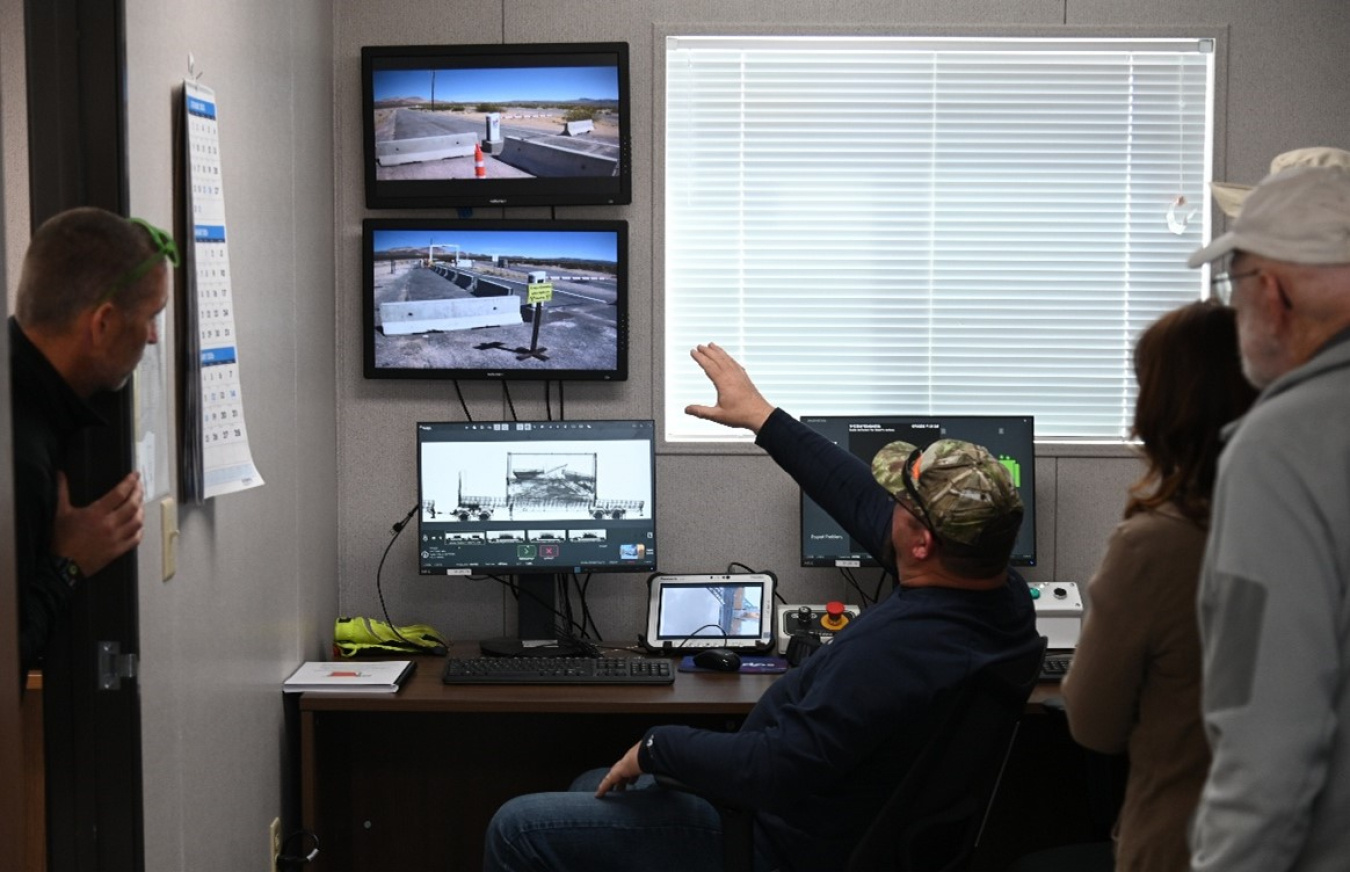
Nevada Site Specific Advisory Board members were briefed on a new drive-through truck portal at the Radioactive Waste Management Complex.
EM Nevada is accomplishing its environmental restoration mission according to the Federal Facility Agreement and Consent Order (FFACO), which establishes a strategy and timeline for completing corrective actions to safely and effectively remediate and restore contaminated sites.
This spring marks the 30th anniversary of FFACO. Of the 3,044 sites identified in the regulatory agreement, 2,959 have been closed with regulatory approval.
“The last few sites are undergoing corrective actions and investigations, and we expect that all FFACO sites will be closed in the next few years,” EM Nevada FFACO/Regulatory Lead Tiffany Gamero said. “It’s exciting to be nearing the end of this important endeavor to address the legacy contamination at the NNSS and ensure the health and safety of Nevada residents and the environment.”
The second stop for the NSSAB included a tour and briefing on radioactive waste management at the NNSS Radioactive Waste Management Complex. They viewed a new drive-through truck portal and learned how the advanced technology will monitor arriving low-level radioactive waste shipments for disposal at the NNSS.
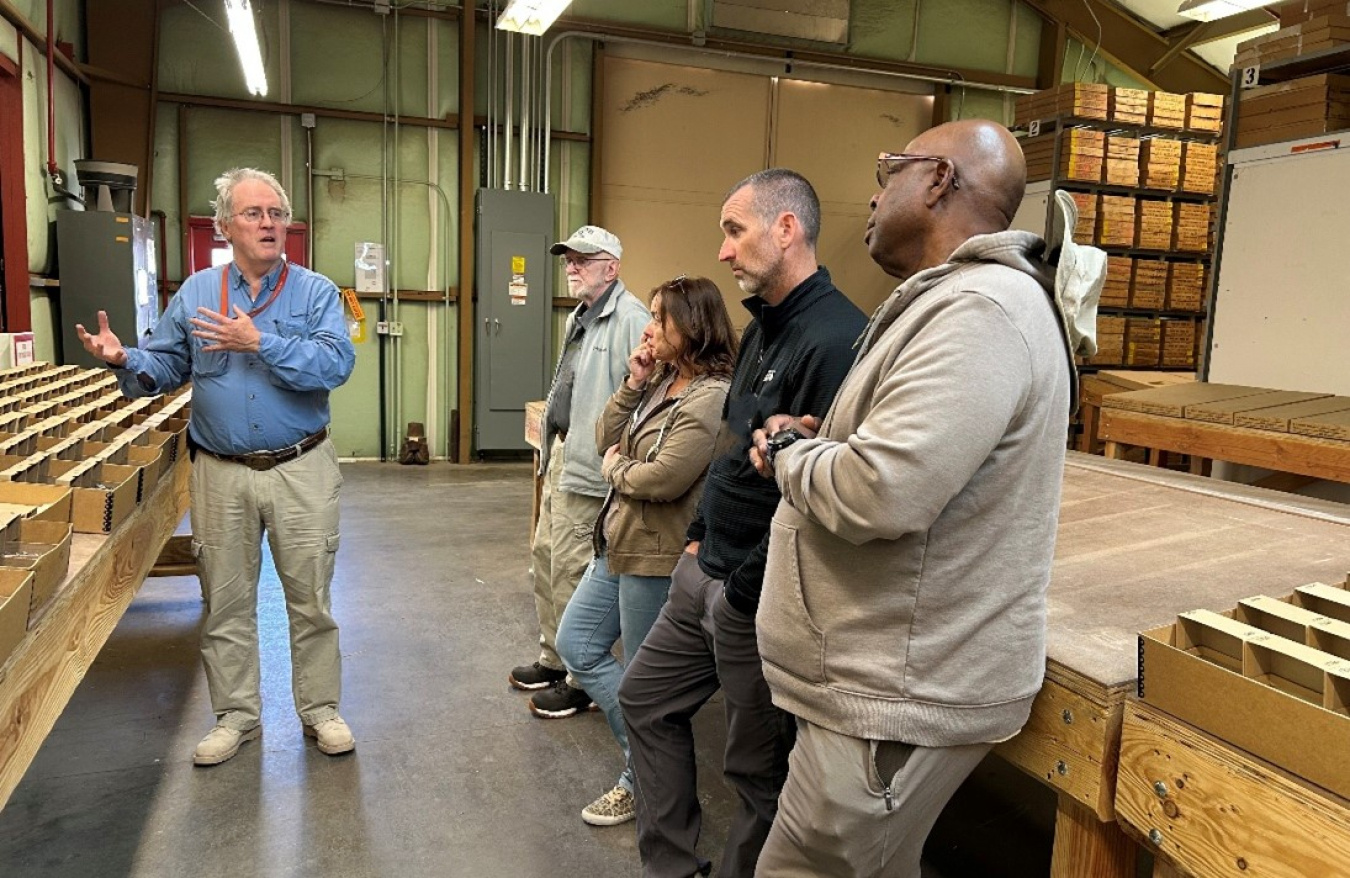
Nevada Site Specific Advisory Board members examined rock cuttings collected every 10 feet during a recent well drilling campaign.
The final stop of the day was the U.S. Geological Survey Core Library and Data Center, which stores more than 60 years of rock samples for multiple agencies, including from EM Nevada groundwater characterization.
Chief Geologist Chris Lewis described the recently completed drilling of two new wells and deepening of a third at the Pahute Mesa corrective action area on the NNSS. Rock samples from the Core Library provided important information on the Pahute Mesa subsurface to help plan the drilling campaign.
This month, well development and testing of these wells will begin, and the data will help assess and verify groundwater models that currently forecast contamination from historic nuclear testing on the NNSS will not exceed regulatory safety standards at the closest public land boundary within 1,000 years. These model forecasts are supported by the results of sampling performed by DOE and independent entities that have not detected tritium from underground nuclear testing in any onsite or offsite drinking water wells.
The NSSAB’s next scheduled meeting is June 17 in Las Vegas. For more information, contact the NSSAB office at nssab@emcbc.doe.gov.
-Contributor: Barbara Ulmer
To receive the latest news and updates about the Office of Environmental Management, submit your e-mail address.