



Two universities in Ohio and Kentucky are collaborating to build STEM interest in local high school students and inspire them to pursue careers at the U.S. Department of Energy’s Portsmouth and Paducah sites. May 26, 2026
Office of Environmental Management
May 26, 2026 Estimated Read Time min
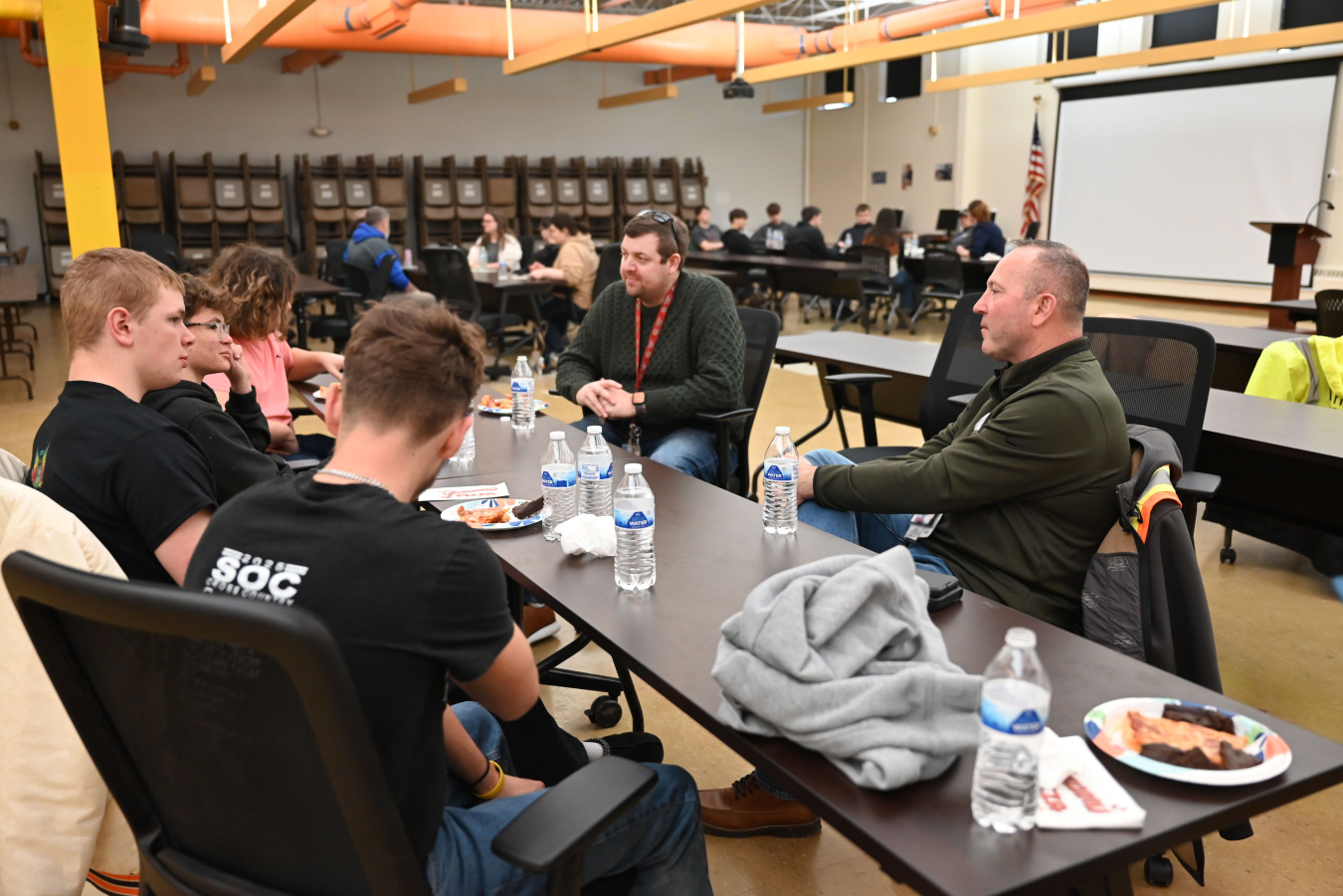
Ryan Callihan, a U.S. Department of Energy contracting officer representative for Ohio University, center, and Shane Williams, Southern Ohio Cleanup Company On-Site Waste Disposal Facility Capital Projects director, right, meet with students participating in the Student Summary of the Annual Site Environmental Report from the Pike County Career Technology Center during their Portsmouth Site visit to discuss site operations and future job opportunities.
LEXINGTON, Ky. — Two universities in Ohio and Kentucky are collaborating to build STEM interest in local high school students and inspire them to pursue careers at the U.S. Department of Energy’s (DOE) Portsmouth and Paducah sites.
Ohio University (OU) and Murray State University (MSU) lead the development and publication of the Portsmouth Paducah Project Office (PPPO) Student Summary of the Annual Site Environmental Report (ASER), commonly referred to as the Student ASER.
“The Student ASER provides an opportunity to involve local students in STEM-based activities and interact with local universities,” acting PPPO Manager Erik Olds said. “It is just one of several PPPO educational outreach programs to boost STEM education and prepare a pipeline of talent to fill the jobs of tomorrow.”
The ASER is an environmental report that details monitoring results on and around PPPO’s cleanup sites. To help students better understand the ASER content, the universities connect them with subject matter experts, field trips and months of learning about the site’s history and deactivation and demolition work. At the program’s end, students develop a visual, condensed, non-technical summary of the ASER that is published and presented at a public expo near their respective sites.
In Ohio, Portsmouth West High School and Pike County Career Technology Center students met biweekly throughout the school year to create the Portsmouth Student ASER with guidance from OU’s Voinovich School of Leadership and Public Affairs personnel.
“The cross-institutional exchange of ideas sparked fantastic creativity for both our programs,” said Stephanie Howe, OU’s director of Energy Programs PORTSfuture, a program supported by the U.S. Department of Energy's (DOE) Office of Environmental Management that advocates for the efficient and economical restoration of the Portsmouth Site.
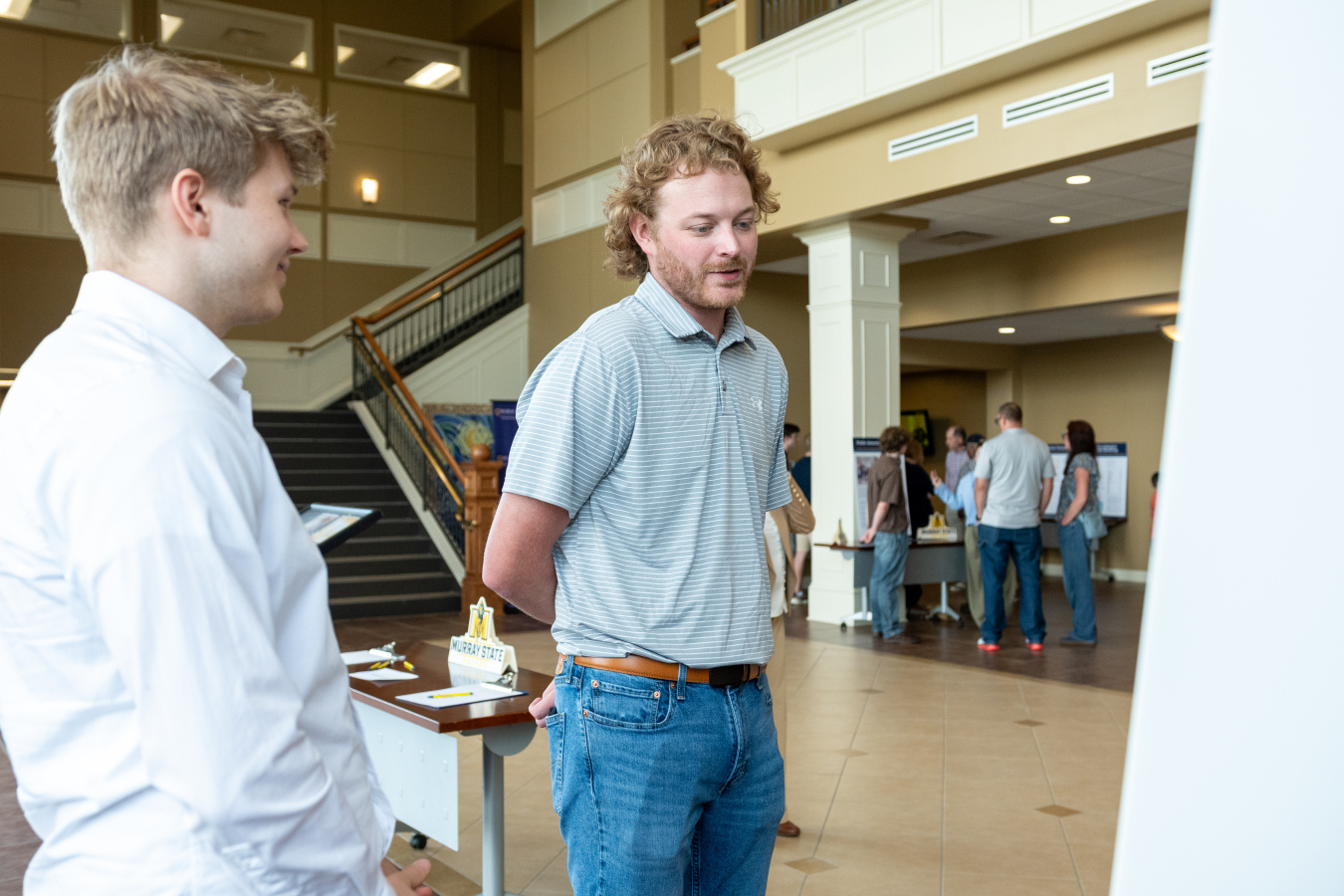
U.S. Department of Energy General Engineer Mitchell Guthrie, right, speaks with McCracken County High School student Torin Townsend about his research during an expo focused on the Paducah Student Summary of the Annual Site Environmental Report, or Student ASER. The curriculum for students participating in the Student ASER includes published poster presentations for the public to view and discuss.
Howe continued, “Our conversations with MSU resulted in a refresh of the Portsmouth Student ASER program that has been ongoing for 15 years. Learning about MSU’s innovative launch strategies, their ongoing incorporation of MSU faculty and the type of content MSU includes in their final student summary document was truly enlightening.”
Similarly in Kentucky, students from McCracken County High School (MCHS) visited the Paducah Site and worked with MSU personnel to produce the Paducah Student ASER.
“This was our second year working with DOE on the Student ASER,” MSU DOE Project Director Alex Sherwood said. “Stephanie Howe and the OU team provided a big boost to establish the Paducah Student ASER by understanding their past successes. Because of this, we added substantial information to our Student ASER playbook and MCHS students were offered new and unique opportunities for educational growth as part of their research.”
The ASER is key to PPPO’s effort to inform the public about environmental conditions at the Portsmouth and Paducah sites through a detailed overview of environmental activities each year. Reports are available on the PPPO website for both Portsmouth and Paducah. Past Student ASER reports can be viewed on the PORTSfuture website and MSU DOE grant website.
-Contributors: Zachary Boyarski, Melissa Green
To receive the latest news and updates about the Office of Environmental Management, submit your e-mail address.