



Idaho Cleanup Project crews recently fabricated and tested four stainless steel storage canisters to prepare for a used nuclear fuel shipment from a reactor at Penn State University this year. April 14, 2026
Office of Environmental Management
April 14, 2026 Estimated Read Time min
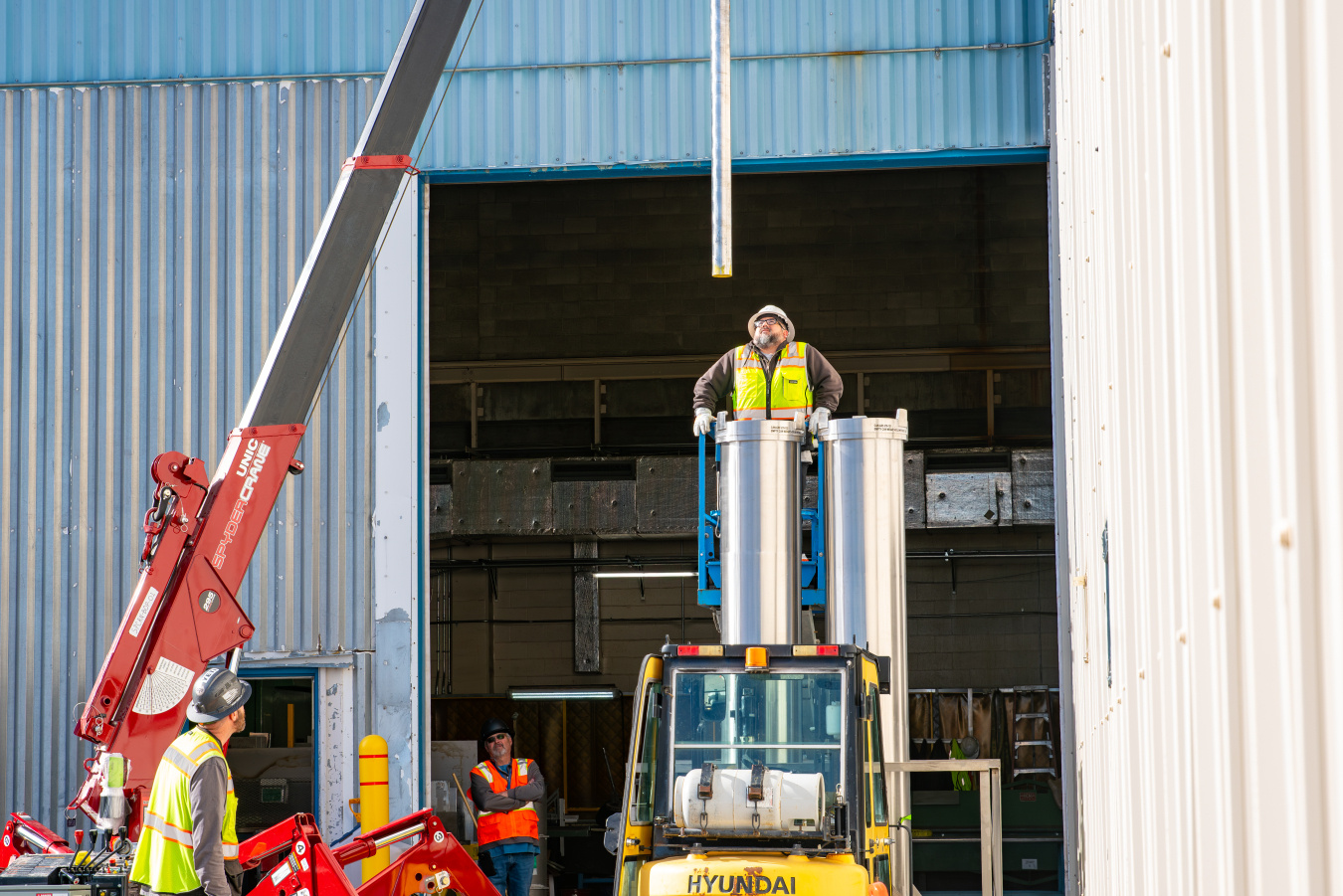
Crew members place heavy metal rods into large stainless steel Training, Research, Isotope, General Atomics used nuclear fuel canisters to test load-bearing capabilities.
IDAHO FALLS, Idaho — Idaho Cleanup Project (ICP) crews recently fabricated and tested four stainless steel storage canisters to prepare for a used nuclear fuel (UNF) shipment from a reactor at Penn State University this year, ensuring the safe long term management of the material at the Idaho National Laboratory (INL) Site and enabling critical U.S. Department of Energy (DOE) research opportunities.
In April 2025, DOE and the state of Idaho signed a waiver to the 1995 Idaho Settlement Agreement, a legal framework that establishes cleanup milestones at the INL Site, to allow receipt and storage of the material, called Training, Research, Isotope, General Atomics (TRIGA) fuel, in Idaho for the first time in decades.
Commonly found in U.S. university research reactors, TRIGA fuel supports advancements in nuclear energy and medical research. Through the Atoms for Peace program, research reactor fuel is eligible for return to DOE facilities once it is no longer needed.
The waiver resulted from DOE’s Office of Environmental Management meeting some of the milestones, including the transfer of all Idaho UNF into dry storage canisters. The waiver supports continued research at the INL Site that advances American energy, jobs and security.
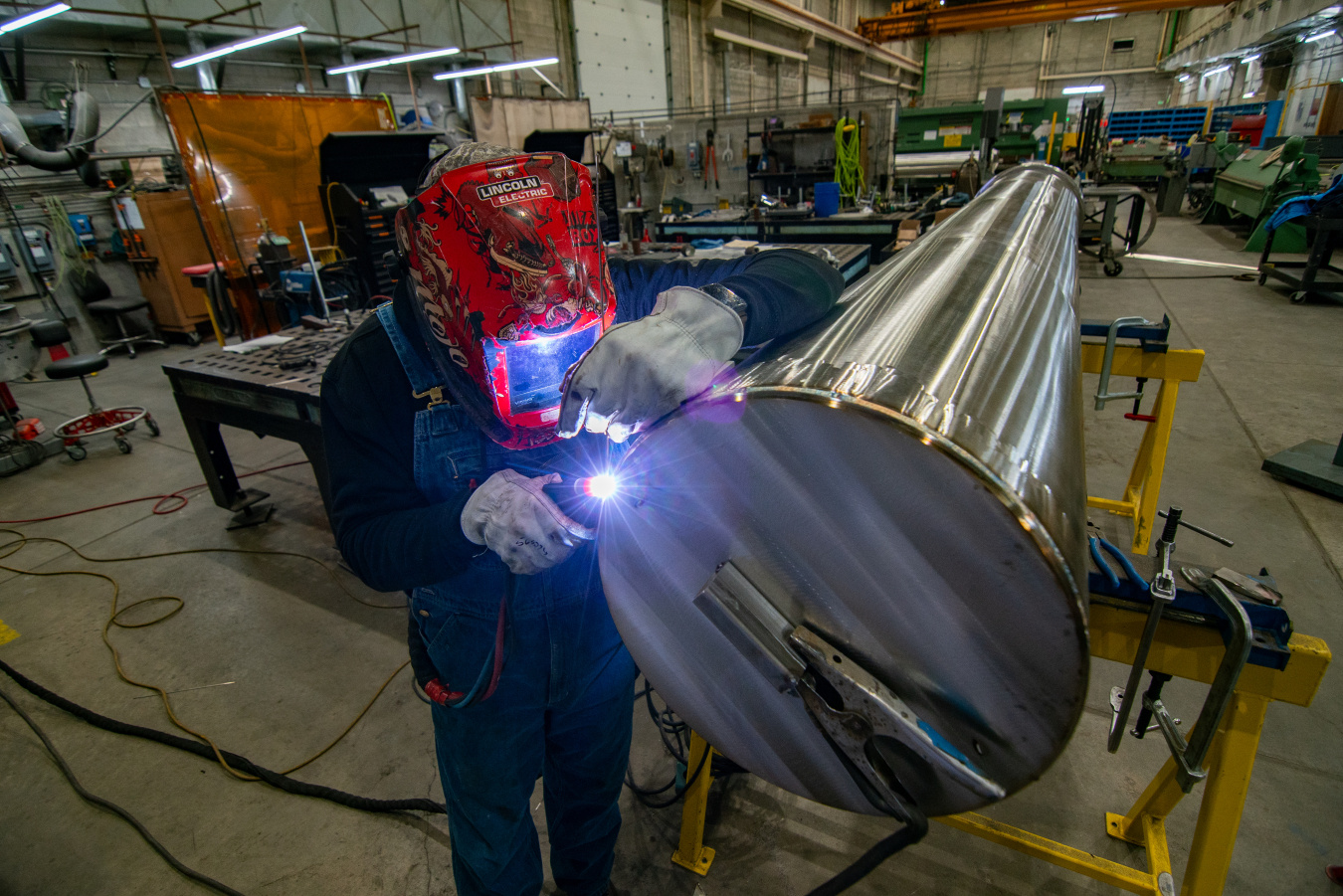
Idaho Cleanup Project crews use specialized tools to fabricate canisters designed to safely store Training, Research, Isotope, General Atomics used nuclear fuel.
At the Idaho Nuclear Technology and Engineering Center fabrication shop, crews with ICP contractor Idaho Environmental Coalition (IEC) used specialized tools to roll stainless steel sheets and form the body of the canisters, and craft their bases and lids.
“I’m proud of our team and their effort. Completing these canisters is crucial to ultimately receiving and safely storing future TRIGA fuel shipments,” said Kasey Baisch, an IEC manager.
Crews also performed load-bearing tests to ensure each canister could be handled safely while containing TRIGA fuel.
“Their work not only supports the safe storage of TRIGA fuel but also reinforces our commitment to advancing cleanup and critical research at the INL Site and at universities across the country,” IEC Used Nuclear Fuel Project Manager Carla Ellsworth said.
-Contributors: Leslie Dal Lago, Carter Harrison
To receive the latest news and updates about the Office of Environmental Management, submit your e-mail address.